JSTOR Global Plants Home
  • Home
  • Browse
  • About
  • Access
  • Account
    • Saved Items
    • Profile
  • Log in

Global Plants

Skip to Main Content
  • JSTOR Global Plants Home
  • Global Plants

    • Browse
    • About
    • Access
    • Account
      • Saved Items
      • Profile
Log in
  • Browse
  • About
  • Access
  • Account
    • Saved Items
    • Profile
Advanced Search

Compilation
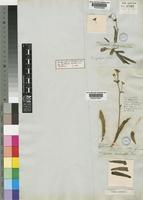
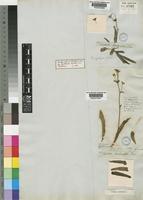
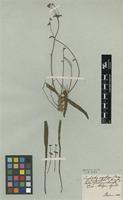
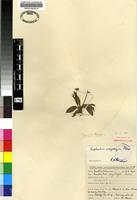
Euphorbia oxystegia

4 Images see all

Euphorbia oxystegia Boiss. [family EUPHORBIACEAE]
Type of Euphorbia oxystegia Boiss. [family EUPHORBIACEAE]
Holotype of Euphorbia oxystegia Boiss. [family EUPHORBIACEAE]
Previous
Next

Name

Identification
Euphorbia bupleurifolia E.Mey. [family EUPHORBIACEAE ] Euphorbia oxystegia Boiss. [family EUPHORBIACEAE ] (stored under name);
Related name
  • Euphorbia oxystegia
  • Euphorbia bupleurifolia

Flora

Entry for EUPHORBIA bubalina Boiss. [family EUPHORBIACEAE]
Herbarium
Royal Botanic Gardens, Kew (K)
Collection
Flora Capensis
Resource Type
Reference Sources
Entry From
Flora Capensis, Vol 5, Part 2, page 216, (1925) Author: (By N. E. BROWN, J. HUTCHINSON and D. PRAIN.)
Names
EUPHORBIA bubalina Boiss. [family EUPHORBIACEAE], Cent. Euphorb. 26, and in DC. Prodr. xv. ii. 90;—Berger, Sukk. Euphorb. 121 and 122, fig. 32.
EUPHORBIA oxystegia Baker [family EUPHORBIACEAE], in Saund. Ref. Bot. iii. t. 209, not of Boiss.
EUPHORBIA clava E. Meyer [family EUPHORBIACEAE], in Drège, Zwei Pfl. Documente, 184, name only, not of Jacq.
EUPHORBIA laxiflora O. Kuntze [family EUPHORBIACEAE], Rev. Gen. Pl. iii. 286.
Information
a succulent shrub, 2–5 ft. high (Burchell), spineless; branches 5–9 lin. thick, terete, subtuberculate, glabrous, green; leaves alternate, scattered along the young branches, very spreading, 1 1/2–6 in. long, 1/4–1 1/3 in. broad, cuneate-oblanceolate or oblong-lanceolate, obtuse or subacute, apiculate, cuneately tapering to a narrow sessile base, not distinctly petiolate, slightly folded lengthwise, glabrous on both sides; peduncles solitary in the axils of the leaves, spreading or ascending, 1–6 in. long, 1/2–1 lin. thick, once forked or bearing an umbel of 3 simple or once- or twice-forked rays 1/2–2 in. long at the apex, with a pair or a whorl of 3 bracts at the base of the umbel and 1 or 2 very reduced alternate leaves below, withering and persisting for 2 or 3 years, glabrous; bracts 1/2– 3/4 in. long, 1/2– 2/3 in. broad, deltoid or deltoid-ovate, obtuse or acute, apiculate, subtruncate at the base, glabrous on both sides, green, usually edged with red; involucre sessile, 2 1/2–3 lin. in diam., cup-shaped, glabrous, with 5 glands and 5 subquadrate subentire or slightly toothed puberulous lobes; glands 1 1/4–1 3/4 lin. in their greater diam., transverse, oblong or very broadly cuneate-oblong, entire, green, like the bracts; capsule closely sessile, about 1/3 in. in diam., subglobose-trigonous, slightly narrowing upwards, glabrous; styles 3/4–1 lin. long, erect, united into a column for half their length, bifid at the apex, green; seeds 2–2 1/4 lin. long, ovoid, acute, slightly 2-keeled on the apical part, very minutely papillate-tuberculate or subreticulate to nearly smooth. null
Distribution
COAST REGION Bathurst Div.; near Port Alfred, Burchell, 3994! Rogers, 156! Trapps Valley, Miss Daly, 718! King Williamstown Div.; near the Buffalo River, Drège, 4615! East London Div.; river bank, East London, Galpin, 3110! British Kaffraria, Cooper, 132! 3150! and cultivated specimens!
Notes
Described from a living plant introduced by T. Cooper, and cultivated at Kew. In the Refugium Botanicum the glands of the involucre are inaccurately figured and described as yellow.

Related Materials

  • Terms and Conditions
  • Privacy Policy
  • Cookie Policy
  • Cookie Settings
  • Accessibility
  • Help
  • Contact Us
  • Facebook
  • Twitter
ITHAKA

JSTOR is part of ITHAKA, a not-for-profit organization helping the academic community use digital technologies to preserve the scholarly record and to advance research and teaching in sustainable ways.

©2000-2026 ITHAKA. All Rights Reserved. JSTOR®, the JSTOR logo, JPASS®, Aluka®, and ITHAKA® are registered trademarks of ITHAKA.

╳