JSTOR Global Plants Home
  • Home
  • Browse
  • About
  • Access
  • Account
    • Saved Items
    • Profile
  • Log in

Global Plants

Skip to Main Content
  • JSTOR Global Plants Home
  • Global Plants

    • Browse
    • About
    • Access
    • Account
      • Saved Items
      • Profile
Log in
  • Browse
  • About
  • Access
  • Account
    • Saved Items
    • Profile
Advanced Search

Compilation
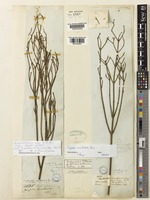
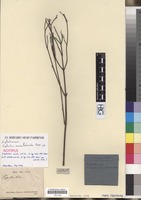
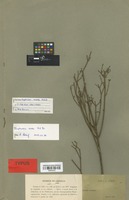
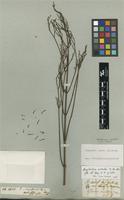
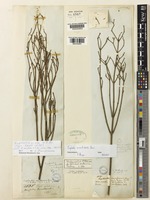
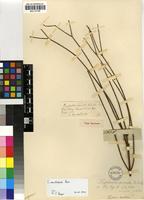
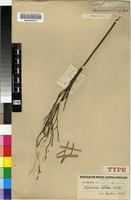
Euphorbia mixta

7 Images see all

Euphorbia mixta N.E.Br. [family EUPHORBIACEAE]
Isotype of Euphorbia mixta N.E. Br. [family EUPHORBIACEAE]
Type of Euphorbia mixta N. E. Br. [family EUPHORBIACEAE]
Type? of Euphorbia serpiformis Boiss. [family EUPHORBIACEAE]
Euphorbia mixta N.E.Br. [family EUPHORBIACEAE]
Type of Euphorbia arrecta N.E.Br. [family EUPHORBIACEAE]
Type of Euphorbia mixta N.E.Br. [family EUPHORBIACEAE]
Previous
Next

Name

Identification
Euphorbia arrecta N.E.Br. [family EUPHORBIACEAE ] Verified by Not on sheet, Euphorbia mixta N.E.Br. [family EUPHORBIACEAE ] (stored under name); Verified by Not on sheet,
Related name
  • Euphorbia serpiformis
  • Euphorbia arceuthobioides
  • Euphorbia arrecta
  • Euphorbia mixta

Flora

Entry for EUPHORBIA mixta N. E. Br. [family EUPHORBIACEAE]
Herbarium
Royal Botanic Gardens, Kew (K)
Collection
Flora Capensis
Resource Type
Reference Sources
Entry From
Flora Capensis, Vol 5, Part 2, page 216, (1925) Author: (By N. E. BROWN, J. HUTCHINSON and D. PRAIN.)
Names
EUPHORBIA mixta N. E. Br. [family EUPHORBIACEAE]
EUPHORBIA scopiformis Boiss. [family EUPHORBIACEAE], (serpiformis by error),in DC. Prodr. xv. errata and 75 partly, as to Zeyher 1535 only, excl. all synonyms.
Information
a leafless and spineless succulent bush, probably 2 ft. or more high, compactly much-branched above, unisexual; main stems or branches 1 1/4–1 1/2 lin. thick (dried); lateral branches more slender, opposite, diverging from each other at the base at an angle of 45°–50°, then erect, elongated and by forking into cymes or with opposite pairs of cymes racemosely scattered along them forming a panicle 1 ft. long and 3–4 in. broad, glabrous; leaves rudimentary, scale-like, opposite, 2/3– 3/4 lin. long, deltoid-ovate, often angular on each side at the base, and there contracted into an exceedingly short petiole or subsessile, obtuse, apiculate; stipular glands none; cymes usually twice forked, each fork or branchlet bearing 1 involucre; bracts under the involucre sessile, broadly ovate or oblong, obtuse, apiculate; involucre sessile, 1–1 1/4 lin. in diam., cup-shaped, glabrous outside, with 5 glands and 5 oblong or subquadrate minutely toothed and ciliate lobes; glands 1/2– 2/3 lin. in their greater diam., transversely oblong, entire, very slightly concave; ovary and capsule not seen. null
Distribution
COAST REGION Clanwilliam Div.; Berg Valley, Zeyher, 1535! Possibly Schlechter, 9940, from Brand Vley in Worcester Div. may belong here.
Notes
The name E. scopiformis as applied by Boissier, according to the only three specimens quoted, includes two perfectly distinct species, being founded upon a specimen collected by Bergius in Riet Valley, which is the type of Arthrothamnus scopiformis, Klotzsch & Garcke, and another collected by Ecklon & Zeyher (Euphorb. 24) near Brakfontein in Clanwilliam Div., both of which belong to E. arceuthobioides, whilst the distinct Berg Valley plant (Zeyher 1535) appears to have been added afterwards, as its characteristics do not appear in the description. As the name scopiformis was not originally applied to this plant (Zeyher 1535) and belongs to the plant described by Boissier as E. arceuthobioides before or at about the same time, I deem it best to abolish the name E. scopiformis altogether and apply a fresh name as above.

Related Materials

  • Terms and Conditions
  • Privacy Policy
  • Cookie Policy
  • Cookie Settings
  • Accessibility
  • Help
  • Contact Us
  • Facebook
  • Twitter
ITHAKA

JSTOR is part of ITHAKA, a not-for-profit organization helping the academic community use digital technologies to preserve the scholarly record and to advance research and teaching in sustainable ways.

©2000-2026 ITHAKA. All Rights Reserved. JSTOR®, the JSTOR logo, JPASS®, Aluka®, and ITHAKA® are registered trademarks of ITHAKA.

╳