JSTOR Global Plants Home
  • Home
  • Browse
  • About
  • Access
  • Account
    • Saved Items
    • Profile
  • Log in

Global Plants

Skip to Main Content
  • JSTOR Global Plants Home
  • Global Plants

    • Browse
    • About
    • Access
    • Account
      • Saved Items
      • Profile
Log in
  • Browse
  • About
  • Access
  • Account
    • Saved Items
    • Profile
Advanced Search

Compilation
Euphorbia macowani

9 Images see all

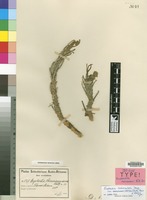
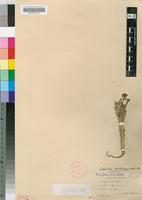
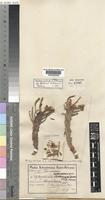
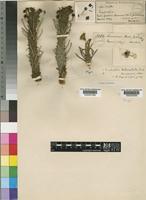
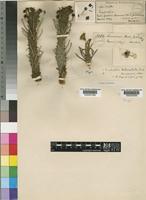
Syntype of Euphorbia macowani N.E.Br. [family EUPHORBIACEAE]
Type of Euphorbia macowani N.E.Br. [family EUPHORBIACEAE]
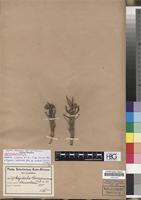
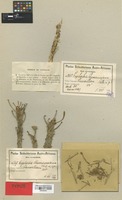
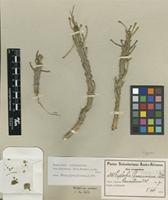
Isosyntype of Euphorbia tuberculata Jacq. var. macowani (N.E. Br.) A.C. White [family EUPHORBIACEAE]
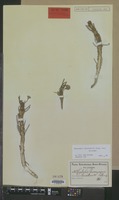
Syntype of Euphorbia schumanniana Schltr. [family EUPHORBIACEAE]
Euphorbia macowani N.E.Br. [family EUPHORBIACEAE]
Type of Euphorbia schumanniana Schltr. [family EUPHORBIACEAE]
Syntype of Euphorbia macowani N.E.Br. [family EUPHORBIACEAE]
Type of Euphorbia macowani N.E.Br. [family EUPHORBIACEAE]
Previous
Next

Name

Identification
Euphorbia tuberculata Jacq. [family EUPHORBIACEAE ] (stored under name); Verified by HBG-formal name change, 2010 Euphorbia macowani N.E. Br. [family EUPHORBIACEAE ] Verified by HBG-formal name entry, 2010 Euphorbia schumanniana Schltr. unpubl. herb. name [family EUPHORBIACEAE ] Verified by Not on sheet,
Related name
  • Euphorbia schumanniana
  • Euphorbia macowani
  • Euphorbia tuberculata

Flora

Entry for EUPHORBIA Macowani N. E. Br. [family EUPHORBIACEAE]
Herbarium
Royal Botanic Gardens, Kew (K)
Collection
Flora Capensis
Resource Type
Reference Sources
Entry From
Flora Capensis, Vol 5, Part 2, page 216, (1925) Author: (By N. E. BROWN, J. HUTCHINSON and D. PRAIN.)
Names
EUPHORBIA Macowani N. E. Br. [family EUPHORBIACEAE]
Information
succulent, spineless, but the branches beset with ascending or suberect hardened remains of peduncles, not spines; only dried branches seen, 3 1/2–8 in. long, 5–8 lin. thick, probably much stouter when alive, cylindric, slightly thickened upwards, covered with elongated subrhomboid tubercles 1/4– 1/2 in. long, 1 1/2–2 lin. broad, and about 1 lin. prominent, glabrous; leaves suberect, 1–1 1/2 in. long, 1–2 lin. broad near the obtuse or acute apex, tapering gradually to the base, linear-spathulate, entire, fleshy, glabrous; peduncles solitary in the axils of the tubercles at the tips of the branches, suberect, 1/2–1 3/4 in. long, glabrous, bearing 5 bracts and 1 involucre at the apex; bracts 2–3 lin. long, 1–2 1/2 lin. broad, obovate, obtuse or rounded at the apex, about 3 of them pubescent on the back and ciliate, glabrous within, the others glabrous on both sides and scarcely ciliate; involucre about 7 lin. in diam., broadly cup-shaped, villous-pubescent outside, glabrous within, with 5 glands and 5 rather large subquadrate ciliate lobes, fringed-toothed at the top; glands 2 1/2 lin. long and 3 1/2–4 lin. broad across the tips, broadly cuneate, palmately divided to two-thirds of the way down into 5–7 primary linear forked segments, with very shortly bifid or trifid tips, villous-pubescent on both sides, but with a transverse excavated glabrous gland at the base of the united part, apparently purplish, tips of the segments white; ovary subsessile, included in the involucre, glabrous; styles 2 lin. long, exserted, united almost to the apex into a slender glabrous column articulated close to the base, minutely trifid at the apex; capsule subsessile, about 5 lin. in diam., globose-trigonous, glabrous; seeds 2 lin. long, subterete, slightly conical, truncate at the base, very abruptly and shortly conic-acute at the apex, very rough with minute irregular tubercles, grey. null
Distribution
COAST REGION Clanwilliam Div.; near Clanwilliam, Schlechter, 8419! Mac-Owan, 3286 partly (wrongly labelled as from Cannon Hill in Uitenhage Div.)!

Related Materials

  • Terms and Conditions
  • Privacy Policy
  • Cookie Policy
  • Cookie Settings
  • Accessibility
  • Help
  • Contact Us
  • Facebook
  • Twitter
ITHAKA

JSTOR is part of ITHAKA, a not-for-profit organization helping the academic community use digital technologies to preserve the scholarly record and to advance research and teaching in sustainable ways.

©2000-2026 ITHAKA. All Rights Reserved. JSTOR®, the JSTOR logo, JPASS®, Aluka®, and ITHAKA® are registered trademarks of ITHAKA.

╳