JSTOR Global Plants Home
  • Home
  • Browse
  • About
  • Access
  • Account
    • Saved Items
    • Profile
  • Log in

Global Plants

Skip to Main Content
  • JSTOR Global Plants Home
  • Global Plants

    • Browse
    • About
    • Access
    • Account
      • Saved Items
      • Profile
Log in
  • Browse
  • About
  • Access
  • Account
    • Saved Items
    • Profile
Advanced Search

Compilation
Euphorbia ledienii

3 Images see all

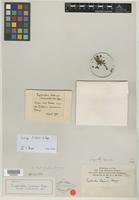
Lectotype of Euphorbia ledienii A. Berger [family EUPHORBIACEAE]
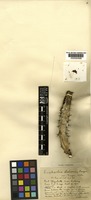
Syntype of Euphorbia ledienii A.Berger var. dregei N.E.Br. [family EUPHORBIACEAE]
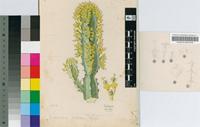
Euphorbia ledienii A.Berger var. dregei N.E.Br.
Previous
Next

Name

Identification
Euphorbia ledienii A.Berger [family EUPHORBIACEAE ]
Related name
  • Euphorbia ledienii

Flora

Entry for EUPHORBIA Ledienii Berger [family EUPHORBIACEAE]
Herbarium
Royal Botanic Gardens, Kew (K)
Collection
Flora Capensis
Resource Type
Reference Sources
Entry From
Flora Capensis, Vol 5, Part 2, page 216, (1925) Author: (By N. E. BROWN, J. HUTCHINSON and D. PRAIN.)
Names
EUPHORBIA Ledienii Berger [family EUPHORBIACEAE], Sukk. Euphorb. 80
Information
a succulent spiny leafless bush, 4–6 ft. high, erect; branches up to 2 1/4 (when dried 1/2–1 1/2) in. in diam., 4–7-angled, slightly constricted at varying intervals, glabrous, green; angles compressed, slightly or conspicuously sinuate-toothed, separated by concave faces or grooves 1/2– 3/4 in. broad; spine-shields separate or connected into a horny brown border, even on the same branch, 1–1 1/2 lin. broad; spines in pairs 3–9 lin. apart, diverging, 1–3 lin. long or sometimes rudimentary or absent, without prickles at their base, dark brown; leaves rudimentary, scale-like, 1/2 lin. long, broadly deltoid-ovate, soon deciduous; flowering-eyes 1–2 lin. above the spine-pairs and touching or enclosed in the spine-shields; cymes usually 3 together at each flowering-eye, sessile or on peduncles up to 1 1/2 lin. long, each with 3 involucres, the central male, the lateral hermaphrodite; bracts 1/2– 3/4 lin. long, scale-like, ovate or ovate-oblong, obtuse or subacute, glabrous; involucre 2–2 1/2 (when dried 1 1/2–2) lin. in diam., cup-shaped or campanulate, glabrous, with 5 glands and 5 subquadrate toothed lobes, all bright yellow; glands contiguous or subcontiguous, 3/4–1 1/4 lin. in their greater diam., transversely oblong, entire, often with the ends deflexed; capsule 3–3 1/2 lin. in diam., exserted 1 1/2–2 lin. beyond the involucre, 3-angled, with a distinct keel down each angle and a disc-like calyx at its base; styles united into a column 3/4–1 lin. long, with bifid spreading or recurved arms 1/4– 3/4 lin. long; seeds immature in the specimens seen. null
Distribution
COAST REGION Uitenhage Div.; Karoo-like hills between the Sundays and Zwartkops Rivers, Zeyher, 1097! Zwartkops, Marloth, 4891! Redhouse, Mrs. Paterson, 88a! 88b! 720! 880! Port Elizabeth Div.; near Port Elizabeth, Drège, 42! near Bethelsdorp, Mrs. Paterson, 2019! Div.? Norvals Poort, Rogers, 2035! also cultivated plants! Var. β: Humansdorp Div.; near Zeekoe River, Thunberg! Port Elizabeth Div.; near Port Elizabeth, Drège!
Notes
Described partly from living plants and flowers in fluid. The form figured in the Botanical Magazine, and of which a specimen with flowers in fluid has also been sent to Kew by Mr. I. L. Drège of Port Elizabeth, seems distinctly to differ from the type in its narrower and proportionately more elongated funnel-shaped involucres. It may be specifically distinct, but living plants with fruit and seeds require to be compared before this point can be decided. The specimen of E. canariensis in Thunberg's Herbarium appears to be the same as the variety Dregei, but is without flowers, so that good flowering specimens from the locality where Thunberg collected it are required to confirm the identification.

Related Materials

  • Terms and Conditions
  • Privacy Policy
  • Cookie Policy
  • Cookie Settings
  • Accessibility
  • Help
  • Contact Us
  • Facebook
  • Twitter
ITHAKA

JSTOR is part of ITHAKA, a not-for-profit organization helping the academic community use digital technologies to preserve the scholarly record and to advance research and teaching in sustainable ways.

©2000-2026 ITHAKA. All Rights Reserved. JSTOR®, the JSTOR logo, JPASS®, Aluka®, and ITHAKA® are registered trademarks of ITHAKA.

╳