JSTOR Global Plants Home
  • Home
  • Browse
  • About
  • Access
  • Account
    • Saved Items
    • Profile
  • Log in

Global Plants

Skip to Main Content
  • JSTOR Global Plants Home
  • Global Plants

    • Browse
    • About
    • Access
    • Account
      • Saved Items
      • Profile
Log in
  • Browse
  • About
  • Access
  • Account
    • Saved Items
    • Profile
Advanced Search

Compilation
Euphorbia inermis

9 Images see all

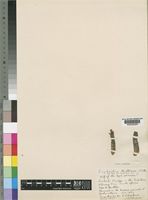
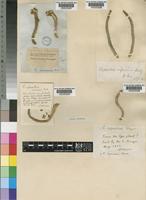
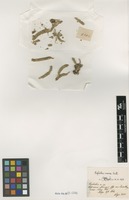
Type of Euphorbia huttonae N.E.Br. [family EUPHORBIACEAE]
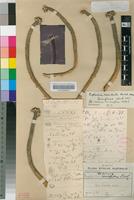
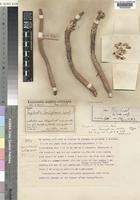
Type of Euphorbia inermis Mill. var. laniglans N.E.Br. [family EUPHORBIACEAE]
Isoneotype of Euphorbia inermis Pancic ex Boiss. [family EUPHORBIACEAE]
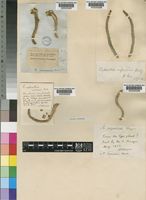
Euphorbia inermis Mill. [family EUPHORBIACEAE]
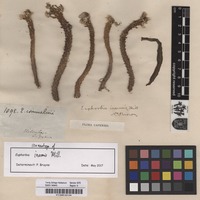
Type of Euphorbia inermis Mill. [family EUPHORBIACEAE]
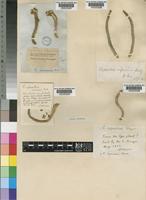
Type of Euphorbia inermis Mill. var. laniglans N.E.Br. [family EUPHORBIACEAE]
Euphorbia inermis Mill. [family EUPHORBIACEAE]
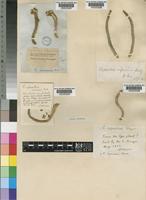
Filed as Euphorbia inermis Mill. [family EUPHORBIACEAE]
Previous
Next

Name

Identification
Euphorbia huttonae N.E.Br. [family EUPHORBIACEAE ] Euphorbia inermis Mill. [family EUPHORBIACEAE ] (stored under name);
Related name
  • Euphorbia esculenta
  • Euphorbia commelini
  • Euphorbia laniglans
  • Euphorbia inermis
  • Euphorbia huttonae
  • Euphorbia viperina

Flora

Entry for EUPHORBIA inermis Mill. [family EUPHORBIACEAE]
Herbarium
Royal Botanic Gardens, Kew (K)
Collection
Flora Capensis
Resource Type
Reference Sources
Entry From
Flora Capensis, Vol 5, Part 2, page 216, (1925) Author: (By N. E. BROWN, J. HUTCHINSON and D. PRAIN.)
Names
EUPHORBIA inermis Mill. [family EUPHORBIACEAE], Gard. Dict. ed. viii. no. 13
EUPHORBIA viperina Berger [family EUPHORBIACEAE], in Monatsschr. Kakt. xii. 39, and Sukk. Euphorb. 114; Hemsley in Bot. Mag. t. 7971.
Information
succulent, spineless, leafless; body or main stem short and thick, producing a crown of three or more series of crowded branches around the central flattened or depressed tuberculate obconic area at the top, and not rising much above ground level, tessellately tuberculate; branches 1 1/2–10 in. long or under cultivation much longer, 5–6 lin. thick, ascending or ascending-spreading, cylindric, tessellately tuberculate, glabrous, dull green; tubercles rhomboid, 2 1/2–5 lin. long, 1 3/4–2 3/4 lin. broad and 3/4 lin. prominent, shortly and obtusely conical, with a small white leaf-scar; leaves minute, rudimentary, soon deciduous, 1/2 lin. long and broad, ovate, acute; peduncles solitary in the axils of the tubercles at the tips of the branches, 1 1/2–2 lin. long, stout, bearing about 4 bracts and 1 involucre, glabrous, sometimes per-sistent; bracts 2/3–1 lin. long, scale-like, ovate or oblong, entire or ciliate; involucre 4–4 1/2 lin. in diam. (2 1/2–3 lin. when dried), cup-shaped, white, with 5 (rarely 4) glands and 5 transversely rectangular ciliate lobes, glabrous on the cup outside and within, but pubescent on the back of the lobes and filled with woolly-white bracteoles; glands glabrous, variable on the same plant, 1 1/4–1 1/2 lin. long, 1–1 1/2 lin. broad across the tips, sometimes ovate-oblong and very shortly bifid, with the lobes denticulate at the apex, sometimes divided to below the middle, with two diverging lobes cut like the horns of a reindeer, in both cases with the united glandular part dark green, revolute at the sides and the lobes white, sometimes divided nearly or quite to the base into 2 much-branched lobes and entirely white, without any glandular dark green part; ovary sessile, woolly-white at the apex, thinly sprinkled with ascending or spreading hairs or rarely glabrous; styles united to the apex into a slender column 1 1/2–2 lin. long; stigmas about 1/3 lin. long, more or less deeply bifid, with cuneate lobes, radiating and contiguous forming a sort of disc; capsule sessile, trigonous-subglobose, 2 1/2 lin. in diam., glabrous or with a few hairs; seeds 1 1/2 lin. long, ellipsoid, slightly 4-angled, subtruncate at the base, apiculate at the apex, very minutely tuberculate on the dorsal sides smooth on the ventral, dark brown, and (in the only example seen) with some whitish bodies (exudations?) at the angles, perhaps not constant. null
Distribution
CENTRAL REGION var. β, Jansenville Div.; near Klipplaat, Marloth, 5270!COAST REGION Uitenhage Div.; Coega, Rogers! 115! Port Elizabeth Div.; Zwartkops, Zeyher, 1098! Marloth, 4872! 4897! Redhouse, near Port Elizabeth, Mrs. Paterson, 579! near Port Elizabeth, Drège! and cultivated specimens!
Notes
The figure in the Botanical Magazine merely represents a rooted branch of this plant and gives no idea of its real habit, which is somewhat like that of E. Caput-Medusæ. Described partly from a living plant sent to Kew by Mrs. T. V. Paterson, partly from dried material.

Related Materials

  • Terms and Conditions
  • Privacy Policy
  • Cookie Policy
  • Cookie Settings
  • Accessibility
  • Help
  • Contact Us
  • Facebook
  • Twitter
ITHAKA

JSTOR is part of ITHAKA, a not-for-profit organization helping the academic community use digital technologies to preserve the scholarly record and to advance research and teaching in sustainable ways.

©2000-2026 ITHAKA. All Rights Reserved. JSTOR®, the JSTOR logo, JPASS®, Aluka®, and ITHAKA® are registered trademarks of ITHAKA.

╳