JSTOR Global Plants Home
  • Home
  • Browse
  • About
  • Access
  • Account
    • Saved Items
    • Profile
  • Log in

Global Plants

Skip to Main Content
  • JSTOR Global Plants Home
  • Global Plants

    • Browse
    • About
    • Access
    • Account
      • Saved Items
      • Profile
Log in
  • Browse
  • About
  • Access
  • Account
    • Saved Items
    • Profile
Advanced Search

Compilation
Euphorbia fimbriata

7 Images see all

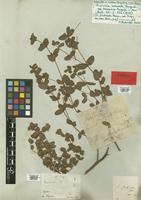
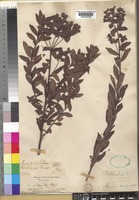
Type of Euphorbia fimbriata Scop. var. laxa Boiss. [family EUPHORBIACEAE]
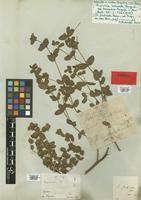
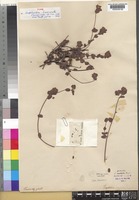
Filed as Euphorbia fimbriata Scop. [family EUPHORBIACEAE]
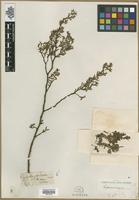
Type? of Euphorbia fimbriata Poit. [family EUPHORBIACEAE]
Euphorbia khasyana Boiss. [family EUPHORBIACEAE]
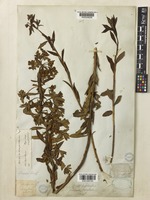
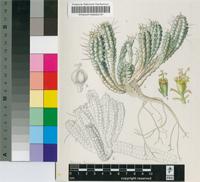
Type of Euphorbia khasyana Boiss. [family EUPHORBIACEAE]
Type of Euphorbia laciniata Panigrahi [family EUPHORBIACEAE]
Euphorbia fimbriata Scop.
Previous
Next

Name

Identification
Euphorbia fimbriata Scop. [family EUPHORBIACEAE ]
Related name
  • Euphorbia fimbriata

Flora

Entry for EUPHORBIA fimbriata Scop. [family EUPHORBIACEAE]
Herbarium
Royal Botanic Gardens, Kew (K)
Collection
Flora Capensis
Resource Type
Reference Sources
Entry From
Flora Capensis, Vol 5, Part 2, page 216, (1925) Author: (By N. E. BROWN, J. HUTCHINSON and D. PRAIN.)
Names
EUPHORBIA fimbriata Scop. [family EUPHORBIACEAE], Delic. Insub. iii. 8, t. 4
EUPHORBIA scopoliana Steud. [family EUPHORBIACEAE], Nom. ed. 2, 615; Boiss. in DC. Prodr. xv. ii. 87.
EUPHORBIA enneagona Haw. [family EUPHORBIACEAE], Misc. Nat. 184, and Syn. Pl. Succ. 128; Spreng. Syst. Veg. iii. 786.
EUPHORBIA mammillaris Berger [family EUPHORBIACEAE], in Monatsschr. Kakt. xii. 109, with figs., and Sukk. Euphorb. 90, fig. 22, incl. var. spinosior, not of Linn.
Information
plant 1–3 ft. high, succulent, leafless, more or less spiny, erect, branching in a clustered or more or less whorled manner, diœcious; branches ascending or erect, but sometimes decumbent and rooting at the base, 7/8–1 1/3 in. thick, 7–12-angled, glabrous, green, becoming light brown with age; angles not spirally arranged, 1–1 1/2 lin. prominent, tessellately divided by impressed lines into 6-angled transversely oblong tubercles 1 1/2–2 lin. long, 2 3/4–4 lin. broad, very broadly and obtusely subconical, with a central whitish leaf-scar and a slight but distinct transverse raised line across their middle; leaves rudimentary, soon deciduous, 1–1 1/4 lin. long, 1/3– 3/4 lin. broad, ovate or elliptic-lanceolate, acute; spines (modified peduncles) solitary in the axils of the tubercles, 3–8 lin. long, horizontally spreading, more or less clustered in whorl-like groups at irregular distances along the stems and branches, green when young, changing to red and finally grey, bearing about 4 minute deciduous bracts; flowers clustered at the apex of the branches, solitary in the axils of the tubercles; peduncles in the male plant 1–1 1/2 lin. long, bearing 1 involucre and 3–4 oblong obtuse entire bracts 3/4–1 lin. long; in the female plant 0 and the involucre sessile, surrounded by the bracts; involucre of the male plant 2 1/2–3 lin. in diam., of the female 1 1/4–1 1/2 lin. in diam., cup-shaped, glabrous, green, with 5 glands and 5 transversely rectangular denticulate lobes; glands 3/4–1 1/4 lin. in their greater diam. in the male and about 1/2– 3/4 lin. in the female plant, transversely oblong or with their inner margin nearly straight and the outer forming a semicircle, entire or minutely crenulate, rugose, green; ovary sessile, subglobose, scarcely angular, without a calyx at its base, glabrous; styles 1 lin. long, united for half their length into a stout column, with stout spreading deeply bifid tips, green; fruit not seen. null
Distribution
COAST REGION Worcester Div.; near Worcester, Pillans!SOUTH AFRICA without locality, cultivated plants!
Notes
Described from living plants cultivated at Kew. This species seems to be the one generally cultivated under the name of E. mammillaris, and I think that, besides the synonymy above given, it is probable that some of the references to E. mammillaris mentioned in the under that species may belong here. I retain Scopoli's name for this plant, as it was published in 1787, whilst E. fimbriata of Roth was not published until 1801 although maintained by preference by Boissier as a species of his own. E. enneagona, Haw., was published in 1803. E. mammillaris, Thunb. Prodr. 86 and Fl. Cap. ed. Schult. 403, which is stated to have been collected at Hantam, may belong to this species, but the description is quite insufficient to determine, and the colour of the flowers is not mentioned. There is no specimen of it in Thunberg's Herbarium. I believe that I am right in referring E. enneagona of Haworth to this species, his description fairly agrees and the yellowish-green involucre, as described by him, distinguishes it at once from E. cereiformis, to which species Berger has referred it. The pendulous branches mentioned by Haworth are occasionally seen in this and allied species, and I think are due to a want of sufficient water at the time of their formation.

Related Materials

  • Terms and Conditions
  • Privacy Policy
  • Cookie Policy
  • Cookie Settings
  • Accessibility
  • Help
  • Contact Us
  • Facebook
  • Twitter
ITHAKA

JSTOR is part of ITHAKA, a not-for-profit organization helping the academic community use digital technologies to preserve the scholarly record and to advance research and teaching in sustainable ways.

©2000-2026 ITHAKA. All Rights Reserved. JSTOR®, the JSTOR logo, JPASS®, Aluka®, and ITHAKA® are registered trademarks of ITHAKA.

╳