JSTOR Global Plants Home
  • Home
  • Browse
  • About
  • Access
  • Account
    • Saved Items
    • Profile
  • Log in

Global Plants

Skip to Main Content
  • JSTOR Global Plants Home
  • Global Plants

    • Browse
    • About
    • Access
    • Account
      • Saved Items
      • Profile
Log in
  • Browse
  • About
  • Access
  • Account
    • Saved Items
    • Profile
Advanced Search

Compilation
Euphorbia enormis

3 Images see all

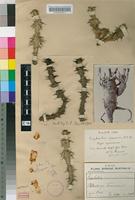
Type of Euphorbia enormis N.E.Br. [family EUPHORBIACEAE]
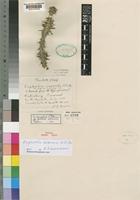
Isotype of Euphorbia enormis N.E.Br. [family EUPHORBIACEAE]
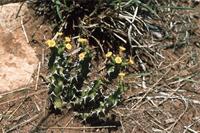
Euphorbia enormis N.E.Br.
Previous
Next

Name

Identification
Euphorbia enormis N.E.Br. [family EUPHORBIACEAE ]
Related name
  • Euphorbia enormis

Flora

Entry for EUPHORBIA enormis N. E. Br. [family EUPHORBIACEAE]
Herbarium
Royal Botanic Gardens, Kew (K)
Collection
Flora Capensis
Resource Type
Reference Sources
Entry From
Flora Capensis, Vol 5, Part 2, page 216, (1925) Author: (By N. E. BROWN, J. HUTCHINSON and D. PRAIN.)
Names
EUPHORBIA enormis N. E. Br. [family EUPHORBIACEAE]
Information
dwarf, succulent, spiny and leafless; rootstock obconic or somewhat carrot-shaped, 3–4 in. thick, fleshy, subterranean, producing numerous branches at its apex; branches erect, 1 1/4–5 1/2 in. long and up to 1 in. in diam. at the broadest parts, 3–4-angled, the shorter more or less clavate, the others with 1–4 constrictions, so that they falsely appear to be somewhat jointed, glabrous; angles compressed, irregularly toothed, with the larger teeth collected upon the more dilated parts of the branches, 2–5 lin. apart and 1–3 lin. prominent, deltoid; spine-shields extending above the spines to the flowering-eyes and below them into acute points, but not forming a continuous horny margin to the angles, bearing 2 pairs of spines, a pair close to the flowering-eye 1/4–1 lin. long or sometimes quite rudimentary, and a pair at the apex of the tooth 2–4 lin. long, diverging, grey; leaves quite rudimentary, 1/8– 1/3 lin. long, 1/2– 2/3 lin. broad, transverse, truncate, often represented by a raised line; flowers and fruit not seen. null
Distribution
KALAHARI REGION Transvaal; Pietersburg, Marloth, 5144!
Notes
Although the specimen seen is without flowers, it is so distinct from all the other South African species that there is no difficulty in distinguishing it. In habit and general appearance it somewhat resembles E. clavigera, but the spines are more rigid in texture, grey instead of pale brown, and the spine-shield extends in a rather broad band to the flowering-eye and there bears a pair of small spines, which is not the case in E. clavigera. The same characters, as well as its much stouter spines and branches, likewise separate it from E. Knuthii.

Related Materials

  • Terms and Conditions
  • Privacy Policy
  • Cookie Policy
  • Cookie Settings
  • Accessibility
  • Help
  • Contact Us
  • Facebook
  • Twitter
ITHAKA

JSTOR is part of ITHAKA, a not-for-profit organization helping the academic community use digital technologies to preserve the scholarly record and to advance research and teaching in sustainable ways.

©2000-2026 ITHAKA. All Rights Reserved. JSTOR®, the JSTOR logo, JPASS®, Aluka®, and ITHAKA® are registered trademarks of ITHAKA.

╳