JSTOR Global Plants Home
  • Home
  • Browse
  • About
  • Access
  • Account
    • Saved Items
    • Profile
  • Log in

Global Plants

Skip to Main Content
  • JSTOR Global Plants Home
  • Global Plants

    • Browse
    • About
    • Access
    • Account
      • Saved Items
      • Profile
Log in
  • Browse
  • About
  • Access
  • Account
    • Saved Items
    • Profile
Advanced Search

Compilation
Euphorbia contorta

7 Images see all

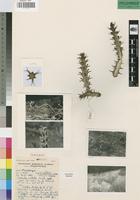
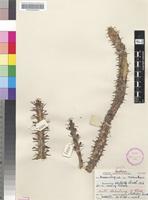
Isotype of Euphorbia contorta Leach [family EUPHORBIACEAE]
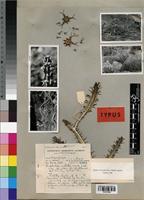
Isotype of Euphorbia contorta L. C. Leach [family EUPHORBIACEAE]
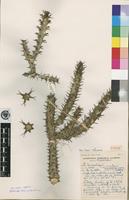
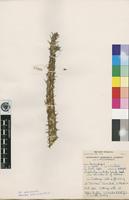
Type of Euphorbia contorta L.C.Leach [family EUPHORBIACEAE]
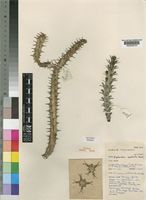
Isotype of Euphorbia contorta Leach [family EUPHORBIACEAE]
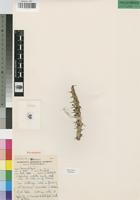
Isotype of Euphorbia contorta L.C.Leach [family EUPHORBIACEAE]
Paratype of Euphorbia contorta Leach [family EUPHORBIACEAE]
Type of Euphorbia contorta L.C.Leach [family EUPHORBIACEAE]
Previous
Next

Name

Identification
Isotype of Euphorbia contorta L. C. Leach [family EUPHORBIACEAE ] (stored under name); Verified by Data not digitized,
Related name
  • Euphorbia contorta

Flora

Entry for Euphorbia contorta L.C. Leach [family EUPHORBIACEAE]
Herbarium
Royal Botanic Gardens, Kew (K)
Collection
Flora Zambesiaca
Resource Type
Reference Sources
Entry From
FZ, Vol 9, Part 5, (2001) Author: S. Carter & L.C. Leach
Names
Euphorbia contorta L.C. Leach [family EUPHORBIACEAE], in Kirkia 4: 17, tab III, photos in tab IV (1964). —Court, Succ. Fl. South. Africa: 28 (1981). Type: Mozambique, c. 48 km west of Ribáuè, fl. 16.v.1961, Leach & Rutherford-Smith 10889 (SRGH, holotype; G; K; LISC; PRE).
Information
Spiny succulent sparsely branched untidy shrub, c. 1 m high.Branches spreading, sometimes scrambling, usually bent and often twisted, (4)5(7–11)-angled, sometimes constricted into segments to 30 cm long, 2.5–3 cm in diameter; angles acute, with prominent tubercles 8–20 mm apart along the margins.Spine shields 4–9 × 3 mm, obovate, separate; spines 3–10 mm long, narrowly divergent, carmine when young becoming grey; prickles 1–3 mm long.Leaves sessile, fleshy, 8–22 × 7–12 mm, ovate.Cymes solitary, simple, subsessile; branches 1–1.5 mm long; bracts 1.5 × 1.5 mm, subquadrate.Cyathia c. 3.5 × 5 mm, with obconic involucres; glands spreading, transversely oblong, 2.5 mm wide, touching, greenish-yellow, outer margin pinkish; lobes c. 1 × 1.25 mm, transversely elliptic, fimbriate, pale green, speckled red.Male flowers: fascicular bracts broadly flabellate, fimbriate, and bracteoles narrow, c. 3 mm long, laciniate; stamens c. 4.5 mm long.Female flower: styles to 2 mm long, free to the base, spreading recurved, stigmas capitate.Capsule red-brown, c. 3.5 × 4 mm, subglobose, pedicel 1 mm long.Seed ellipsoid, 2.5 × 1.75 mm, verrucose.
Habitat
Scattered, in shallow soil on granite slopes
Range
Restricted to the granite inselbergs of southern Niassa and Zambezia Provinces
Altitude range
480–700 m.
700
480
Distribution
Mozambique Z Gurué Distr., Lioma Mt., 11.vii.1943, Torre 5668A (PRE).Mozambique N Cuamba Distr., c. 27 km east of Cuamba (Nova Freixo), fl. 24.v.1961, Leach & Rutherford-Smith 10996 (K; SRGH).
Notes
Hargreaves has named one of his collections, no. 497 from Malawi, Machinga Distr., Mangombo Hill near Sonje, as Euphorbia tetracanthoides (Succ. Spurges Malawi: 42 (1987)), but this identification is extremely unlikely.I have not seen the specimen, but the locality and his sketches suggest it may be E. contorta

Related Materials

  • Terms and Conditions
  • Privacy Policy
  • Cookie Policy
  • Cookie Settings
  • Accessibility
  • Help
  • Contact Us
  • Facebook
  • Twitter
ITHAKA

JSTOR is part of ITHAKA, a not-for-profit organization helping the academic community use digital technologies to preserve the scholarly record and to advance research and teaching in sustainable ways.

©2000-2026 ITHAKA. All Rights Reserved. JSTOR®, the JSTOR logo, JPASS®, Aluka®, and ITHAKA® are registered trademarks of ITHAKA.

╳