JSTOR Global Plants Home
  • Home
  • Browse
  • About
  • Access
  • Account
    • Saved Items
    • Profile
  • Log in

Global Plants

Skip to Main Content
  • JSTOR Global Plants Home
  • Global Plants

    • Browse
    • About
    • Access
    • Account
      • Saved Items
      • Profile
Log in
  • Browse
  • About
  • Access
  • Account
    • Saved Items
    • Profile
Advanced Search

Compilation
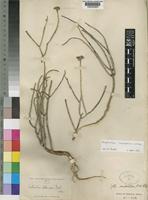
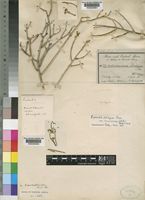
Euphorbia consobrina

3 Images see all

Euphorbia nubica N.E.Br. [family EUPHORBIACEAE]
Previous
Next

Name

Identification
Euphorbia consobrina N.E.Br. [family EUPHORBIACEAE ] Euphorbia unrecorded unrecorded [family EUPHORBIACEAE ] Euphorbia nubica N.E.Br. [family EUPHORBIACEAE ] (stored under name);
Related name
  • Euphorbia nubica
  • Euphorbia consobrina
  • Euphorbia schimperi
  • Euphorbia unrecorded

Flora

Entry for EUPHORBIA consobrina N. E. Br. [family EUPHORBIACEAE]
Herbarium
Royal Botanic Gardens, Kew (K)
Collection
Flora Somalia
Resource Type
Reference Sources
Entry From
Flora Somalia, Vol 1, (1993) Author: by S. Carter (Euphorbia, Monadenium), M. G. Gilbert (Acalypha, Andrachne, Antidesma, Bridelia, Caperonia, Cephalocroton, Chrozophora, Clutia, Dalechampia, Flueggea, Givotia, Manihot, Meineckia, Micrococca, Oldfieldia, Phyllanthus, Ricinus, Suregada, Tragia), and M. Thulin (Croton, Drypetes, Erythrococca, Excoecaria, Jatropha, Spirostachys and Thecacoris) [updated by M. Thulin 2008]
Names
EUPHORBIA consobrina N. E. Br. [family EUPHORBIACEAE], (1911).
Information
Densely branched shrub 30–100 cm high, occasionally subscandent to 2 m high; ultimate branchlets 2–4 cm long, succulent, 2–5 mm thick marked with fairly prominent brown callose leaf-scars, greyish green and often purple-blotched. Leaves sessile, lanceolate to linear-lanceolate, 5–35 x 2–5 mm; stipules absent. Cymes in terminal 2–5-branched umbels, with rays 3–6 mm long surrounding a central sessile cyathium which usually develops only male flowers; bracts sessile, ovate, 3.5 x 3 mm, usually persistent until capsule development. Cyathia 6.5 mm in diam.; glands 4, or 5 on the central cyathium, separate, 2.5 mm broad, yellow becoming red. Ovary glabrous; styles 2.5 mm long, joined at the base, with shortly bifid apices. Capsule exserted on a slightly recurved pedicel 3–6 mm long, distinctly 3-lobed, 4.5 x 5.5 mm. Seeds ovoid, 2.75 x 2 mm, minutely tuberculate, yellowish brown; caruncle 0.5 mm across.
Range
N2, 3; C1
Altitude range
0–2135 m.
Distribution (external)
Sudan (Red Sea Hills)
Arabian Peninsula
E Ethiopia
Notes
Ciin, enjir ad, ergin (Som.). Bally 11048; Lavranos & Carter & al. 24971; Kasmi, Mohamed & Hussein 5539. Variable in Somalia, and the name is applied here with reservation. Plants from the northeast mountain ranges have a similar erect habit, to 1 m high, as those from the type-locality in the Red Sea Hills (Sudan), but further south, at lower altitudes, habit becomes more straggly to almost subscandent. Characteristic features of the species are retained throughout this distribution, such as small cyathia, small distinctly lobed capsules and minutely tuberculate seeds. However, in Somalia, one significant characteristic of the species – persistent involucral bracts – is scarcely evident, such that a distinct taxon (or taxa) may be involved. Field study is required before this can be resolved.

Related Materials

  • Terms and Conditions
  • Privacy Policy
  • Cookie Policy
  • Cookie Settings
  • Accessibility
  • Help
  • Contact Us
  • Facebook
  • Twitter
ITHAKA

JSTOR is part of ITHAKA, a not-for-profit organization helping the academic community use digital technologies to preserve the scholarly record and to advance research and teaching in sustainable ways.

©2000-2026 ITHAKA. All Rights Reserved. JSTOR®, the JSTOR logo, JPASS®, Aluka®, and ITHAKA® are registered trademarks of ITHAKA.

╳