JSTOR Global Plants Home
  • Home
  • Browse
  • About
  • Access
  • Account
    • Saved Items
    • Profile
  • Log in

Global Plants

Skip to Main Content
  • JSTOR Global Plants Home
  • Global Plants

    • Browse
    • About
    • Access
    • Account
      • Saved Items
      • Profile
Log in
  • Browse
  • About
  • Access
  • Account
    • Saved Items
    • Profile
Advanced Search

Compilation
Euphorbia arrecta

5 Images see all

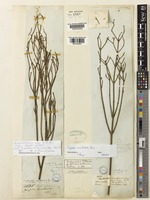
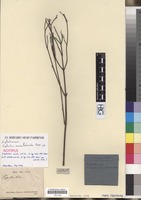
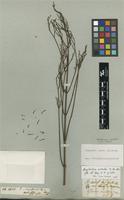
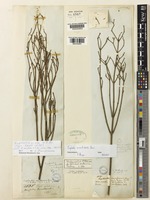
Euphorbia mixta N.E.Br. [family EUPHORBIACEAE]
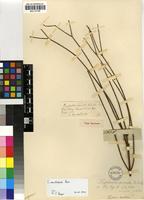
Isotype of Euphorbia mixta N.E. Br. [family EUPHORBIACEAE]
Type? of Euphorbia serpiformis Boiss. [family EUPHORBIACEAE]
Euphorbia mixta N.E.Br. [family EUPHORBIACEAE]
Type of Euphorbia arrecta N.E.Br. [family EUPHORBIACEAE]
Previous
Next

Name

Identification
Euphorbia arrecta N.E.Br. [family EUPHORBIACEAE ] Verified by Not on sheet, Euphorbia mixta N.E.Br. [family EUPHORBIACEAE ] (stored under name); Verified by Not on sheet,
Related name
  • Euphorbia serpiformis
  • Euphorbia arceuthobioides
  • Euphorbia arrecta
  • Euphorbia mixta

Flora

Entry for Euphorbia arrecta N.E. Br. [family EUPHORBIACEAE]
Herbarium
Royal Botanic Gardens, Kew (K)
Collection
Flora Zambesiaca
Resource Type
Reference Sources
Entry From
FZ, Vol 9, Part 5, (2001) Author: S. Carter & L.C. Leach
Names
Euphorbia arrecta N.E. Br. [family EUPHORBIACEAE], in Fries, Wiss. Ergebn. Schwed. Rhod.-Kongo-Exped.: 116 (1914) [non F.C. 5, 2: 283 (1915)]. —S. Carter in F.T.E.A., Euphorbiaceae, part 2: 456 (1988). Type: Zambia, Kuta, between Lakes Bangweulu and Tanganyika, fl. & fr. 22.x.1911, R.E. Fries 1078 (UPS, holotype; K, drawing of holotype).
Information
Perennial herb, with annual stems from a branched cylindrical woody rootstock; stems up to 45 cm high, sparsely branched, puberulous.Leaves usually reflexed on a petiole to 8 mm long; stipules glandular, minute; lamina to 5 × 0.8 cm, linear-lanceolate, obtuse at the apex, rounded at the base, minutely serrate with glandular teeth on the margins, pilose with long spreading hairs, midrib prominent on the lower surface.Cymes in axillary and terminal 3-branched umbels, with primary rays to 8 cm long, each forking once.Bracts similar to the leaves.Cyathia sessile, 3.5 × 5 mm, with puberulous funnel-shaped involucres; glands 4–5, 2.5 mm wide, transversely elliptic, minutely crenulate on the margin, spreading, reddish; lobes 1 mm long, subquadrate with a fringed ciliate margin.Male flowers: bracteoles fan-shaped, deeply laciniate, feathery; stamens 4 mm long.Female flower: ovary densely pubescent; styles 2.5 mm long, joined to halfway, with spreading thickened apices.Capsule exserted on a pilose pedicel 3.5 mm long, 6.5 × 7.5 mm, obtusely 3-lobed with a truncate base, sparsely pilose.Seeds 4.8 × 3.5 mm, ovoid, acutely triangular at the apex, obscurely 4-angled, surface obscurely and closely wrinkled, purplish-black.
Habitat
Brachystegia woodland amongst grasses, often appearing after annual fires
Altitude range
1150–1625 m.
1625
1150
Distribution
Zambia N Mbala Distr., Chilongowelo Farm, fl. & fr. 22.i.1955, Richards 4225 (K); 9.5 km from Mbala on Mbeya road, fl. 4.ix.1956, Richards 6107 (K).
Distribution (external)
south-western Tanzania

Related Materials

  • Terms and Conditions
  • Privacy Policy
  • Cookie Policy
  • Cookie Settings
  • Accessibility
  • Help
  • Contact Us
  • Facebook
  • Twitter
ITHAKA

JSTOR is part of ITHAKA, a not-for-profit organization helping the academic community use digital technologies to preserve the scholarly record and to advance research and teaching in sustainable ways.

©2000-2026 ITHAKA. All Rights Reserved. JSTOR®, the JSTOR logo, JPASS®, Aluka®, and ITHAKA® are registered trademarks of ITHAKA.

╳