JSTOR Global Plants Home
  • Home
  • Browse
  • About
  • Access
  • Account
    • Saved Items
    • Profile
  • Log in

Global Plants

Skip to Main Content
  • JSTOR Global Plants Home
  • Global Plants

    • Browse
    • About
    • Access
    • Account
      • Saved Items
      • Profile
Log in
  • Browse
  • About
  • Access
  • Account
    • Saved Items
    • Profile
Advanced Search

Compilation
Eupatorium pilosum

7 Images see all

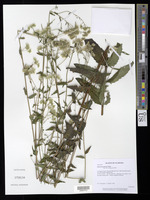
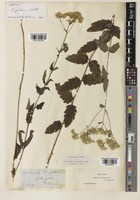
Eupatorium pilosum Walter [family ASTERACEAE]
Filed as Eupatorium lanceolatum Muhl. [family ASTERACEAE]
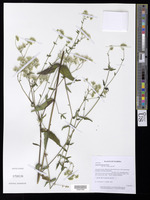
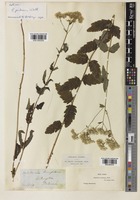
Eupatorium pilosum Walter [family ASTERACEAE]
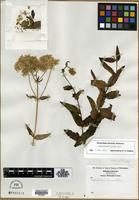
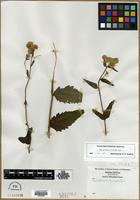
Eupatorium pilosum Walter [family COMPOSITAE]
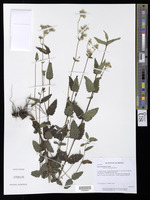
Filed as Eupatorium lanceolatum Muhl. [family ASTERACEAE]
Previous
Next

Name

Identification
Eupatorium lanceolatum Muhl. [family ASTERACEAE ] (stored under name); Verified by Not on Sheet, Eupatorium pilosum Walter [family ASTERACEAE ] Verified by Godfrey, R.K., 1973
Related name
  • Eupatorium lanceolatum
  • Eupatorium pilosum
Common name
  • Rough boneset, Flora of North America Vol. 21

Flora

Entry for Eupatorium pilosum Walter [family COMPOSITAE]
Herbarium
Flora of North America (FNA)
Collection
Flora of North America
Resource Type
Reference Sources
Entry From
Flora of North America, Vol 21,
Names
Eupatorium pilosum Walter [family COMPOSITAE], Fl. Carol., 199. 1788
Eupatorium rotundifolium Linnaeus var. saundersii (Porter ex Britton) Cronquist [family COMPOSITAE]
Eupatorium verbenifolium Michaux [family COMPOSITAE]
Treatment Author(s)
Kunsiri Chaw Siripun
Edward E. Schilling
Information
Perennials, 30–100+ cm. Stems (from short rhizomes) single, sparsely branched distally, densely puberulent to pilose throughout. Leaves usually opposite (distal sometimes alternate); simple, sessile or subsessile; blades ± 3-nerved (distal to bases), elliptic, lanceolate, or lance-ovate, 30–90 × 20–45 mm (lengths mostly 2–2.5 times widths), bases rounded to rounded-cuneate, margins unevenly serrate, apices acute to attenuate, faces puberulent, gland-dotted. Heads in corymbiform arrays. Phyllaries 7–10 in 2–3 series, oblong to lance-oblong, 2–7 × 1–1.5 mm, apices (sometimes whitish) acuminate to acute, mucronate, abaxial faces puberulent, gland-dotted. Florets 5; corollas 3.5–4 mm. Cypselae 3–4 mm; pappi of 30–50 bristles 4–5 mm. 2n = 20, 30, 40.
Phenology
jul-aug (summer), sep (fall)
Altitude range
20–100+ m;
Distribution
USA Ala.USA Conn.USA Del.USA Fla.USA Ga.USA Ky.USA La.USA Md.USA Mass.USA Miss.USA N.J.USA N.Y.USA N.C.USA Pa.USA R.I.USA S.C.USA Tenn.USA Va.USA W.Va.
Discussion
Eupatorium pilosum has been most commonly treated as a variety of E. rotundifolium; it is distinct morphologically by its leaves, which are narrower and 3-nerved distal to bases, rather than 3-nerved from bases. Distal leaves of E. pilosum tend to differ from the proximal by being alternate with entire margins.

Related Materials

  • Terms and Conditions
  • Privacy Policy
  • Cookie Policy
  • Cookie Settings
  • Accessibility
  • Help
  • Contact Us
  • Facebook
  • Twitter
ITHAKA

JSTOR is part of ITHAKA, a not-for-profit organization helping the academic community use digital technologies to preserve the scholarly record and to advance research and teaching in sustainable ways.

©2000-2026 ITHAKA. All Rights Reserved. JSTOR®, the JSTOR logo, JPASS®, Aluka®, and ITHAKA® are registered trademarks of ITHAKA.

╳