JSTOR Global Plants Home
  • Home
  • Browse
  • About
  • Access
  • Account
    • Saved Items
    • Profile
  • Log in

Global Plants

Skip to Main Content
  • JSTOR Global Plants Home
  • Global Plants

    • Browse
    • About
    • Access
    • Account
      • Saved Items
      • Profile
Log in
  • Browse
  • About
  • Access
  • Account
    • Saved Items
    • Profile
Advanced Search

Compilation
Eugenia guineensis

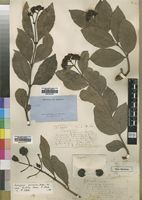
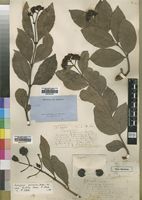
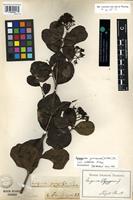
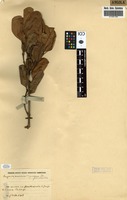
4 Images see all

Type of Syzygium guineense (Hiern) F.White ssp. huillense [family MYRTACEAE]
Filed as Syzygium guineense (Willd.) DC. var. littorale Keay [family MYRTACEAE]
Filed as Eugenia owariensis P.Beauv. [family MYRTACEAE]
Previous
Next

Name

Identification
Eugenia guineensis Hiern [family MYRTACEAE ] (stored under name); Syzygium guineense (Hiern) F.White [family MYRTACEAE ]
Related name
  • Syzygium guineense
  • Eugenia guineensis

Flora

Entry for Syzygium guineense Willd. DC. [family MYRTACEAE]
Herbarium
Royal Botanic Gardens, Kew (K)
Collection
Flora Zambesiaca
Resource Type
Reference Sources
Entry From
FZ, Vol 4, Part 0, page 183, (1978) Author: F. White
Names
Eugenia owariensis [family MYRTACEAE], sensu Bak. f. in Journ. Linn. Soc., Bot. 40: 71 (1911).—sensu Steedman, Trees etc. S. Rhod.: 56 (1933) non Beauv. (1810).
Calyptranthes guineensis Willd. [family MYRTACEAE], Sp. Pl. 2: 974 (1800). Type as above.
Eugenia guineensis Willd. Baill. ex Laness. [family MYRTACEAE], Pl. Ut. Col. Fr.: 822 (1886).—Sim. For. Fl. Port. E. Afr.: 67(1909). Type as above.
Syzygium guineense Willd. DC. [family MYRTACEAE], Prodr. 3: 259 (1828).—R. E. Fr., Wiss. Ergebn. Schwed. Rhod.-Kongo-Exped. 1: 176 (1914).—Burtt Davy, F.P.F.T. 1: 241 (1926).—O. B. Mill., B.C.L.: 45 (1948); in Journ. S. Afr. Bot. 18: 65 (1952).— Brenan & Greenway, T.T.C.L.: 380 (1949).—Codd, Trees & Shrubs Kruger Nat. Park: 136, t. 128 figs. a & b (1951).—Pardy in Rhod. Agric. Journ.: 76 cum photogr. (1952).—Eggeling & Dale, Indig. Trees Uganda: 273, tt. 12 & 60 (1952).—Wild, Guide Fl. Vict. Falls: 145 (1953); S. Rhod. Bot. Diet.: 130 (1953).—Brenan in Mem. N.Y. Bot. Gard. 8: 439 (1954).—WiUiamson, Useful Pl. NyasaL: 428 (1955).—Palgrave, Trees of Centr. Afr.: 287 cum. tab. & photogr. (1957).—Keay in F.W.T.A. ed. 2, 1: 240, t. 96 (1954).—Gomes & Sousa, Dendrol. Moçamb. 1: 235 cum tab. (1960); Dendrol. Moçamb. Estudo Geral 2: 613, t. 184 (1966).—Dale & Greenway, Kenya Trees & Shrubs: 335, t. 20 (1961).—F. White, F.F.N.R.: 303 (1962).—AmshoffinFl. Gab. 11: 13(1966); in C.F.A. 4: 104 (1970).—Friedrich-Holzhammer in Merxm., Prodr. Fl. SW. Afr. 97: 1 (1966).—Boutique in F.C.B. Myrtac.: 13 (1968).—Palmer & Pitman, Trees of S. Afr. 3: 1681 cum tab. etphotogr. (1972).—J. H. Ross, Fl. Natal: 260 (1972). TAB. 45 fig. E-H. Type from W. Africa.
Information
Small or medium-sized (elsewhere a large) evergreen tree or a suffrutex. Leaf-lamina 4 x 2–14 x 7 cm., very variable in shape, broadest at or near the middle, apex obtuse to acuminate, base cuneate; petiole 0·2–2·2 cm. long. Receptacle (including pseudopedicel) + calyx 0·35–0·65 cm. long; calyx +upper receptacle 0·15–0·25 cm. long; filaments 0·35–0·9 cm. long. Fruit subglobose or ellipsoid, 1·3–3·5 x 1·2–2·5 cm.
Range
Widespread in Africa from Sénégal to Somalia and southwards to SW. Africa, Botswana, S. Africa (the Transvaal and Eastern Cape Province).
Notes
Sysygium guineense, as interpreted here, is one of the most widespread African tree species. It certainly occurs in a greater range of vegetation types and shows a larger variety of growth forms than any other African plant. Outside our area it is widely distributed in the rain forests of the Guineo-Congolian Region and the montane forests of the Afromontane Region, as well as in riverine forest and woodland in the Sudanian Region. In habit it ranges from a lofty forest tree 30 m. or more tall with large plank buttresses to a rhizomatous suffrutex less than 30 cm. tall, but in other respects its structure varies little. The flowers are essentially uniform and the fruits show only slight difference in shape. Variation in leaf-shape and size at first sight appears to be continuous, but in the field much of this variation is seen to be closely correlated with ecology and habit. Even Engler as long ago as 1921 (Pflanzenw. Afr. 3, 2: 738) accepted S. guineense as a widespread transgressive species, the limits of which roughly correspond to those adopted here. Primarily on the basis of leaf-shape 11 subspecies can be recognized for Africa as a whole. Some of these are connected by intermediates, and others, were it not for ecogeographic weighting, might appear to be arbitrarily delimited, but the overwhelming majority of specimens occupy noda which can be well characterized in ecogeographical terms. The subspecies are thus biologically significant: not merely typological abstractions; they have objective reality. The species as a whole is possibly the most notorious ecological and chorological transgressor in Africa, but each subspecies is confined to a single major habitat or range of closely related habitats within a single major chorological unit, or is only slightly transgressive to about the same degree as its “ normal “ associates. The only exception to this is subsp. guineense which occurs in fringing forest and in woodland without showing any taxonomically significant differences. There are good reasons for believing that at least some of the complexity of S. guineense may be associated with apomixis. Apomixis, associated with nucellar polyembryony, has been reported for the Asiatic species, S. jambos. Polyembryony has also been found to occur in S. guineense subsp. guineense and subsp. huillense. The nature of this has not been studied developmentally, but, since polyembryony in Angiosperms is usually of the nucellar type, and is thus associated with at least facultative apomixis, it is quite likely that polyembryonic S. guineense is also apomictic. S. guineense and its relatives have much to offer the experimental taxonomist.

Related Materials

  • Terms and Conditions
  • Privacy Policy
  • Cookie Policy
  • Cookie Settings
  • Accessibility
  • Help
  • Contact Us
  • Facebook
  • Twitter
ITHAKA

JSTOR is part of ITHAKA, a not-for-profit organization helping the academic community use digital technologies to preserve the scholarly record and to advance research and teaching in sustainable ways.

©2000-2026 ITHAKA. All Rights Reserved. JSTOR®, the JSTOR logo, JPASS®, Aluka®, and ITHAKA® are registered trademarks of ITHAKA.

╳