JSTOR Global Plants Home
  • Home
  • Browse
  • About
  • Access
  • Account
    • Saved Items
    • Profile
  • Log in

Global Plants

Skip to Main Content
  • JSTOR Global Plants Home
  • Global Plants

    • Browse
    • About
    • Access
    • Account
      • Saved Items
      • Profile
Log in
  • Browse
  • About
  • Access
  • Account
    • Saved Items
    • Profile
Advanced Search

Compilation
Eugenia guineense

12 Images see all

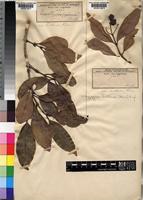
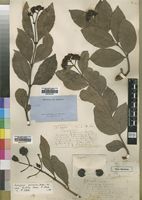
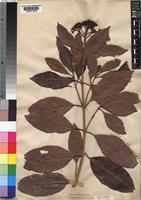
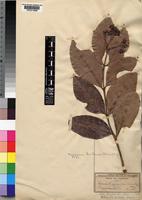
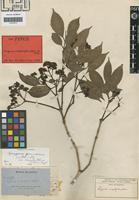
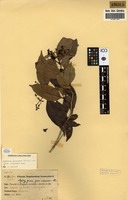
Syzygium huillense (Hiern) Engl. [family MYRTACEAE]
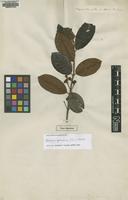
Type of Syzygium guineense (Hiern) F.White ssp. huillense [family MYRTACEAE]
Isotype of Eugenia urophylla Welw. ex Hiern [family MYRTACEAE]
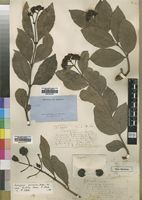
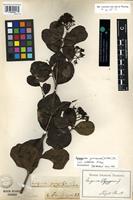
Type of Eugenia fourcadei Dummer [family MYRTACEAE]
Type of Syzygium guineense (Hiern) F.White ssp. huillense [family MYRTACEAE]
Type of Psidium guineense Sw. [family MYRTACEAE]
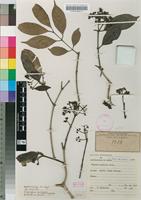
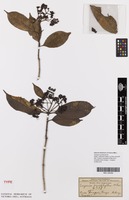
Filed as Syzygium guineense (Willd.) DC. var. littorale Keay [family MYRTACEAE]
Isosyntype of Eugenia urophylla Welw. ex Hiern [family MYRTACEAE]
Syzygium guineense (Willd.) DC. [family MYRTACEAE]
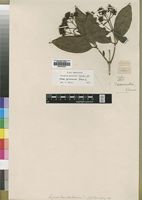
Syzygium huillense (Hiern) Engl. [family MYRTACEAE]
Isotype of Eugenia urophylla Welw. ex Hiern [family MYRTACEAE]
Filed as Syzygium guineense (Willd.) DC. var. guineense [family MYRTACEAE]
Previous
Next

Name

Identification
Eugenia guineense unrecorded [family MYRTACEAE ] Syzygium huillense (Hiern) Engl. [family MYRTACEAE ] (stored under name);
Related name
  • Syzygium guineense
  • Eugenia guineense
  • Syzygium huillense

Flora

Entry for SYZYGIUM guineense (Hiern) F. White subsp. huillense [family MYRTACEAE]
Herbarium
Royal Botanic Gardens, Kew (K)
Collection
Flora of Tropical East Africa
Resource Type
Reference Sources
Entry From
Flora of Tropical East Africa, page 1, (2001) Author: B Verdcourt, B.Sc., Ph.D.
Names
SYZYGIUM guineense (Hiern) F. White subsp. huillense [family MYRTACEAE], F.F.N.R.: 504, 304 (1963); Boutique, F.C.B. Myrtaceae: 17, fig. 2/f (1968) pro parte; F. White in F.Z. 4: 202, t. 45/h (1978). Type: Angola, Huila, between Mampula and Nene, Welwitsch 4401 (BM!, lecto., COI, K!, LISU, isolecto., chosen by Amshoff in Acta Bot. Neerl. 9: 406, 1960)
Eugenia guineense Hiern var. huillense [family MYRTACEAE], Cat. Afr. Pl. Welw. 1: 359 (1898) pro parte
Syzygium huillense (Hiern) Engl. [family MYRTACEAE], in E.J. 54: 339 (1917); Milne-Redh. in K.B. 2: 24 (1947); Amshoff in Acta Bot. Neerl. 9: 406 (1960) & in C.F.A. 4: 101 (1970)
Syzygium mumbwaense Greenway [family MYRTACEAE], in K.B. 1928: 196 (1928) pro parte excl. Bourne 91. Type: Zambia, Mumbwa, Chibuluma vlei, Macaulay 995 (K!, holo.)
Information
Subshrub (geopyrophyte) with woody annual shoots, typically (20–)45–60 cm tall (but merging with and otherwise indistinguishable from plants 0.9–4.5 m tall) from a woody underground rootstock. Leaves often drying a pale greyish brown, elliptic to obovate, 4–15.5 cm long, 2–7.5 cm wide, subacute, rounded acute to round or retuse at the apex, cuneate to round or almost cordate at the base; petiole usually short, (1–)2–5(–9) mm long. Calyces usually dry an orange-brown. Fruit purple or plum-coloured, 1.5–2(–3) cm long and wide.
Range
DISTR. T 4, 7, 8 (intermediates)
Altitude range
(1050–) 1450–1800 m
Distribution
TANZANIA Mpanda District 58 km S of Uvinsa, 30 Aug. 1950, Bullock 3265!TANZANIA Njombe District near Luwangu Mission, 10 Nov. 1960, Willan 541! & Njombe, 10 Dec. 1931, Lynes C6!
Distribution (external)
; Congo (Kinshasa)
Angola
Zambia
Zimbabwe
Notes
In East Africa there is little to support keeping this subspecies separate; small subshrubs are indistinguishable from 7.5 m trees save for size e.g. Davies 23 from Mbosi and Napper 877 from the Mbisi Forest; but over much of Congo (Kinshasa), Angola and Zambia subsp. huillense is apparently constant and distinct. As in so many Central African species comprising forest and savanna paired taxa where, despite of, or perhaps even because of, the constant advance and retreat of the evergreen forest and savanna interface due to climatic changes over several million years, there is still gene flow between the tall tree types of 30 m and the savanna pyrophytic subshrubs of 30 cm; it is very often impossible to distinguish herbarium specimens without habitat data. It is as inconvenient to try separating the two as it is silly to pretend that the two are not different. This is particularly the case when the forest form is a good timber tree and the savanna form is little more than a herb. Common sense demands that some name at some rank is available. In other cases the separation of the taxa is complete.

Related Materials

  • Terms and Conditions
  • Privacy Policy
  • Cookie Policy
  • Cookie Settings
  • Accessibility
  • Help
  • Contact Us
  • Facebook
  • Twitter
ITHAKA

JSTOR is part of ITHAKA, a not-for-profit organization helping the academic community use digital technologies to preserve the scholarly record and to advance research and teaching in sustainable ways.

©2000-2026 ITHAKA. All Rights Reserved. JSTOR®, the JSTOR logo, JPASS®, Aluka®, and ITHAKA® are registered trademarks of ITHAKA.

╳