JSTOR Global Plants Home
  • Home
  • Browse
  • About
  • Access
  • Account
    • Saved Items
    • Profile
  • Log in

Global Plants

Skip to Main Content
  • JSTOR Global Plants Home
  • Global Plants

    • Browse
    • About
    • Access
    • Account
      • Saved Items
      • Profile
Log in
  • Browse
  • About
  • Access
  • Account
    • Saved Items
    • Profile
Advanced Search

Compilation
Eugenia caryophyllata

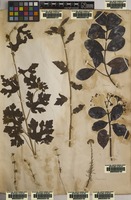
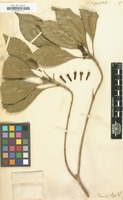
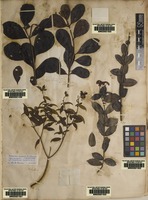
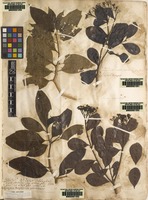
12 Images see all

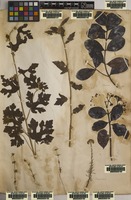
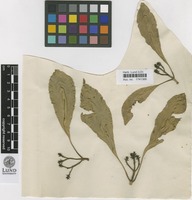
Filed as Caryophyllus indet. [family CARYOPHYLLACEAE]
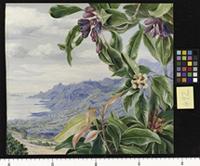
The Clove in fruit, and view over Mahe, Seychelles
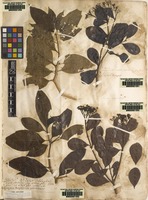
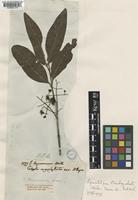
Original material of Myrtus caryophyllata L. [family MYRTACEAE]
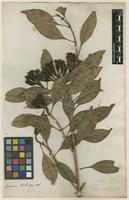
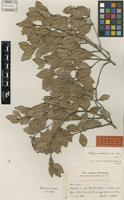
Eugenia caryophyllata Thunb. [family MYRTACEAE]
Syzygium heyneanum Wall. [family MYRTACEAE]
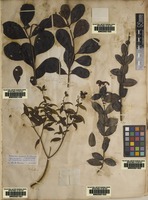
Type of Eugenia esnardiana Urb. & Ekman [family MYRTACEAE]
Original material of Myrtus caryophyllata L. [family MYRTACEAE]
Filed as Eugenia caryophyllata [family MYRTACEAE]
Original material of Myrtus caryophyllata L. [family MYRTACEAE]
Previous
Next

Name

Identification
Eugenia caryophyllata
Related name
  • Eugenia caryophyllata
Common name
  • prεkomama (FRI) (GHANA, AKAN-WASA), Burkill, H.M. 1985. The useful plants of west tropical Africa, Vol. 4
  • siminii = Xylopia aethiopica (Dumal) A.Rich., butapplied to exotic cloves (S&F) (SIERRA LEONE, KRIO), Burkill, H.M. 1985. The useful plants of west tropical Africa, Vol. 4
  • kanumfari from Arabic (JMD) (GHANA, FULA-FULFULDE (Ghana)), Burkill, H.M. 1985. The useful plants of west tropical Africa, Vol. 4
  • clove; ‘pepper’ (Ghana)., Burkill, H.M. 1985. The useful plants of west tropical Africa, Vol. 4
  • pepre (JMD) (GHANA, VULGAR), Burkill, H.M. 1985. The useful plants of west tropical Africa, Vol. 4
  • qernfel (RM) (MALI, ARABIC (Mali)), Burkill, H.M. 1985. The useful plants of west tropical Africa, Vol. 4
  • giroflier (the tree); girofle (the clove)., Burkill, H.M. 1985. The useful plants of west tropical Africa, Vol. 4

Flora

Entry for SYZYGIUM aromaticum (L.) Merr. & Perry [family MYRTACEAE]
Herbarium
Royal Botanic Gardens, Kew (K)
Collection
Flora of Tropical East Africa
Resource Type
Reference Sources
Entry From
Flora of Tropical East Africa, page 1, (2001) Author: B Verdcourt, B.Sc., Ph.D.
Names
SYZYGIUM aromaticum (L.) Merr. & Perry [family MYRTACEAE]
Caryophyllus aromaticus L. [family MYRTACEAE]
Eugenia aromatica (L.) Baill. [family MYRTACEAE], non O. Berg (U.O.P.Z.: 249 (1949)
Eugenia caryophyllata Thunb. [family MYRTACEAE], ;
Eugenia caryophyllus (Spreng.) Bullock & S.G. Harrison [family MYRTACEAE], ;
Jambosa caryophyllus (Spreng.) Nied. [family MYRTACEAE], T.T.C.L.: 377 (1949), Dale, Introd. Trees Uganda: 46 (1953).
Information
Tree 5–21 m tall, much branched with a bushy conical crown. Leaves pink when young, rather shining, elliptic or oblong-elliptic, about 10x5 cm, very narrowly attenuate at the base, smelling of cloves when crushed. Flowers in terminal cymose clusters; unopened buds green, pinkish or brilliant crimson; opened flowers purplish, about 6 mm wide but petals soon falling. Stamens greyish yellow. Fruits dark purple, oblong-ellipsoid, 2–2.5 cm long, 1.3 cm wide, juicy, usually 1-seeded.
Notes
Originally from the Moluccas, the clove tree was introduced into Zanzibar and Pemba in 1818 and rapidly became the major export accounting in the past for over 80% of the world’s supply of cloves (the sun-dried flower buds) and clove oil. For more information see U.O.P.Z.: 249–252 (1949) and for an extensive history of the crop in East Africa, Stuhlmann, Beiträge zur Kulturgeschichte von Ostafrika (Deutsch-Ost-Afrika vol. 10: 278–295 (1909), as Caryophyllus aromaticus ); it has also been cultivated at Amani (Tanzania. Lushoto District: Amani, 3 Feb. 1921, Soleman A.H. 6056 & 28 Oct. 1986, Ruffo & Mmari 2115 & Sigi Nursery, Lunguza, 23 Mar. 1973, Ruffo 1055; Zanzibar, Kanaoni, 31 Jan. 1929, Greenway 1252; Pemba, 13 Oct. 1929, Burtt Davy 22537). The trees start flowering at about 7–8 years old and live for 60–70 years or more.

Related Materials

  • Terms and Conditions
  • Privacy Policy
  • Cookie Policy
  • Cookie Settings
  • Accessibility
  • Help
  • Contact Us
  • Facebook
  • Twitter
ITHAKA

JSTOR is part of ITHAKA, a not-for-profit organization helping the academic community use digital technologies to preserve the scholarly record and to advance research and teaching in sustainable ways.

©2000-2026 ITHAKA. All Rights Reserved. JSTOR®, the JSTOR logo, JPASS®, Aluka®, and ITHAKA® are registered trademarks of ITHAKA.

╳