JSTOR Global Plants Home
  • Home
  • Browse
  • About
  • Access
  • Account
    • Saved Items
    • Profile
  • Log in

Global Plants

Skip to Main Content
  • JSTOR Global Plants Home
  • Global Plants

    • Browse
    • About
    • Access
    • Account
      • Saved Items
      • Profile
Log in
  • Browse
  • About
  • Access
  • Account
    • Saved Items
    • Profile
Advanced Search

Compilation
Eugenia brasiliensis

7 Images see all

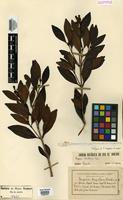
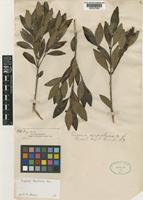
Isotype of Eugenia augustana Kiaersk. [family MYRTACEAE]
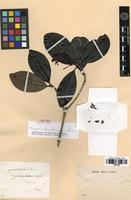
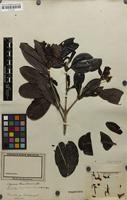
Isotype of Eugenia brasiliensis Lam. [family MYRTACEAE]
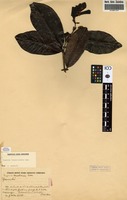
Filed as Eugenia brasiliensis Lam. [family MYRTACEAE]
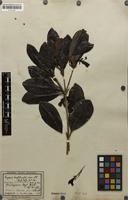
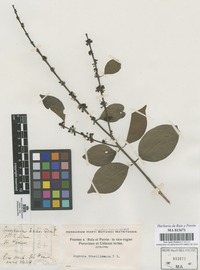
Eugenia augustana Kiaersk. [family MYRTACEAE]
Filed as Eugenia brasiliensis Lam. [family MYRTACEAE]
Original material of Eugenia brasiliensis Lam. not on sheet not on sheet [family MYRTACEAE]
Previous
Next

Name

Identification
Eugenia augustana Kiaersk. [family MYRTACEAE ] (stored under name); Eugenia brasiliensis Lam. [family MYRTACEAE ] Verified by Barroso, G.M.,
Related name
  • Eugenia augustana
  • Eugenia brasiliensis

Flora

Entry for EUGENIA brasiliensis Lam. [family MYRTACEAE]
Herbarium
Royal Botanic Gardens, Kew (K)
Collection
Flora of Tropical East Africa
Resource Type
Reference Sources
Entry From
Flora of Tropical East Africa, page 1, (2001) Author: B Verdcourt, B.Sc., Ph.D.
Names
EUGENIA brasiliensis Lam. [family MYRTACEAE]
EUGENIA dombeyi (Spreng.) Skeels [family MYRTACEAE]
Information
A slender ornamental tree 7.5–15 m tall with reddish young shoots. Leaves ovate or oblong-obovate, 6.3–16 cm long, 2.5–6.3 cm wide, obtuse at the apex, cuneate at the base, coriaceous; petiole 1 cm long; flowers solitary; pedicels 2.5–5 cm long with 2 basal narrowly elliptic densely glandular-pustulate bracts 1.3 cm long. Calyx-lobes green. Petals white, 1.5 cm long; fruit green turning bright red to dark purple or nearly black, oblate, 1.2–2 cm diameter with persistent sepals 1.25 cm long, edible.
Notes
E. dombeyi ( Spreng .) Skeels known by a variety of similar names such as ‘grubixameira’, ‘grumixama’, ‘grumichama’ etc. was formerly cultivated in Tanzania at Mombo ( Veith A.H. 6678) and is recorded in gardening literature as being grown in Kenya (, non Aubl.; T.T.C.L.: 376 (1949)).

Related Materials

  • Terms and Conditions
  • Privacy Policy
  • Cookie Policy
  • Cookie Settings
  • Accessibility
  • Help
  • Contact Us
  • Facebook
  • Twitter
ITHAKA

JSTOR is part of ITHAKA, a not-for-profit organization helping the academic community use digital technologies to preserve the scholarly record and to advance research and teaching in sustainable ways.

©2000-2026 ITHAKA. All Rights Reserved. JSTOR®, the JSTOR logo, JPASS®, Aluka®, and ITHAKA® are registered trademarks of ITHAKA.

╳