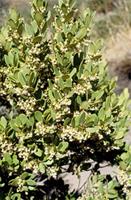
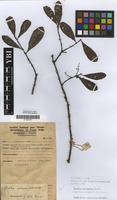
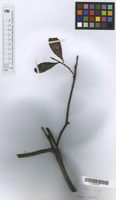
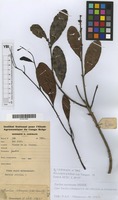
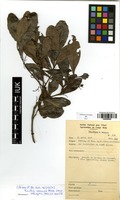
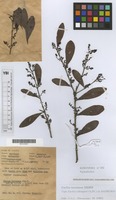
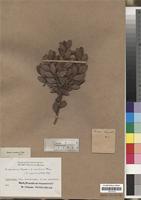
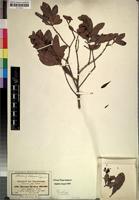
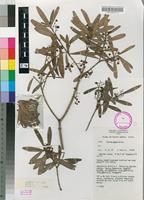
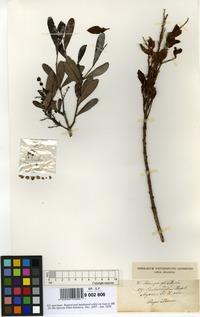
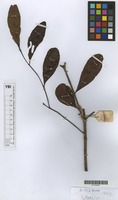
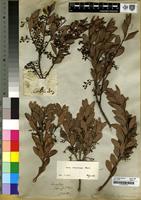
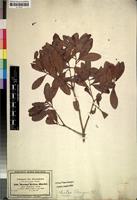
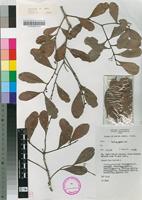
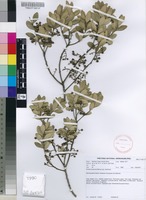
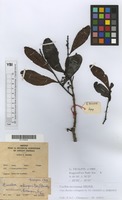
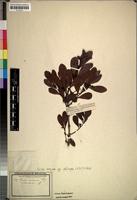
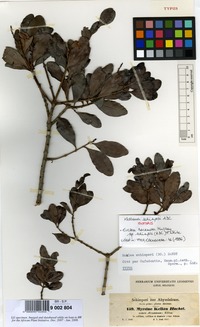
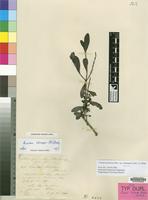
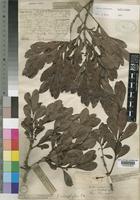
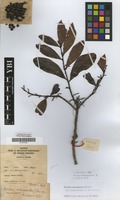
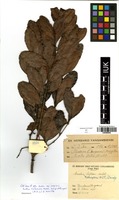
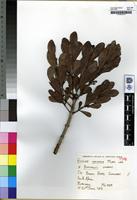
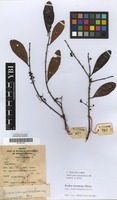
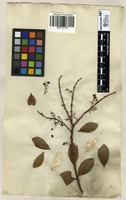
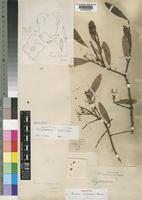
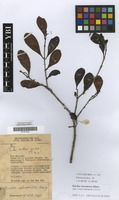
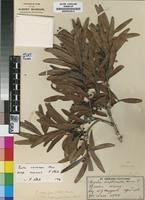
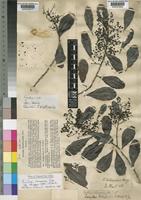
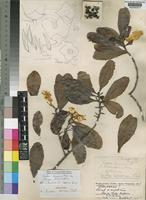
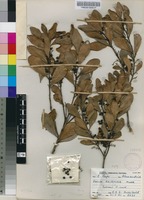
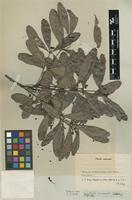
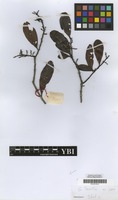
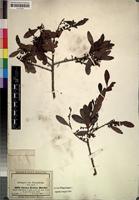
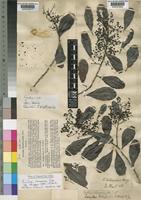
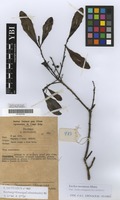
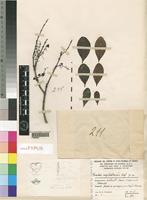
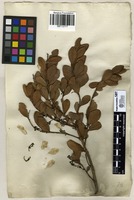
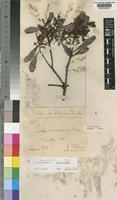
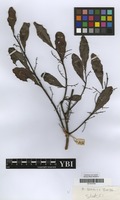
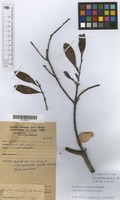
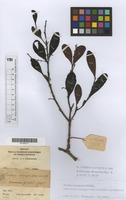
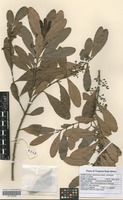
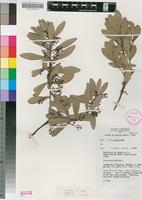
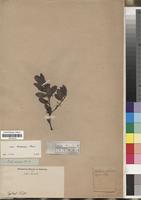
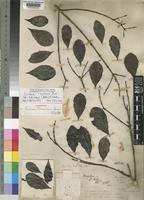
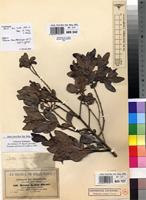
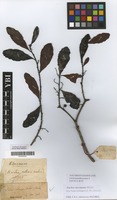
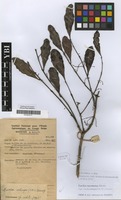
an evergreen densely branched glabrous and shining shrub, usually about 6–9 ft. high with the main stem 5–6 in. in diam., sometimes a small tree of 18 ft.; bark usually grey, smooth; branchlets often reddish, angular, ascending, leafy; leaves alternate, subopposite or opposite, obovate or oblong-obovate, rounded at the apex, wedge-shaped or obtusely narrowed at the base, rigidly coriaceous, green above, pale beneath, not wavy on the revolute margin, entire, 1/2–2 1/2 in. long, 1/3–1 1/4 in. broad; venation slightly prominent on both surfaces; petioles 1/20– 3/20 in. long; racemes 1/2–1 1/4 in. long, axillary, at length drooping, 4–13-flowered; flowers diœcious, white, drooping. Male flowers 4- (or rarely 5–6-) merous, campanulate, glabrous, 1/10– 1/7 in. long; pedicels 1/10– 1/4 in. long; calyx short, cleft half-way down; lobes deltoid; corolla deeply lobed; lobes oval, obtuse or subacute, spreading or erect; stamens 12–18, in two rows; filaments 1/50– 1/20 in. long; anthers lanceolate, thick, 1/24– 1/14 in. long, erect, with a few hairs or glabrous; pollen white; ovary rudimentary; styles 2, erect, terete, white. Female flowers tetramerous or rarely pentamerous, ovoid, rather smaller than the male ones; pedicels 1/10– 1/8 in. long; calyx hemispherical, cleft half-way down; lobes ovate, acute; corolla deeply lobed; lobes not reflexed; staminodes 2–4, glabrous; ovary usually hairy, 4-celled; styles 2; ovules solitary in the cells; fruit globular, glabrescent or glabrous, black, 1-celled, 1-seeded, 1/5 in. in diam. null