JSTOR Global Plants Home
  • Home
  • Browse
  • About
  • Access
  • Account
    • Saved Items
    • Profile
  • Log in

Global Plants

Skip to Main Content
  • JSTOR Global Plants Home
  • Global Plants

    • Browse
    • About
    • Access
    • Account
      • Saved Items
      • Profile
Log in
  • Browse
  • About
  • Access
  • Account
    • Saved Items
    • Profile
Advanced Search

Compilation
Eucalyptus grandis

6 Images see all

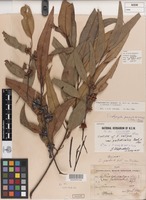
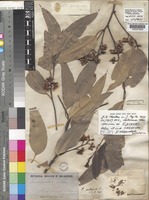
Lectotype of Eucalyptus grandis W.Hill [family MYRTACEAE]
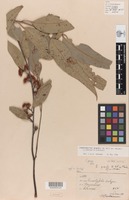
Syntype of Eucalyptus grandis W.Hill [family MYRTACEAE]
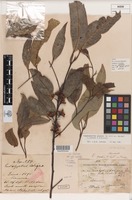
Syntype of Eucalyptus saligna var. pallidivalvis R.T.Baker & H.G.Sm. [family MYRTACEAE]
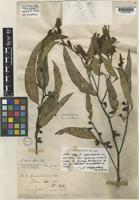
Type? of Eucalyptus grandis Hill ex Maiden [family MYRTACEAE]
Eucalyptus grandis W.Hill [family MYRTACEAE]
Paratype of Eucalyptus grandis W.Hill ex Maiden [family MYRTACEAE]
Previous
Next

Name

Identification
Eucalyptus grandis W.Hill [family MYRTACEAE ] (stored under name); Eucalyptus saligna Sm. [family MYRTACEAE ] Verified by Chippendale, G.M., Eucalyptus resinifera Sm. [family MYRTACEAE ] Verified by Chippendale, G.M.,
Related name
  • Eucalyptus grandis
  • Eucalyptus resinifera
  • Eucalyptus saligna

Flora

Entry for EUCALYPTUS grandis W. Hill [family MYRTACEAE]
Herbarium
Royal Botanic Gardens, Kew (K)
Collection
Flora of Tropical East Africa
Resource Type
Reference Sources
Entry From
Flora of Tropical East Africa, page 1, (2001) Author: B Verdcourt, B.Sc., Ph.D.
Names
EUCALYPTUS grandis W. Hill [family MYRTACEAE], Cat. Nat. Industr. Prod. Queensland (London Exhib.): 25 (1862) (not seen); Dale, Introd. Trees Uganda: 37 (1953); F. White in F.Z. 4: 209, t. 46/d (1978); Fl. Austral. 19: 198, fig. 64/e–f (1988); Friis in Fl. Eth. 2 (2): 91, fig. 72.6/7–8 (1996). Type: Australia, New South Wales, Hill 74 (K!, ? holo.)
Information
Tree to 55 m with white, grey-white or blue-green smooth bark except for basal 4 m which has some rough flaky bark. Juvenile leaves ovate, adult lanceolate, 10–16 cm long, 2–3 cm wide; petiole channelled, 1.5–2 cm long. Umbels 7–11-flowered; peduncle flattened, 0.8–1.8 cm long; pedicels absent or angular, up to 3 mm long. Buds ovoid or broadly fusiform [glaucous]; operculum conical or slightly rostrate, 3–4 mm long, 4–5 mm wide [usually shorter than calyx-tube]. Calyx-tube obconical to campanulate, 3–4 mm long, 4–5 mm wide. Fruits subpyriform [cylindric-conic], 5–8 mm long, 4–7 mm wide with narrow level or descending disc and 4–5[6] scarcely exserted [or flush] incurved [match-like] valves [contracted at mouth]. Fig. 7/17, p. 38.
Range
DISTR. U 1?, 3, 4; K 4, 5; T 2–4, 7
Distribution
UGANDA Mengo District Namanve Plantations compt 13, 28 Apr. 1959, Hughes 352!KENYA Kisumu-Londiani District Londiani Forest Nursery, 10 Feb. 1953, Pudden 12 (EA)TANZANIA Iringa District Lugoda tea estate, 10 May 1968, Renvoize & Abdallah 2091!KENYA Machakos District 5.5 km N of Nunguni, Kithemba Village, 10 May 1968, Mwangangi 912!
Notes
An important timber tree with wood resistant to borers. Hybrids said to be with E. tereticornis, E. botryoides and E. camaldulensis have been reported from several places.

Related Materials

  • Terms and Conditions
  • Privacy Policy
  • Cookie Policy
  • Cookie Settings
  • Accessibility
  • Help
  • Contact Us
  • Facebook
  • Twitter
ITHAKA

JSTOR is part of ITHAKA, a not-for-profit organization helping the academic community use digital technologies to preserve the scholarly record and to advance research and teaching in sustainable ways.

©2000-2026 ITHAKA. All Rights Reserved. JSTOR®, the JSTOR logo, JPASS®, Aluka®, and ITHAKA® are registered trademarks of ITHAKA.

╳