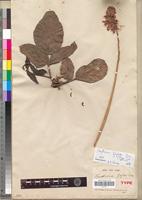
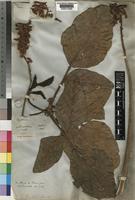
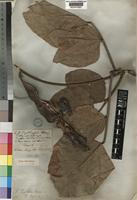
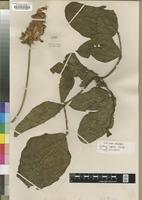
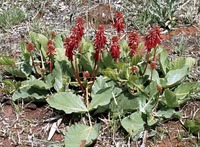
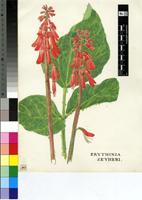
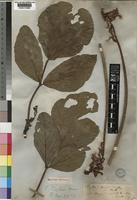
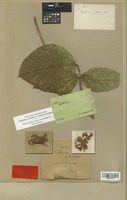
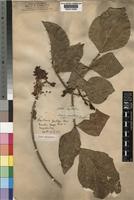
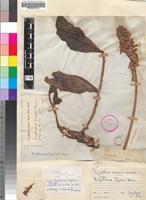
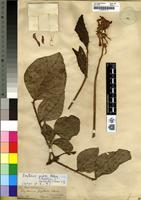
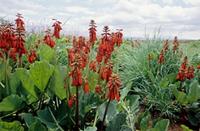
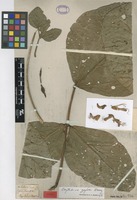
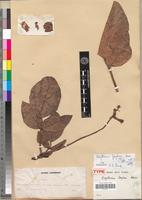
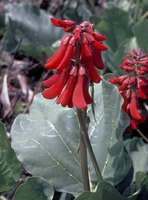
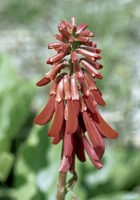
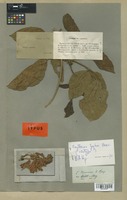
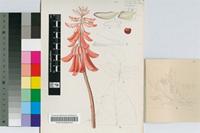
arborescent?; branches, petioles, and the nerves of the leaves prickly; petioles araneo-pubescent, ribstriate; terminal leaflet broadly ovate, subacute, lateral ovate-oblong or ovato-lanceolate, subcuneate at base, all prominently ribbed and veined beneath; stipules oblong, obtuse, or subacute; racemes on long peduncles, densely many-flowered; calyx puberulous, tubular, obsoletely crenate; vexillum scarcely velvetty; vexillary stamen nearly free to the base; legumes torulose, unarmed, subglabrate. Very near E. Humei, but a much larger and coarser plant, and perhaps arborescent; judging from the leaves which are crowded round the end of the twigs. Stipules 3/4–1 inch long, thick and leathery, much larger than those of E. Humei. Petioles 6–8 inches long, 2–2 1/2 lines in diameter, ribbed and furrowed. Terminal leaflet 3–6 inches long, 2–5 inches broad, sparsely prickly on both sides, subacute, but not acuminate; the lateral 2–5 inches long, 1 1/2–3 wide, less ovate. Peduncles 10–16 inches long; the rachis tomentulose. Calyx somewhat membranous, truncate, with very obsolete lobes. Legumes 7–8 inches long, 3/4 inch wide at the seeds, narrowed between. Flowers crimson.