JSTOR Global Plants Home
  • Home
  • Browse
  • About
  • Access
  • Account
    • Saved Items
    • Profile
  • Log in

Global Plants

Skip to Main Content
  • JSTOR Global Plants Home
  • Global Plants

    • Browse
    • About
    • Access
    • Account
      • Saved Items
      • Profile
Log in
  • Browse
  • About
  • Access
  • Account
    • Saved Items
    • Profile
Advanced Search

Compilation
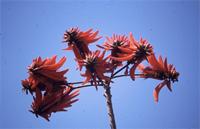
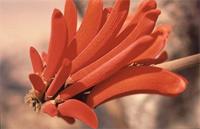
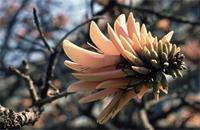
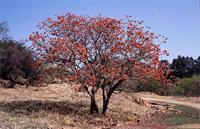
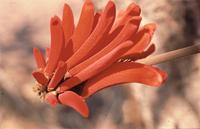
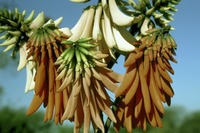
Erythrina lysistemon

28 Images see all

Erythrina lysistemon Hutch.
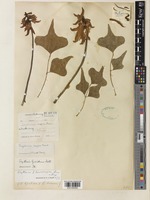
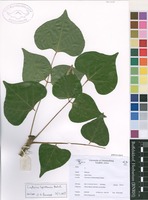
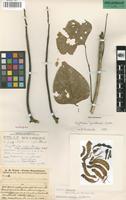
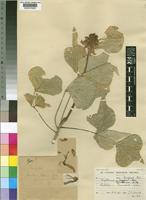
Holotype of Erythrina hennessyae Barneby & Krukoff [family LEGUMINOSAE]
Erythrina lysistemon Hutch.
Erythrina hennessyae Barneby & Krukoff [family LEGUMINOSAE]
Erythrina lysistemon Hutch.
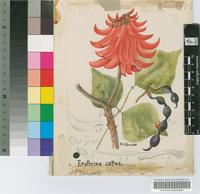
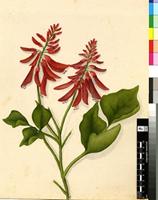
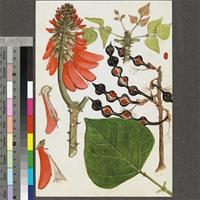
Erythrina lysistemon Hutch. original illustration from the 'Trees of Central Africa'
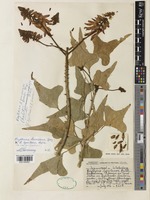
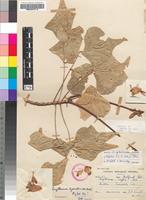
Isotype of Erythrina lysistemon Hutch. [family FABACEAE]
Erythrina lysistemon Hutch.
Filed as Erythrina lysistemon Hutch. [family FABACEAE]
Isotype of Erythrina caffra Thunb. var. mossambicensis Baker f. [family LEGUMINOSAE-PAP]
Erythrina lysistemon Hutch.
Erythrina lysistemon Hutch. [family LEGUMINOSAE-PAPILIONOIDEAE]
Previous
Next

Name

Identification
Erythrina lysistemon Hutch. [family LEGUMINOSAE ]
Related name
  • Erythrina lysistemon

Flora

Entry for Erythrina lysistemon Hutch. [family LEGUMINOSAE]
Herbarium
Royal Botanic Gardens, Kew (K)
Collection
Flora Zambesiaca
Resource Type
Reference Sources
Entry From
FZ, Vol 3, Part 5, (2001) Author: B. Mackinder, R. Pasquet, R. Polhill and B. Verdcourt
Names
Erythrina lysistemon Hutch. [family LEGUMINOSAE], in Bull. Misc. Inform., Kew 1933: 422 (1933). —Collett in Bothalia 4: 223 (1941). —Hutchinson, Botanist South. Africa: 370, 665 (1946). —Codd in Bothalia 6: 509, t. 3 (1956). —Verdcourt in F.T.E.A., Leguminosae, Pap.: 547 (1971). —Hennessy, South African Erythrinas: 17, t. 5 (1972). —Drummond in Kirkia 8: 220 (1972). —Krukoff & Barneby in Lloydia 37: 406, fig. on p. 407 (1974); in Allertonia 3: 131, t. 109 (1982). —Lock, Leg. Afr. Check-list: 411 (1989). —Hennessy in Bothalia 21: 7, fig. 3.12–3.17 (1991). —Mackinder in Kirkia 14: 118 (1993). Type from South Africa (Mpumalanga).
Erythrina caffra [family LEGUMINOSAE], sensu Harvey in F.C. 2: 236 (1862) pro parte. —sensu E.G. Baker, Legum. Trop. Africa: 369 (1929). —sensu Burtt Davy, Fl. Pl. Ferns Transvaal, part 2: 415 (1932). —sensu Miller, Check-lists For. Trees Shrubs Bech. Prot.: 25 (1948); in J. S. African Bot. 18: 32 (1952), non Thunb.
Erythrina humei [family LEGUMINOSAE], sensu J.G.Baker in F.T.A. 2: 182 (1871), non E. Mey.
Erythrina humeana [family LEGUMINOSAE], sensu E.G.Baker in J. Linn. Soc., Bot. 40: 57 (1911). —sensu Eyles in Trans. Roy. Soc. South Africa 5: 381 (1916), non Spreng.
Erythrina caffra var. mossambicensis Baker f. [family LEGUMINOSAE], in J. Bot. 76: 238 (1938). Type: Mozambique, Niassa, Maniamba, Torre 523 (COI, holotype; BM; FHO).
Information
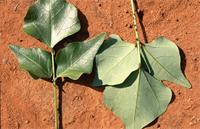
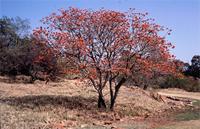
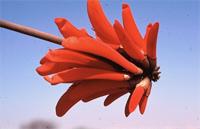
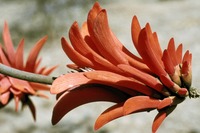
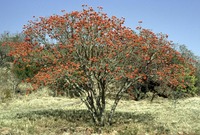
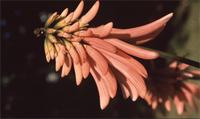
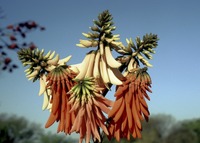
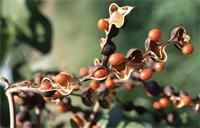
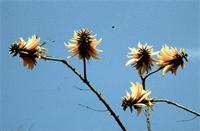
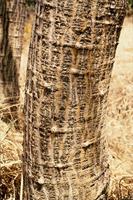
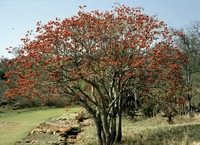
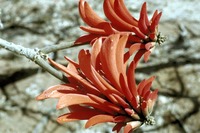
Tree 2–12(20) m tall, bark grey or grey-brown, smooth, not corky, with prickles; branches armed with prickles. Leaves scattered or clustered at ends of twigs, unarmed, glabrous; terminal leaflet 4.5–12(13) × 3.5–10(12) cm, broadly to very broadly ovate or deltate, sometimes longer than broad, acuminate; lateral leaflets 4–11 × 2.5–7 cm, broadly ovate, asymmetric at base; petiole 3.5–8.5 cm long, glabrous when mature, with 0–2 prickles; rhachis 8.5 cm long; petiolules 3–7 mm long; stipules 2–3 mm long, ovate, caducous. Inflorescence a dense terminal pseudoraceme; flowers declined towards the rhachis; peduncle (4)6–22 cm long, ferruginous hairy becoming glabrous at maturity; rhachis 2–10 cm long; bracts 4 mm long, ovate; pedicels 2 mm long; bracteoles 3–4 mm long, linear, caducous. Calyx 1–1.4 cm long, 2-lipped, tomentose. Corolla red, glabrous; standard 2.4–5.5(6.5) × 1–2.1 cm, elliptic to obovate, not reflexed, enclosing other petals and stamens; wings 9–11 × 3–4 mm, oblong; keel 7–10 × 3–5 mm, narrowly oblong, the petals fused along their lower margin. Vexillary stamen free, others fused into a sheath along two-thirds of their length. Ovary 1–1.7 cm long, narrowly cylindrical. Pod black, 12–30 × 1.2–1.8 cm, irregularly constricted between the (1)3–8 seeds, glabrous when mature. Seeds red, 6–8 × 4–6 × 2–3 mm; hilum black, 3 mm long, elliptic.
Habitat
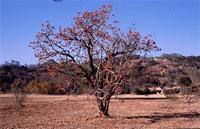
In dry habitats, scrub and wooded grassland in Botswana and western Zimbabwe and deciduous woodlands in central and eastern Zimbabwe, Malawi and Mozambique; also on coastal sand dunes in southern Mozambique;
Altitude range
0–1600 m.
1600
0
Distribution
Mozambique M Matutuíne Distr., 15 km from Zitundo towards Matutuíne (Bela Vista), fl. 5.vii.1973, Correia & Marques 2908 (K; LISC; SRGH).Mozambique MS between Dombe and Mavita, fl. 19.vi.1942, Torre 4369 (LISC).Mozambique Z Milange Distr., slopes of Mt. Tumbini, fl. 1.viii.1948, Andrada 1810 (LISC).Zimbabwe S Mberengwa Distr., Ngobe Dip, fr. 11.xii.1953, Wild 4343 (K; LISC; SRGH).Zimbabwe E Chimanimani Distr., Cashel road c. 10 km east of Chimanimani (Melsetter Village), fl. & fr. 21.ix.1960, Rutherford-Smith 143 (EA; MO; SRGH).Zimbabwe C Marondera Distr., fr. 16.vii.1958, Corby 885 (LISC; SRGH).Mozambique N Lichinga (Vila Cabral), fl. 23.ix.1958, R. Monteiro 83 (LISC).Malawi S Blantyre Distr., fl. & fr. 24.viii.1941, A.J.W. Hornby 2239 (EAH).Zimbabwe W Matopos, fl. & fr. 17.viii.1952, Plowes 1461 (K; MO; SRGH).Botswana SE Lobatse, Peleng Hill, fl. 4.viii.1984, Woollard 1457 (SRGH).
Distribution (external)
Tanzania
Swaziland
South Africa
Notes
No material was seen from Gaza and Inhambane Districts in Mozambique but it is likely that it occurs there.For hybridisation with E. abyssinica Lam. ex DC. see under that species.

Related Materials

  • Terms and Conditions
  • Privacy Policy
  • Cookie Policy
  • Cookie Settings
  • Accessibility
  • Help
  • Contact Us
  • Facebook
  • Twitter
ITHAKA

JSTOR is part of ITHAKA, a not-for-profit organization helping the academic community use digital technologies to preserve the scholarly record and to advance research and teaching in sustainable ways.

©2000-2026 ITHAKA. All Rights Reserved. JSTOR®, the JSTOR logo, JPASS®, Aluka®, and ITHAKA® are registered trademarks of ITHAKA.

╳