JSTOR Global Plants Home
  • Home
  • Browse
  • About
  • Access
  • Account
    • Saved Items
    • Profile
  • Log in

Global Plants

Skip to Main Content
  • JSTOR Global Plants Home
  • Global Plants

    • Browse
    • About
    • Access
    • Account
      • Saved Items
      • Profile
Log in
  • Browse
  • About
  • Access
  • Account
    • Saved Items
    • Profile
Advanced Search

Compilation
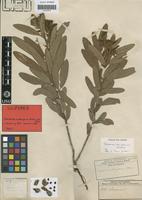
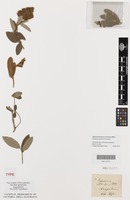
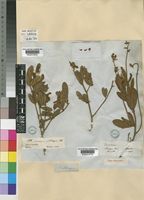
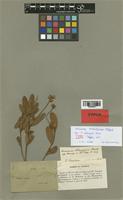
Eriosema pauciflorum

16 Images see all

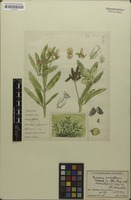
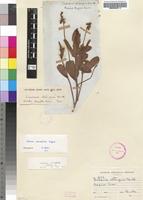
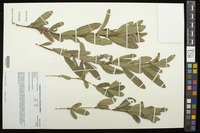
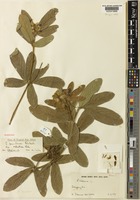
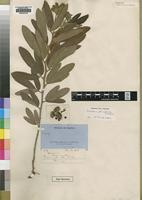
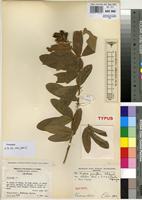
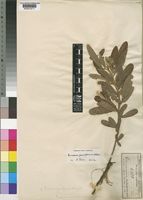
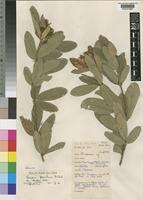
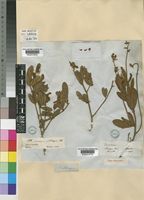
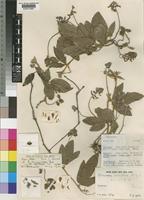
Eriosema pauciflorum Klotzsch
Filed as Eriosema burkei Benth. ex Harv. & Sond. [family FABACEAE]
Isosyntype of Eriosema oblongum Benth. ex Harv. [family FABACEAE]
Eriosema pauciflorum Klotzsch [family FABACEAE]
Eriosema pauciflorum Klotzsch
Holotype of Eriosema pauciflorum Klotzsch var. robustum Verdc. [family LEGUMINOSAE-PAPILIONOIDEAE]
Type of Eriosema pauciflorum Klotzsch [family LEGUMINOSAE]
Isotype of Eriosema pauciflorum Klotzsch var. robustum Verdc. [family FABACEAE]
Type of Eriosema andongense Hiern [family LEGUMINOSAE-PAPILIONOIDEAE]
Isotype of Eriosema pauciflorum Klotzsch var. robustum Verdc. [family LEGUMINOSAE-PAPILIONOIDEAE]
Eriosema pauciflorum Klotzsch [family LEGUMINOSAE-PAPILIONOIDEAE]
Holotype of Eriosema rhynchosioides Baker var. multiflorum Verdc. [family LEGUMINOSAE-PAPILIONOIDEAE]
Isotype of Eriosema andongense Hiern ex Bak. [family LEGUMINOSAE-PAP]
Isosyntype of Eriosema oblongum Benth. ex Harv. [family FABACEAE]
Eriosema pauciflorum Klotzsch [family LEGUMINOSAE-PAPILIONOIDEAE]
Eriosema oblongum Harv. [family FABACEAE]
Previous
Next

Name

Identification
Pseudoeriosema andongense (Welw. ex Baker) Hauman [family LEGUMINOSAE ] (stored under name); Eriosema pauciflorum Klotzsch [family LEGUMINOSAE ] Verified by Torre,A.,
Related name
  • Pseudoeriosema andongense
  • Eriosema oblongum
  • Eriosema rhynchosioides
  • Eriosema pauciflorum
  • Eriosema andongense

Flora

Entry for Eriosema pauciflorum Klotzsch [family LEGUMINOSAE]
Herbarium
Royal Botanic Gardens, Kew (K)
Collection
Flora Zambesiaca
Resource Type
Reference Sources
Entry From
FZ, Vol 3, Part 5, (2001) Author: B. Mackinder, R. Pasquet, R. Polhill and B. Verdcourt
Names
Eriosema pauciflorum Klotzsch [family LEGUMINOSAE], in Peters, Naturw. Reise Mossambique 6, part 1: 31 (1861). —J.G. Baker in F.T.A. 2: 226 (1871). —Harms in Warburg, Kunene-Samb.-Exped. Baum: 265 (1903). —Haydon in E.G. Baker, Legum. Trop. Africa: 509 (1929). —Hauman in F.C.B. 6: 228 (1954). —Torre in C.F.A. 3: 339 (1966). —Verdcourt in F.T.E.A., Leguminosae, Pap.: 792 (1971). —Jacques-Félix in Adansonia, Sér. 2, 11: 164 (1971). —Drummond in Kirkia 8: 220 (1972). —Lock, Leg. Afr. Check-list: 404 (1989). Type: Mozambique, Sena, Peters (B†, holotype; BM, drawing).
Eriosema oblongum Benth. ex Harv. [family LEGUMINOSAE], in F.C. 2: 259 (1862). —Eyles in Trans. Roy. Soc. South Africa 5: 383 (1916). Type from South Africa (Gauteng).
Eriosema andongense Hiern ex Baker f. [family LEGUMINOSAE], in J. Bot. 33: 148 (1895). —Haydon in E.G. Baker, Legum. Trop. Africa: 509 (1929). Type from Angola.
Information
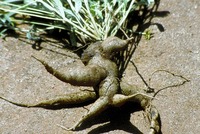
Prostrate, ascending or suberect pyrophytic herb or subshrub, with several to many unbranched or sparsely branched stems 10–45(80) cm long from a woody rootstock. Stems of few to many internodes, with dense covering of short pubescence and longer spreading ferruginous rather bristly hairs. Leaflets 3, often paler beneath, 2.7–9.5(10.5) × 1.1–2.2(3.3) cm, elliptic to narrowly oblong or obovate, rounded and mucronulate or rarely subacute at the apex, ± rounded or cuneate at the base, softly pubescent and glandular on both surfaces or sometimes with dense grey felted indumentum beneath; venation usually impressed above and raised beneath; nerves often reddish beneath; petioles 2.7 mm long; rhachis 4.5–8 mm long; petiolules c. 2 mm long; stipules 6–10 × 1.5–2.5 mm, lanceolate, hairy, veined. Racemes axillary, the flowering part 1.5–3 × 2.3 cm; peduncle (1)3–16 cm long, with spreading pubescence; pedicels c. 1.5 mm long; bracts eventually falling, 5 × 1 mm, lanceolate, hairy. Calyx with covering of long and short hairs and glands, 6–8.5 mm long; lobes lanceolate, acute, c. 1–2 times as long as the tube. Standard red outside and yellow inside or all yellow, 0.95–1.45 cm × (4.5)5–7.5 mm, obovate-oblong, relatively sparsely hairy in central area only or pubescent all over the outside, glandular; wings yellow; keel cream-coloured. Pods 1.5–2 × 0.9–1.25 cm, elliptic, covered with long ferruginous hairs, short hairs and glands. Seeds brown, densely speckled black, 5.5 × 4 × 2 mm, oblong; rim aril cream-coloured.
Habitat
Grassland, dambo edges, open plains in Kalahari Sand woodland, Baikaea scrub, Brachystegia and Acacia woodland, old cultivations, etc., usually part of pre-rain flora
Altitude range
540–1750 m.
1750
540
Distribution
Mozambique MS Sussundenga Distr., Rotanda, 21 km from Messambuzi on road towards Mavita, fl. & fr. 17.xi.1965, Torre & Correia 13024 (LISC).Mozambique Z Lugela Distr., Namagoa Estate, fl. 20.x.1948, Faulkner Kew 321 (K).Malawi S Mulanje (Mlanje) Mt., Whyte (K).Zimbabwe S (fide Drummond, loc. cit.).Zimbabwe E Mutasa Distr., Odzani R. Valley, 1915, Teague 473 (K; BOL).Zimbabwe C Harare, Mutare (Umtali) road, beyond Rodia Fertilizer Factory, fl. & fr. 18.x.1960, Rutherford-Smith 282 (K; SRGH).Mozambique N near Lake Malawi (Nyasa) (probably opposite Likoma Island), W.P. Johnson 462 (K).Zimbabwe W Hwange (Wankie) National Park, near Dupi Pan, fl. & fr. 21.xi.1968, Rushworth 1270 (K; LISC; SRGH).Zimbabwe N (fide Drummond, loc. cit.).Malawi N Karonga Distr., Vinthukutu Forest Reserve, fr. 7.i.1978, Pawek 13578 (K; MO).Zambia B Sesheke Distr., Machili, fl. & fr. 14.x.1960, Fanshawe 5839 (K; NDO).Botswana N Chobe National Park, between Serondella and Ngwezumba R., fl. 17.x.1972, Pope, Biegel & Russell 807 (K; SRGH).
Distribution (external)
Ghana
Central African Republic
Sudan
Rwanda
Burundi
Kenya
Tanzania
Angola
South Africa
Notes
Fanshawe 6821 (Zambia, Barotse, Masese, fr. 15.v.1962, (K; NDO)) from dambo/woodland margin on Kalahari Sand is var. robustum Verdc. (in Kew Bull. 25: 145 (1971)) described from NW Tanzania with larger leaflets and short peduncles. It is, however, less well characterised than I thought, and rather similar specimens have been collected in Malawi, Mozambique and Botswana. It may be a case of second flowering on shoots much more developed than when the plant first flowers or developing under atypical climatic conditions. Fieldwork will probably show it is not worth retaining.

Related Materials

  • Terms and Conditions
  • Privacy Policy
  • Cookie Policy
  • Cookie Settings
  • Accessibility
  • Help
  • Contact Us
  • Facebook
  • Twitter
ITHAKA

JSTOR is part of ITHAKA, a not-for-profit organization helping the academic community use digital technologies to preserve the scholarly record and to advance research and teaching in sustainable ways.

©2000-2026 ITHAKA. All Rights Reserved. JSTOR®, the JSTOR logo, JPASS®, Aluka®, and ITHAKA® are registered trademarks of ITHAKA.

╳