JSTOR Global Plants Home
  • Home
  • Browse
  • About
  • Access
  • Account
    • Saved Items
    • Profile
  • Log in

Global Plants

Skip to Main Content
  • JSTOR Global Plants Home
  • Global Plants

    • Browse
    • About
    • Access
    • Account
      • Saved Items
      • Profile
Log in
  • Browse
  • About
  • Access
  • Account
    • Saved Items
    • Profile
Advanced Search

Compilation
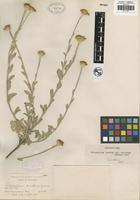
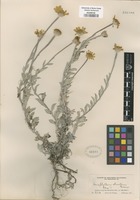
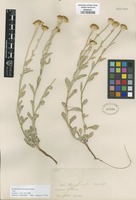
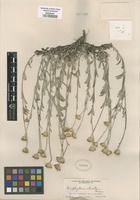
Eriophyllum obovatum

4 Images see all

Original material of Eriophyllum obovatum Greene [family ASTERACEAE]
Holotype of Eriophyllum obovatum Greene [family ASTERACEAE]
Original material of Eriophyllum obovatum Greene [family ASTERACEAE]
Previous
Next

Name

Identification
Eriophyllum obovatum Greene [family ASTERACEAE ] (stored under name); Verified by Not on Sheet, Eriophyllum lanatum (Pursh) J. Forbes [family ASTERACEAE ] Verified by Constance, Lincoln, 1933
Related name
  • Eriophyllum obovatum
  • Eriophyllum lanatum

Flora

Entry for Eriophyllum lanatum (Pursh) J. Forbes var. obovatum (Greene) H. M. Hall [family COMPOSITAE]
Herbarium
Flora of North America (FNA)
Collection
Flora of North America
Resource Type
Reference Sources
Entry From
Flora of North America, Vol 21,
Names
Eriophyllum lanatum (Pursh) J. Forbes var. obovatum (Greene) H. M. Hall [family COMPOSITAE], Univ. Calif. Publ. Bot., 3: 186. 1907
Eriophyllum obovatum Greene [family COMPOSITAE], Erythea, 3: 123. 1895
Treatment Author(s)
Dale E. Johnson
John S. Mooring
Information
Perennials (± taprooted). Proximal leaves alternate; blades oblanceolate, margins entire or coarsely serrate, plane, faces densely woolly. Heads borne singly or 2–3 per array. Peduncles mostly 4–10(–15) cm. Involucres 10–12 mm diam. Ray florets 10–13; laminae 6–7 mm. Cypselae 2.5–4 mm; pappi 0.4–1.2 mm. 2n =16.
Conservation Status
of conservation concern;
Phenology
jun-jul (summer)
Altitude range
1300–2500 m;
Distribution
USA Calif.
Discussion
Variety obovatum is known only from the Greenhorn and the San Bernardino mountains (M. Skinner and B. Pavlik 1994). It is apparently entirely diploid (J. S. Mooring 1975) and is suspected of forming natural hybrids with Eriophyllum confertiflorum (L. Constance 1937). The scarcely distinguishable var. lanceolatum is disjunct by 800 km northward.

Related Materials

  • Terms and Conditions
  • Privacy Policy
  • Cookie Policy
  • Cookie Settings
  • Accessibility
  • Help
  • Contact Us
  • Facebook
  • Twitter
ITHAKA

JSTOR is part of ITHAKA, a not-for-profit organization helping the academic community use digital technologies to preserve the scholarly record and to advance research and teaching in sustainable ways.

©2000-2026 ITHAKA. All Rights Reserved. JSTOR®, the JSTOR logo, JPASS®, Aluka®, and ITHAKA® are registered trademarks of ITHAKA.

╳