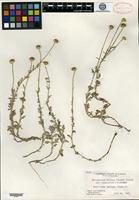
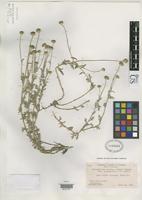
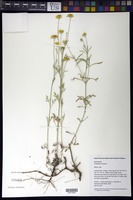
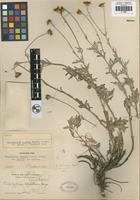
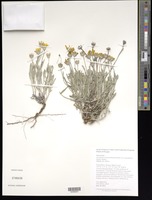
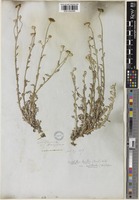
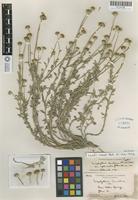
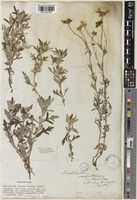
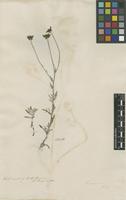
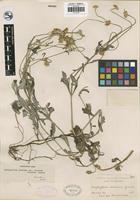
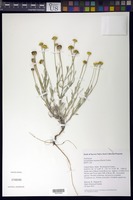
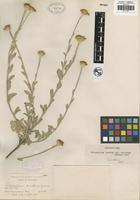
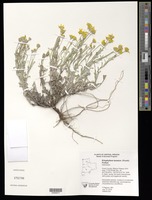
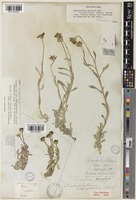
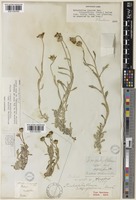
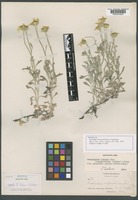
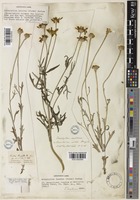
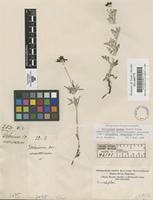
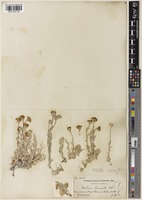
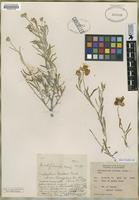
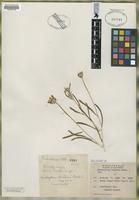
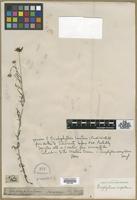
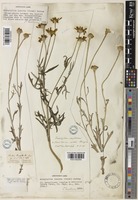
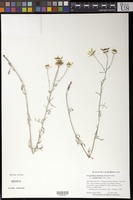
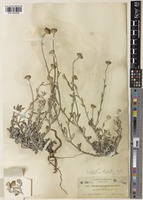
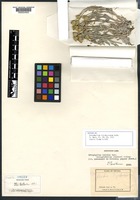
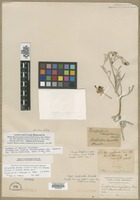
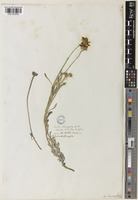
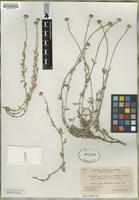
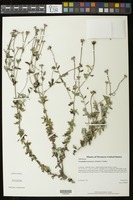
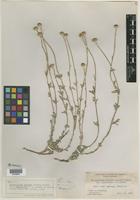
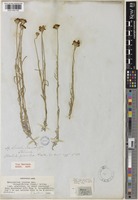
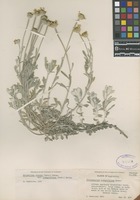
Entry for Eriophyllum lanatum (Pursh) J. Forbes [family COMPOSITAE]
Entry From
Flora of North America, Vol 21,
Discussion
Eriophyllum lanatum is a polyploid complex of intergrading regional facies treated here as varieties. Artificial hybridization studies show that strong barriers to interbreeding exist among the varieties at the diploid level (J. S. Mooring 2001). In nature, morphologically intermediate polyploid populations often occur in regions where the ranges of the varieties approach one another. Edaphic factors and light intensity also make identification more difficult by strongly influencing leaf morphology and sizes of structures. For example, cultivated individuals of var. achillioides may have laciniately toothed rather than pinnatifid leaves. Rarely, plants of different varieties maintain their identity while growing side by side. In some instances, one is diploid and the other tetraploid; in others both are diploid. Varieties arachnoideum, croceum, grandiflorum, and obovatum apparently form natural hybrids with E. confertiflorum var. confertiflorum; past hybridizations may have resulted in the origin of E. latilobum and E. jepsonii (L. Constance 1937; P. A. Munz 1959; Mooring 1994) and E. confertiflorum var. tanacetiflorum (Mooring 1994).
Our treatment of Eriophyllum lanatum closely follows that of L. Constance (1937), which was done without benefit of cytogeographic studies. The key is to modal populations of the varieties, usually based on living plants.
Some varieties have been introduced into cultivation as ornamentals.