JSTOR Global Plants Home
  • Home
  • Browse
  • About
  • Access
  • Account
    • Saved Items
    • Profile
  • Log in

Global Plants

Skip to Main Content
  • JSTOR Global Plants Home
  • Global Plants

    • Browse
    • About
    • Access
    • Account
      • Saved Items
      • Profile
Log in
  • Browse
  • About
  • Access
  • Account
    • Saved Items
    • Profile
Advanced Search

Compilation
Eriochloa annulata

11 Images see all

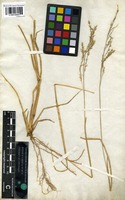
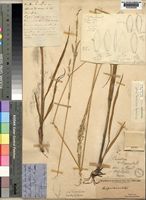
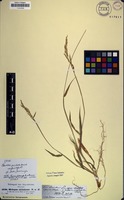
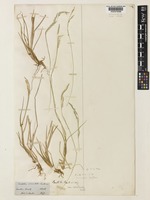
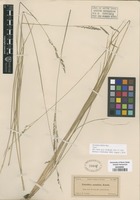
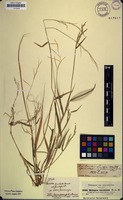
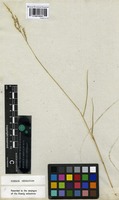
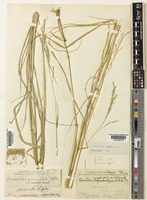
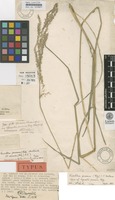
Type? of Paspalum annulatum Flüggé [family POACEAE]
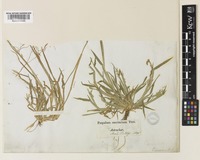
Isosyntype of Panicum annulatum A.Rich. [family POACEAE]
Type? of Eriochloa procera (Retz.) C.E. Hubb. [family POACEAE]
Eriochloa procera (Retz.) C.E.Hubb. [family POACEAE]
Holotype of Entolasia imbricata Stapf [family POACEAE]
Isosyntype of Panicum annulatum A.Rich. [family POACEAE]
Eriochloa pseudoacrotricha (Thell.) J.M.Black [family POACEAE]
Type? of Eriochloa debilis Mez [family POACEAE]
Eriochloa procera (Retz.) C. E. Hubbard [family POACEAE]
Lectotype of Agrostis procera Retz. [family POACEAE]
Eriochloa succincta Kunth [family POACEAE]
Previous
Next

Name

Identification
Entolasia imbricata Stapf [family POACEAE ] (stored under name); Verified by Stapf, O., Helopus annulatus Nees [family POACEAE ] Eriochloa annulata Kunth [family POACEAE ]
Related name
  • Eriochloa annulata
  • Entolasia imbricata
  • Panicum annulatum
  • Helopus annulatus

Flora

Entry for ERIOCHLOA ramosa O. Kuntze [family POACEAE]
Herbarium
Royal Botanic Gardens, Kew (K)
Collection
Flora of Tropical Africa
Resource Type
Reference Sources
Entry From
Flora of Tropical Africa, Vol 9, page 1, (1917) Author: (By O. STAPF.)
Names
ERIOCHLOA ramosa O. Kuntze [family POACEAE], Rev. Gen. Pl. ii. 775. —Hack. in Bull. Acad. Int. Bot. xvi. 19; Merrill in Philipp. Journ. Sc. i. Suppl. 348; Hitchcock in Contr. U.S. Nat. Herb. xii. 208.
Eriochloa annulata Kunth [family POACEAE], Rév. Gram. i. 30, and Enum. i. 73; Duthie, List Grass. N.W. India, 2; Benth. Fl. Hongkong, 409; Hack. in Engl. Jahrb. vi. 233.
Eriochloa annulata Rendle var. nov [family POACEAE], in Gregory, Great Rift Valley, 399.
Eriochloa polystachya Duthie [family POACEAE], Ill. Indig. Fodd. Grass. Ind. t. 41; Fodd. Grass. N. Ind. 2; Hook. f. Fl. Brit Ind. vii. 20; Rendle in Journ. Linn. Soc. Bot. xxxvi. 320; not of H. B. & K.
Milium ramosum Retz. [family ], Obs. vi. 22; Roxb. Fl. Ind. i. 317; Griff. Not. iii. 15; Ic. Pl. Asiat. t. 139, f. 60.
Agrostis ramosa Poir. [family POACEAE], Encycl. Suppl. i. 257.
Paspalum annulatum Fluegge [family POACEAE], Monogr. Pasp. 133; Trin. Sp. Gram. Ic. t. 133.
Helopus lævis Trin. ex Spreng. [family POACEAE], Neue Entdeck. ii. 49.
Helopus annulatus Steud. [family POACEAE], Syn. Glum. i. 99; not of Nees.
Piptatherum annulatum Presl [family POACEAE], Rel. Haenk. i. 221; not of Raddi.
Information
Annual (sometimes becoming perennial ?), tufted, from less than 1 ft. to over 2 ft. high. Culms geniculately ascending or erect, moderately slender to rather stout, 4–6- (rarely more-) noded, branched from the lower and frequently also from the intermediate nodes, glabrous. Leafsheaths often somewhat loose, subherbaceous, finely striate, smooth, quite glabrous except at the usually delicately pubescent nodes, very rarely with a few minute hairs; ligules reduced to a line of cilia; blades linear, from 2–6 (rarely more) in. by 2–4 (rarely 5) lin., slightly succulent and rigid, quite glabrous, very smooth, midrib very slender, lateral nerves very fine, numerous and close, the primary usually hardly differentiated. Panicle flaccid, narrow or more or less open, but always secund, 3–6 in. long (rarely under 3 in.), of usually numerous suberect or obliquely spreading flexuous or drooping distant racemes; common axis slender, subterete, channelled, striate, smooth and glabrous except at the scaberulous edges of the channel; racemes peduncled (the lowest with the peduncles up to over 1 in. long), or the uppermost subsessile, usually simple or in robust specimens more or less compound downwards with short secondary racemes, 1 1/2– 1/2 in. long; rhachis flat on the back 3/20– 1/4 lin. wide, with a slender acute projecting midrib on the face (hence more or less triquetrous in cross section), scaberulous all over; pedicels 2-nate or solitary, the longer of a pair up to 3/4 or almost 1 lin. long, slender, finely scaberulous, occasionally with a very few fine hairs from the upper part, tips subdiscoid. Spikelets 2-seriate, laterally contiguous, oblong, acute, mostly 1 1/2 lin. long, rarely less, rarely longer, pale green; basal bead-like internode pale or one half blackish-purple, up to 1/6 lin. in diam. Lower glume reduced to a narrow membranous cupular rim around the bead; upper very faintly 5-nerved, finely and appressedly and often scantily silky, very acute or minutely mucronate, but without an awnlet. Lower floret reduced to an empty valve, equalling and very similar to the upper glume. Upper floret finely punctate, 1 lin. long; valve with a mucro 3/20– 1/5 lin. long. Anthers 1/2 lin. long.
Range
Common throughout tropical Asia; introduced into Ascension Island, St. Helena and Cuba.
Distribution
German East Africa Mozamb. Dist. Usambara; by streams near Dugu, Holst, 3207!Portuguese East Africa Mozamb. Dist. by the Luabo River, Kirk ! Beira, Rogers, 13114!British East Africa Nile Land near Njemps, Lake Baringo, Gregory !
Notes
E. ramosa and the following species (E. acrotricha) are very closely allied and might, on a wider conception of the species, be treated as subspecies of a polymorphic type which would also include an Australian form described by Bailey as E. decumbens, in Queensl. Agr. Journ. i. 234, and in Queensl. Fl. 1815, and figured in his Cat. Queensl. Pl. fig. 584. E. ramosa as understood here appears to be remarkably uniform throughout Asia in respect to the size, shape and structure of the spikelets. Gregory's and one of Roger's specimens, quoted above have remarkably small spikelets (1 lin. long) and practically glabrous nodes. Another piece, however, of Roger's no. 13114 has spikelets of the usual size.

Related Materials

  • Terms and Conditions
  • Privacy Policy
  • Cookie Policy
  • Cookie Settings
  • Accessibility
  • Help
  • Contact Us
  • Facebook
  • Twitter
ITHAKA

JSTOR is part of ITHAKA, a not-for-profit organization helping the academic community use digital technologies to preserve the scholarly record and to advance research and teaching in sustainable ways.

©2000-2026 ITHAKA. All Rights Reserved. JSTOR®, the JSTOR logo, JPASS®, Aluka®, and ITHAKA® are registered trademarks of ITHAKA.

╳