JSTOR Global Plants Home
  • Home
  • Browse
  • About
  • Access
  • Account
    • Saved Items
    • Profile
  • Log in

Global Plants

Skip to Main Content
  • JSTOR Global Plants Home
  • Global Plants

    • Browse
    • About
    • Access
    • Account
      • Saved Items
      • Profile
Log in
  • Browse
  • About
  • Access
  • Account
    • Saved Items
    • Profile
Advanced Search

Compilation
Erigeron lobatus

9 Images see all

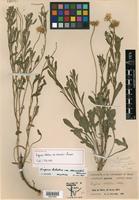
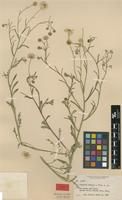
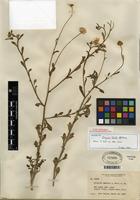
Holotype of Erigeron lobatus A. Nelson var. warnockii Shinners [family ASTERACEAE]
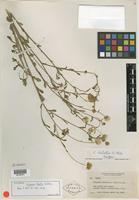
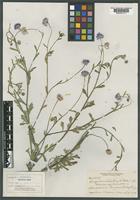
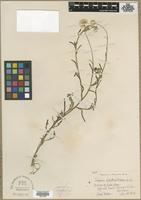
Isotype of Erigeron lobatus A. Nelson [family ASTERACEAE]
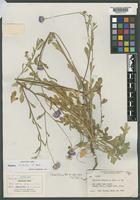
Holotype of Erigeron lobatus A. Nelson [family ASTERACEAE]
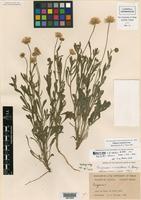
Isotype of Erigeron lobatus A. Nelson var. warnockii Shinners [family ASTERACEAE]
Isotype of Erigeron lobatus A.Nelson [family ASTERACEAE]
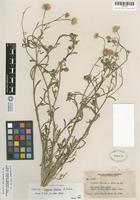
Isotype of Erigeron lobatus A. Nelson [family ASTERACEAE]
Type? of Erigeron lobatus Nelson [family ASTERACEAE]
Isotype of Erigeron lobatus A. Nelson [family ASTERACEAE]
Previous
Next

Name

Identification
Isotype of Erigeron lobatus A. Nelson [family ASTERACEAE ] (stored under name); Verified by Nelson, A.,
Related name
  • Erigeron lobatus
Common name
  • Plains fleabane, Flora of North America Vol. 20
  • Lobed fleabane, Flora of North America Vol. 20

Flora

Entry for Erigeron lobatus A. Nelson [family COMPOSITAE]
Herbarium
Flora of North America (FNA)
Collection
Flora of North America
Resource Type
Reference Sources
Entry From
Flora of North America, Vol 20,
Names
Erigeron lobatus A. Nelson [family COMPOSITAE], Amer. J. Bot., 21: 580. 1934
Treatment Author(s)
Guy L. Nesom
Information
Annuals, mostly 10–40(–50) cm; taprooted. Stems erect, sparsely hispido-pilose (hairs spreading, straight, 0.6–2) mm), densely stipitate-glandular. Leaves basal (persistent) and cauline; basal and proximal cauline blades obovate-spatulate, 50–100(–150) × 4–25 mm, cauline gradually reduced (lobing distally), margins pinnatifid or bipinnatifid with (1–)2–4 pairs of rounded to acute lobes, faces sparsely hispido-pilose, stipitate-glandular. Heads 1–5 (peduncles long, ebracteate). Involucres 3–4 × 6–10 mm. Phyllaries in 2–3 series (sometimes basally connate, broad, thin) sparsely hispido-pilose, stipitate glandular. Ray florets 85–110; corollas white, drying dark blue, 6–9 mm, laminae not coiling or reflexing. Disc corollas 1.8–2.9 mm. Cypselae 1.2–1.4 mm, 2-nerved, faces sparsely strigose; pappi: outer of scales (sometimes connate, forming crowns), inner of 11–12 bristles.
Phenology
jan-feb (winter), mar-may (spring), oct (fall)
Altitude range
300–1200 m;
Distribution
Mexico (Sonora).USA Ariz.USA Calif.USA Nev.
Discussion
Erigeron lobatus is characterized by persistent basal and proximal cauline leaves with rounded to acute lobes, vestiture of stipitate glands and sparse, spreading, hispido-pilose hairs, heads on relatively long, ebracteate peduncles, and broad, thin phyllaries. Erigeron divergens often is similar; its glandularity is not stipitate and its nonglandular hairs are shorter and denser.

Related Materials

  • Terms and Conditions
  • Privacy Policy
  • Cookie Policy
  • Cookie Settings
  • Accessibility
  • Help
  • Contact Us
  • Facebook
  • Twitter
ITHAKA

JSTOR is part of ITHAKA, a not-for-profit organization helping the academic community use digital technologies to preserve the scholarly record and to advance research and teaching in sustainable ways.

©2000-2026 ITHAKA. All Rights Reserved. JSTOR®, the JSTOR logo, JPASS®, Aluka®, and ITHAKA® are registered trademarks of ITHAKA.

╳