JSTOR Global Plants Home
  • Home
  • Browse
  • About
  • Access
  • Account
    • Saved Items
    • Profile
  • Log in

Global Plants

Skip to Main Content
  • JSTOR Global Plants Home
  • Global Plants

    • Browse
    • About
    • Access
    • Account
      • Saved Items
      • Profile
Log in
  • Browse
  • About
  • Access
  • Account
    • Saved Items
    • Profile
Advanced Search

Compilation
Erigeron gracilis

10 Images see all

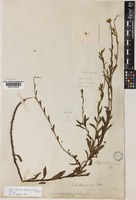
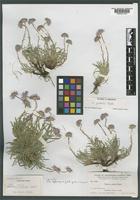
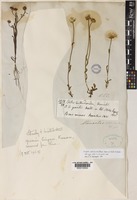
Erigeron bellidioides (Buch.-Ham.ex D.Don) C.B. Clar [family COMPOSITAE]
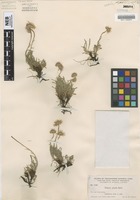
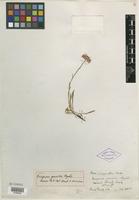
Erigeron gracilis Rydb. [family ASTERACEAE]
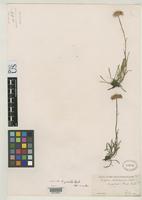
Paratype of Erigeron gracilis Rydb. [family ASTERACEAE]
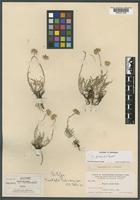
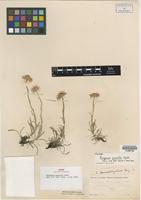
Holotype of Erigeron gracilis Rydb. [family ASTERACEAE]
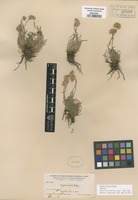
Isotype of Erigeron gracilis Rydberg, P.A. 1900 [family ASTERACEAE]
Isotype of Erigeron gracilis Rydb. [family ASTERACEAE]
Erigeron bellidioides (Buch.-Ham.ex D.Don) C.B. Clar [family COMPOSITAE]
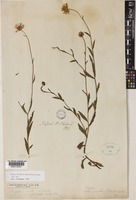
Erigeron bellidioides (Buch.-Ham. ex D.Don) C.B. Cla [family COMPOSITAE]
Previous
Next

Name

Identification
Erigeron gracilis Rydb. [family ASTERACEAE ] (stored under name); Verified by Not on sheet,
Related name
  • Erigeron gracilis
  • Erigeron ochroleucus
Common name
  • Quill fleabane, Flora of North America Vol. 20

Flora

Entry for Erigeron gracilis Rydberg [family COMPOSITAE]
Herbarium
Flora of North America (FNA)
Collection
Flora of North America
Resource Type
Reference Sources
Entry From
Flora of North America, Vol 20,
Names
Erigeron gracilis Rydberg [family COMPOSITAE], Mem. New York Bot. Gard., 1: 404. 1900
Erigeron ursinus D. C. Eaton var. gracilis (Rydberg) A. Nelson [family COMPOSITAE]
Treatment Author(s)
Guy L. Nesom
Information
Perennials, 5–20 cm; rhizomatous, fibrous-rooted, forming diffuse systems of slender, rhizomelike caudex branches. Stems ascending (bases usually purplish), glabrous or sparsely strigose (or hairs loosely spreading), eglandular. Leaves basal (persistent) and cauline; basal (purplish) and proximal cauline blades oblanceolate to oblong, 20–40(–90) × 1–3(–5) mm, cauline reduced distally, margins entire, glabrous or sparsely strigose (or hairs loosely spreading), eglandular. Heads 1. Involucres 5–7.5 × 10⁻¹⁵ mm. Phyllaries in 2–3(–4) series (margins and tips often purplish, loose, linear-lanceolate, apices spreading), sparsely strigoso-hirsute to strigose (hairs appressed or slightly loose), sometimes minutely glandular. Ray florets 40–100; corollas blue to pinkish purple, 7–14 mm, laminae not coiling or reflexing. Disc corollas 4.1–5.6 mm. Cypselae 2 mm, 2-nerved, faces sparsely strigose; pappi: outer of setae, inner of 14–21 bristles. 2n = 18.
Phenology
jun-aug (summer)
Altitude range
2200–2400 m;
Distribution
USA IdahoUSA Mont.USA Wyo.
Discussion
Erigeron gracilis “differs from E. ursinus in the strigose and scarcely glandular pubescence of the involucre, narrower and less herbaceous phyllaries, narrower and on the average longer disc-corollas, simple or nearly simple pappus, narrower ligules, on the average, and ordinarily narrower and slightly hairier leaves. E. gracilis grows at lower elevations than E. ursinus, in a drier habitat, and has a much more restricted range” (A. Cronquist 1947, p. 162). The two species are sympatric in northwestern Wyoming.

Related Materials

  • Terms and Conditions
  • Privacy Policy
  • Cookie Policy
  • Cookie Settings
  • Accessibility
  • Help
  • Contact Us
  • Facebook
  • Twitter
ITHAKA

JSTOR is part of ITHAKA, a not-for-profit organization helping the academic community use digital technologies to preserve the scholarly record and to advance research and teaching in sustainable ways.

©2000-2026 ITHAKA. All Rights Reserved. JSTOR®, the JSTOR logo, JPASS®, Aluka®, and ITHAKA® are registered trademarks of ITHAKA.

╳