JSTOR Global Plants Home
  • Home
  • Browse
  • About
  • Access
  • Account
    • Saved Items
    • Profile
  • Log in

Global Plants

Skip to Main Content
  • JSTOR Global Plants Home
  • Global Plants

    • Browse
    • About
    • Access
    • Account
      • Saved Items
      • Profile
Log in
  • Browse
  • About
  • Access
  • Account
    • Saved Items
    • Profile
Advanced Search

Compilation
Erigeron gormanii

4 Images see all

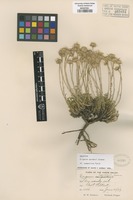
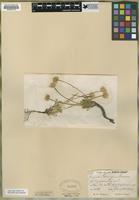
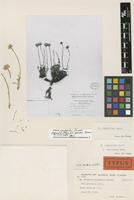
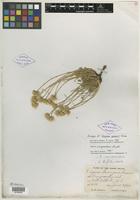
Original material of Erigeron gormanii Greene [family ASTERACEAE]
Isotype of Erigeron gormanii Greene [family ASTERACEAE]
Previous
Next

Name

Identification
Isotype of Erigeron gormanii Greene [family ASTERACEAE ] (stored under name); Verified by Not on sheet,
Related name
  • Erigeron compositus
  • Erigeron gormanii
Common name
  • vergerette à feuilles segmentées, Flora of North America Vol. 20
  • Dwarf mountain fleabane, Flora of North America Vol. 20

Flora

Entry for Erigeron compositus Pursh [family COMPOSITAE]
Herbarium
Flora of North America (FNA)
Collection
Flora of North America
Resource Type
Reference Sources
Entry From
Flora of North America, Vol 20,
Names
Erigeron compositus Pursh [family COMPOSITAE], Fl. Amer. Sept., 2: 535. 1813
Erigeron compositus var. discoideus A. Gray [family COMPOSITAE]
Erigeron compositus var. glabratus Macoun [family COMPOSITAE]
Erigeron compositus var. multifidus (Rydberg) J. F. Macbride & Payson [family COMPOSITAE]
Erigeron gormanii Greene [family COMPOSITAE]
Past names
compositum
Treatment Author(s)
Guy L. Nesom
Information
Perennials, 5–15(–25 cm); taprooted, caudices simple or branches usually relatively thick and short, rarely slender and rhizomelike, covered with persistent leaf bases. Stems erect (simple, ± scapiform), sparsely hispido-pilose, minutely glandular. Leaves mostly basal (persistent); blades spatulate to obovate-spatulate, 5–50(–70) × (2–)4–12 mm, margins (1–)2–3(–4)-ternately lobed or dissected, cauline bractlike, mostly entire, faces densely hispiduloso-puberulent to glabrate, minutely glandular. Heads (sometimes disciform) 1. Involucres 5–10 × 8–20 mm. Phyllaries in 2–3 series (purple-tipped), hirsute (hairs spreading), minutely glandular. Ray (pistillate) florets 20–60; corollas white to pink or blue, usually 6–12 mm, often reduced to tubes (heads disciform), laminae not coiling or reflexing. Disc corollas 3–5 mm. Cypselae 1.6–2.7 mm, 2-nerved, faces sparsely strigose-hirsute; pappi: outer usually of setae, sometimes 0, inner of 12–20 bristles. 2n = 18, 36, 45, 54.
Phenology
may (spring), jun-aug (summer)
Altitude range
(in e Canada, possibly Greenland and Arctic bridge gap, 10–200–)1800–4300 m;
Distribution
Greenlande Asia (Russian Far East).USA AlaskaUSA Ariz.USA Calif.USA Colo.USA IdahoUSA Mont.USA Nev.USA N.Dak.USA Oreg.USA S.Dak.USA UtahUSA Wash.USA Wyo.Canada Alta.Canada B.C.Canada Nfld. and Labr. (Nfld.)Canada N.W.T.Canada NunavutCanada Que.Canada Sask.Canada Yukon
Discussion
Correlations among ploidal level, breeding systems, and morphologic variation have been studied in detail in Erigeron compositus. Five informally designated population systems of diploids are geographically restricted (all of the northwestern United States and adjacent Canada) and primarily sexual, compared to the polyploids, which are agamospermous and apparently of hybrid origin, at least in some cases (R. D. Noyes et al. 1995; Noyes and D. E. Soltis 1996). Reduction in ray floret laminae usually is correlated with polyploidy. Plants with 1-ternately lobed leaves have been identified as var. glabratus, an element of variation that does not have a geographic pattern.
Among closely related species, Erigeron compositus is the only one that produces strongly thickened caudex branches; occasional collections show a tendency toward the slender, loose branches characteristic of the other species.

Related Materials

  • Terms and Conditions
  • Privacy Policy
  • Cookie Policy
  • Cookie Settings
  • Accessibility
  • Help
  • Contact Us
  • Facebook
  • Twitter
ITHAKA

JSTOR is part of ITHAKA, a not-for-profit organization helping the academic community use digital technologies to preserve the scholarly record and to advance research and teaching in sustainable ways.

©2000-2026 ITHAKA. All Rights Reserved. JSTOR®, the JSTOR logo, JPASS®, Aluka®, and ITHAKA® are registered trademarks of ITHAKA.

╳