JSTOR Global Plants Home
  • Home
  • Browse
  • About
  • Access
  • Account
    • Saved Items
    • Profile
  • Log in

Global Plants

Skip to Main Content
  • JSTOR Global Plants Home
  • Global Plants

    • Browse
    • About
    • Access
    • Account
      • Saved Items
      • Profile
Log in
  • Browse
  • About
  • Access
  • Account
    • Saved Items
    • Profile
Advanced Search

Compilation
Erigeron denalii

7 Images see all

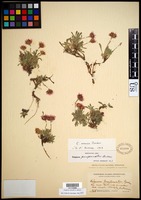
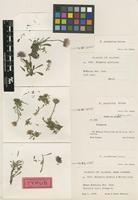
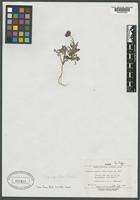
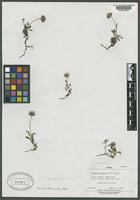
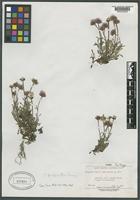
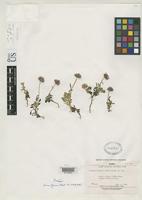
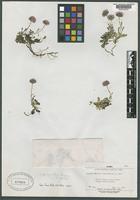
Erigeron denalii A. Nelson [family ASTERACEAE]
Type of Erigeron denalii A.Nelson [family ASTERACEAE]
Paratype of Erigeron denalii A. Nelson [family ASTERACEAE]
Isotype of Erigeron denalii A. Nelson [family ASTERACEAE]
Paratype of Erigeron denalii A. Nelson [family ASTERACEAE]
Isotype of Erigeron denalii Nelson, A. 1945 [family ASTERACEAE]
Holotype of Erigeron denalii A. Nelson [family ASTERACEAE]
Previous
Next

Name

Identification
Erigeron denalii A. Nelson [family ASTERACEAE ] (stored under name); Verified by Not on Sheet,
Related name
  • Erigeron denalii
  • Erigeron purpuratus
Common name
  • Denali fleabane, Flora of North America Vol. 20

Flora

Entry for Erigeron denalii A. Nelson [family COMPOSITAE]
Herbarium
Flora of North America (FNA)
Collection
Flora of North America
Resource Type
Reference Sources
Entry From
Flora of North America, Vol 20,
Names
Erigeron denalii A. Nelson [family COMPOSITAE], Amer. J. Bot., 32: 289. 1945
Erigeron mexiae K. M. Becker [family COMPOSITAE]
Erigeron purpuratus Greene var. dilatatus B. Boivin [family COMPOSITAE]
Treatment Author(s)
Guy L. Nesom
Information
Perennials, 1–5 cm; taprooted, caudices diffuse with extensive systems of rhizomelike, relatively long and slender branches. Stems erect (simple, ± scapiform), villous, granular-glandular. Leaves basal (persistent) and cauline; blades spatulate to oblanceolate-spatulate, 10–20 × 2–4(–5) mm, mid larger than basal and proximal, margins entire or shallowly (2–)3-lobed or -toothed apically (apices obtuse to nearly truncate), faces moderately villous, minutely glandular. Heads 1. Involucres (4–)5–7 × 9–12 mm. Phyllaries in 2(–3) series, densely lanate-villous (hairs to 3 mm, often with dark purple cross walls), glandular. Ray florets 30–55; corollas white to lavender, 4–8 mm, laminae (filiform to narrowly straplike, 0.3–2 mm wide, often involute) erect, rarely spreading, not coiling or reflexing. Disc florets 3.8–4.8 mm. Cypselae 3–3.8 mm, 2-nerved, faces strigillose to strigoso-hirsute; pappi: outer 0 (or inconspicuous), inner of 20–25 (usually ± purple-red tinged, sometimes whitish, variable within populations) bristles.
Phenology
jun-aug (summer)
Altitude range
900–2200 m;
Distribution
USA Alaska.Canada B.C.Canada N.W.T.Canada Yukon
Discussion
Erigeron denalii and E. purpuratus are similar and probably closely related; the two appear to be partially sympatric; differences in vestiture and leaf morphology are constant. The habitat of E. purpuratus, sandy or gravelly alluvium, also is remarkably constant and distinct from that of E. denalii. Apparently correlated with the habitat, plants of E. purpuratus almost always develop a relatively long and slender, woody taproot; taproots of E. denalii apparently are less well defined and often are not collected.
Plants of the type collection of Erigeron mexiae have ray corollas with relatively broad laminae (1.5–2 mm wide); ray corolla width is variable in E. denalii, and E. mexiae is regarded here as an extreme variant within the species. In other characters, there appears to be no difference.

Related Materials

  • Terms and Conditions
  • Privacy Policy
  • Cookie Policy
  • Cookie Settings
  • Accessibility
  • Help
  • Contact Us
  • Facebook
  • Twitter
ITHAKA

JSTOR is part of ITHAKA, a not-for-profit organization helping the academic community use digital technologies to preserve the scholarly record and to advance research and teaching in sustainable ways.

©2000-2026 ITHAKA. All Rights Reserved. JSTOR®, the JSTOR logo, JPASS®, Aluka®, and ITHAKA® are registered trademarks of ITHAKA.

╳