JSTOR Global Plants Home
  • Home
  • Browse
  • About
  • Access
  • Account
    • Saved Items
    • Profile
  • Log in

Global Plants

Skip to Main Content
  • JSTOR Global Plants Home
  • Global Plants

    • Browse
    • About
    • Access
    • Account
      • Saved Items
      • Profile
Log in
  • Browse
  • About
  • Access
  • Account
    • Saved Items
    • Profile
Advanced Search

Compilation
Erigeron compactus

3 Images see all

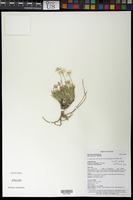
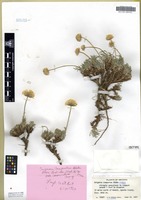
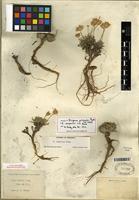
Isotype of Erigeron compactus S.F. Blake var. consimilis (Cronquist) S.F. Blake [family ASTERACEAE]
Isotype of Erigeron compactus S.F. Blake [family ASTERACEAE]
Erigeron compactus Pursh [family ASTERACEAE]
Previous
Next

Name

Identification
Isotype of Erigeron compactus S.F. Blake [family ASTERACEAE ] (stored under name); Verified by Arthur Cronquist, 1943-44, Erigeron peucephyllus A. Gray [family ASTERACEAE ] Verified by Not on sheet, Erigeron pulvinatus Rydb. [family ASTERACEAE ] Verified by Not on sheet, Isotype of Erigeron pulvinatus Rydb. [family ASTERACEAE ] Verified by Not on sheet,
Related name
  • Erigeron pulvinatus
  • Erigeron compactus
  • Erigeron peucephyllus
Common name
  • Fern-leaf fleabane, Flora of North America Vol. 20
  • San Rafael fleabane, Flora of North America Vol. 20

Flora

Entry for Erigeron compactus S. F. Blake [family COMPOSITAE]
Herbarium
Flora of North America (FNA)
Collection
Flora of North America
Resource Type
Reference Sources
Entry From
Flora of North America, Vol 20,
Names
Erigeron compactus S. F. Blake [family COMPOSITAE], Proc. Biol. Soc. Wash., 35: 78. 1922
Erigeron pulvinatus Rydberg [family COMPOSITAE], Fl. Rocky Mts., 911, 1067. 1917,. not Weddell 1857
Treatment Author(s)
Guy L. Nesom
Information
Perennials, 2–10 cm; taprooted, caudices branched. Stems erect (scapiform, bracteate), finely strigose, eglandular. Leaves (persistent) mostly basal (leaf bases broadened or not, not thickened and whitish-indurate); blades linear, 4–20 × 0.5–1.5 mm, cauline bractlike or absent, margins entire, faces densely, finely strigose (hairs thin-based), eglandular. Heads 1. Involucres 5–8 × 7–17 mm. Phyllaries in 2–3(–4) series, finely and closely strigose (hairs thin-based), inconspicuously minutely glandular. Ray florets 15–32; corollas white to pinkish, often with an abaxial lilac midstripe, 6–11 mm (tubes and laminae bases glabrous or glabrate), laminae tardily coiling. Disc corollas 4.5–6 mm. Cypselae 2.8–3.2 mm, 2-nerved, margins velutinous-ciliate, faces glabrous; pappi: outer of setae, inner of 30–40 bristles.
Conservation Status
of conservation concern;
Phenology
may (spring), jun (summer)
Altitude range
1300–2900 m;
Distribution
USA Calif.USA Nev.USA Utah.

Related Materials

  • Terms and Conditions
  • Privacy Policy
  • Cookie Policy
  • Cookie Settings
  • Accessibility
  • Help
  • Contact Us
  • Facebook
  • Twitter
ITHAKA

JSTOR is part of ITHAKA, a not-for-profit organization helping the academic community use digital technologies to preserve the scholarly record and to advance research and teaching in sustainable ways.

©2000-2026 ITHAKA. All Rights Reserved. JSTOR®, the JSTOR logo, JPASS®, Aluka®, and ITHAKA® are registered trademarks of ITHAKA.

╳