JSTOR Global Plants Home
  • Home
  • Browse
  • About
  • Access
  • Account
    • Saved Items
    • Profile
  • Log in

Global Plants

Skip to Main Content
  • JSTOR Global Plants Home
  • Global Plants

    • Browse
    • About
    • Access
    • Account
      • Saved Items
      • Profile
Log in
  • Browse
  • About
  • Access
  • Account
    • Saved Items
    • Profile
Advanced Search

Compilation
Erigeron commixtus

11 Images see all

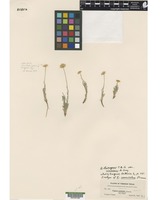
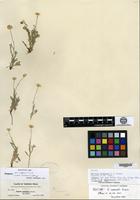
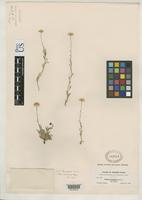
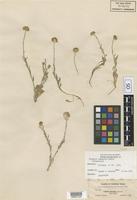
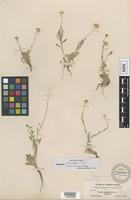
Type of Erigeron commixtus Greene [family ASTERACEAE]
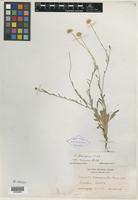
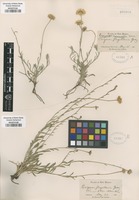
Isosyntype of Erigeron commixtus Greene [family ASTERACEAE]
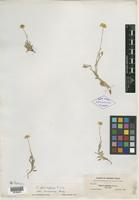
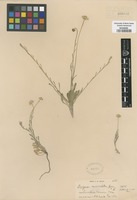
Syntype of Erigeron commixtus Greene [family ASTERACEAE]
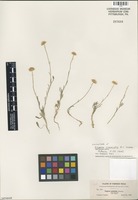
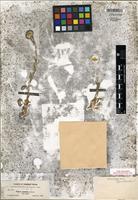
Original material of Erigeron commixtus Greene [family ASTERACEAE]
Type of Erigeron commixtus Greene [family ASTERACEAE]
Type of Erigeron divergens var. cinereus A. Gray [family ASTERACEAE]
Isosyntype of Erigeron commixtus Greene, E.L. 1902 [family ASTERACEAE]
Isosyntype of Erigeron commixtus Greene [family ASTERACEAE]
Isotype of Erigeron commixtus Greene [family ASTERACEAE]
Previous
Next

Name

Identification
Erigeron commixtus Greene [family ASTERACEAE ] (stored under name); Verified by Greene, 1902
Related name
  • Erigeron commixtus
  • Erigeron divergens
Common name
  • Running fleabane, Flora of North America Vol. 20

Flora

Entry for Erigeron tracyi Greene [family COMPOSITAE]
Herbarium
Flora of North America (FNA)
Collection
Flora of North America
Resource Type
Reference Sources
Entry From
Flora of North America, Vol 20,
Names
Erigeron tracyi Greene [family COMPOSITAE], Pittonia, 5: 59. 1902
Erigeron cinereus A. Gray [family COMPOSITAE], 1849. not Hooker & Arnott 1836
Erigeron colomexicanus A. Nelson [family COMPOSITAE]
Erigeron commixtus Greene [family COMPOSITAE]
Erigeron divergens Torrey & A. Gray var. cinereus A. Gray [family COMPOSITAE]
Treatment Author(s)
Guy L. Nesom
Information
Annuals, biennials, or short-lived perennials, 2.5–8(–12, 18) cm; usually taprooted, sometimes fibrous-rooted, caudices simple or branched. Stems first erect (greenish proximally), then producing herbaceous, leafy, prostrate runners (stoloniform branches, sometimes with rooting plantlets at tips), densely hirsutulous (hairs spreading-deflexed, of relatively even lengths and orientations), sparsely minutely glandular. Leaves mostly basal (persistent in early season); blades oblanceolate to spatulate (obovate-elliptic laminae), 10–30(–60) × 3–6(–12) mm, cauline abruptly reduced distally, margins entire, dentate, or lobed, faces densely hirsute, eglandular. Heads 1(–3 rarely, from midstem or proximal branches). Involucres 3.5–4.5(–6) × 6–9(–12) mm. Phyllaries in 3–4 series, sparsely to moderately hirsute, minutely glandular. Ray florets 60–130; corollas white, often purplish abaxially, sometimes with an abaxial midstripe, 5–9 mm, laminae not coiling or reflexing. Disc corollas 2–3 mm (throats indurate and slightly inflated). Cypselae 0.7–1.3 mm, 2-nerved, faces sparsely strigose; pappi: outer of setae, inner of 12–16 bristles. 2n = 27.
Phenology
mar-may (spring), jun-aug (summer), sep-oct (fall)
Altitude range
700–2300(–2400) m;
Distribution
Mexico (Baja California).Mexico (Chihuahua).Mexico (Coahuila).Mexico (Durango).Mexico (Sonora).Mexico (Zacatecas).USA Ariz.USA Colo.USA Kans.USA Nev.USA N.Mex.USA Okla.USA Tex.USA Utah
Discussion
In March through June, plants of Erigeron tracyi produce leaves in a basal rosette usually with a single, erect, monocephalous, stem. Stoloniform branches are soon formed (often recognized on pressed specimens by the leaves mostly on one side of the branches), and by the end of the season (August through October), prostrate runners are usually evident, sometimes forming terminal, rooting plantlets.
Erigeron tracyi is similar in habit to E. flagellaris, particularly in the herbaceous stolons or stoloniform branches; the stem pubescence of E. tracyi is different, the stolons much less commonly produce rooting plantlets at the tips, and the plants tend to be perennial with woody or lignescent caudices, although they are variable both in habit and duration. Apparent hybrids with E. modestus and E. flagellaris are occasionally encountered, and the most common form of E. tracyi is perhaps (speculative) a stabilized, apomictic hybrid between the latter and E. divergens. All chromosome counts thus far have shown E. tracyi to be triploid and asynaptic.

Related Materials

  • Terms and Conditions
  • Privacy Policy
  • Cookie Policy
  • Cookie Settings
  • Accessibility
  • Help
  • Contact Us
  • Facebook
  • Twitter
ITHAKA

JSTOR is part of ITHAKA, a not-for-profit organization helping the academic community use digital technologies to preserve the scholarly record and to advance research and teaching in sustainable ways.

©2000-2026 ITHAKA. All Rights Reserved. JSTOR®, the JSTOR logo, JPASS®, Aluka®, and ITHAKA® are registered trademarks of ITHAKA.

╳