JSTOR Global Plants Home
  • Home
  • Browse
  • About
  • Access
  • Account
    • Saved Items
    • Profile
  • Log in

Global Plants

Skip to Main Content
  • JSTOR Global Plants Home
  • Global Plants

    • Browse
    • About
    • Access
    • Account
      • Saved Items
      • Profile
Log in
  • Browse
  • About
  • Access
  • Account
    • Saved Items
    • Profile
Advanced Search

Compilation
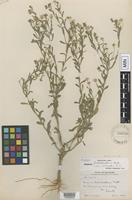
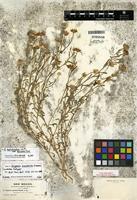
Erigeron bellidiastrum

14 Images see all

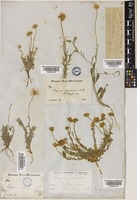
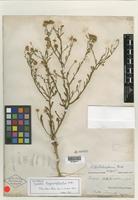
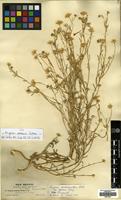
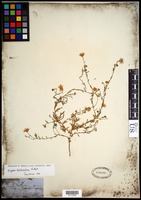
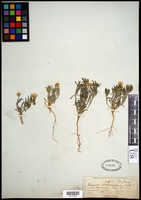
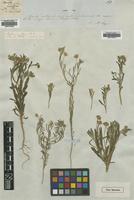
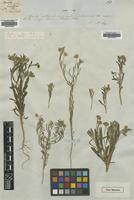
Erigeron divergens Torr. & A.Gray var. cinereus Gray. A. [family COMPOSITAE]
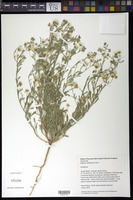
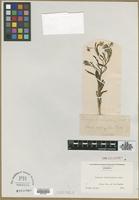
Type? of Erigeron bellidiastrum Nutt. [family ASTERACEAE]
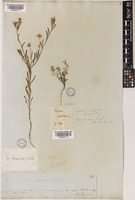
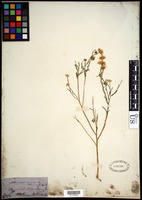
Type of Erigeron arenarius Greene [family COMPOSITAE]
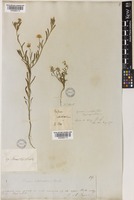
Erigeron bellidiastrum Nutt. [family ASTERACEAE]
Erigeron bellidiastrum Nutt. [family COMPOSITAE]
Type? of Erigeron bellidiastrum Nutt. [family ASTERACEAE]
Type of Erigeron bellidiastrum Nutt. [family ASTERACEAE]
Erigeron bellidiastrum Nutt. [family ASTERACEAE]
Isotype of Erigeron bellidiastrum Nutt. var. robustus Cronquist [family ASTERACEAE]
Type of Erigeron bellidiastrum var. bellidiastrum [family ASTERACEAE]
Previous
Next

Name

Identification
Erigeron bellidiastrum Nutt. [family ASTERACEAE ] (stored under name);
Related name
  • Erigeron arenarius
  • Erigeron bellidiastrum
Common name
  • Sand fleabane, Flora of North America Vol. 20

Flora

Entry for Erigeron bellidiastrum Nuttall [family COMPOSITAE]
Herbarium
Flora of North America (FNA)
Collection
Flora of North America
Resource Type
Reference Sources
Entry From
Flora of North America, Vol 20,
Names
Erigeron bellidiastrum Nuttall [family COMPOSITAE], Trans. Amer. Philos. Soc., n. s., 7: 307. 1840
Treatment Author(s)
Guy L. Nesom
Information
Annuals (or biennials?), 3.5–30(–50) cm; taprooted. Stems erect to ascending, hirsutulous (hairs upcurved), usually eglandular, sometimes minutely glandular (var. arenarius). Leaves basal (sometimes persistent) and cauline or mostly cauline; blades linear to oblanceolate or spatulate, 10–60(–80) × 2–6(–9, or 15) mm, margins entire, lobed, or pinnately dissected, faces sparsely strigose, eglandular. Heads 1–12 usually in diffuse arrays (from branches beyond midstems or sometimes clustered distally). Involucres 3–5 × 5–7(–11) mm. Phyllaries in 2–3(–4) series, hispidulous, minutely glandular. Ray florets 22–70 (some positioned among inner phyllaries); corollas white, often with abaxial lilac midstripe, drying white to bluish, 4–7.5 mm, laminae not coiling or reflexing. Disc corollas 2.2–3 mm (throats indurate and inflated). Cypselae 1–1.6(–1.8) mm, 2-nerved, faces sparsely strigose; pappi: outer cartilaginous crowns, inner of 15–18 bristles.
Distribution
United Statesn Mexico.
Discussion
Erigeron bellidiastrum is recognized by its annual duration, upcurved hairs of the stem, relatively few rays, 1-seriate pappi, and by some ray florets consistently produced between the phyllaries, the mature cypselae of these held in place as the phyllaries reflex at maturity.

Related Materials

  • Terms and Conditions
  • Privacy Policy
  • Cookie Policy
  • Cookie Settings
  • Accessibility
  • Help
  • Contact Us
  • Facebook
  • Twitter
ITHAKA

JSTOR is part of ITHAKA, a not-for-profit organization helping the academic community use digital technologies to preserve the scholarly record and to advance research and teaching in sustainable ways.

©2000-2026 ITHAKA. All Rights Reserved. JSTOR®, the JSTOR logo, JPASS®, Aluka®, and ITHAKA® are registered trademarks of ITHAKA.

╳