JSTOR Global Plants Home
  • Home
  • Browse
  • About
  • Access
  • Account
    • Saved Items
    • Profile
  • Log in

Global Plants

Skip to Main Content
  • JSTOR Global Plants Home
  • Global Plants

    • Browse
    • About
    • Access
    • Account
      • Saved Items
      • Profile
Log in
  • Browse
  • About
  • Access
  • Account
    • Saved Items
    • Profile
Advanced Search

Compilation
Erigeron arisolius

19 Images see all

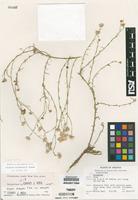
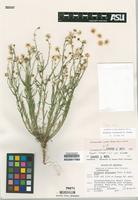
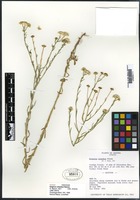
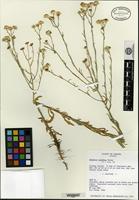
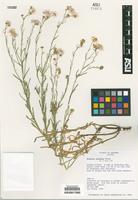
Paratype of Erigeron arisolius Nesom [family ASTERACEAE]
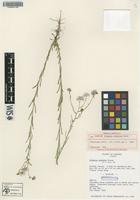
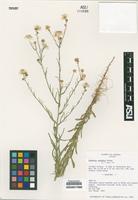
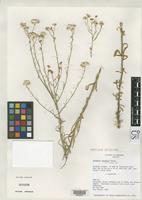
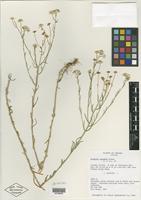
Isotype of Erigeron arisolius G.L. Nesom [family ASTERACEAE]
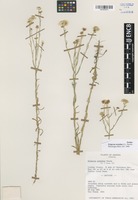
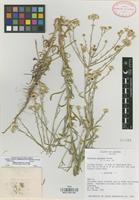
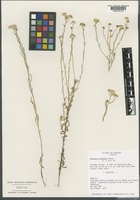
Isotype of Erigeron arisolius G. L. Nesom [family ASTERACEAE]
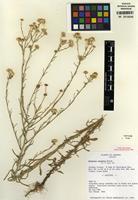
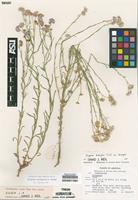
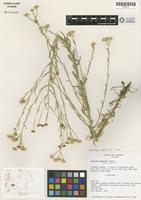
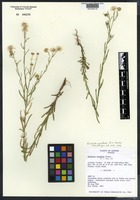
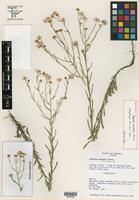
Isotype of Erigeron arisolius G.L.Nesom [family ASTERACEAE]
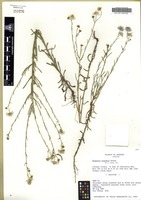
Isotype of Erigeron arisolius G.L. Nesom [family COMPOSITAE]
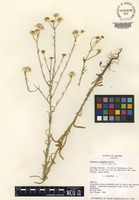
Paratype of Erigeron arisolius Nesom [family ASTERACEAE]
Isotype of Erigeron arisolius G. L. Nesom [family ASTERACEAE]
Isotype of Erigeron arisolius Nesom [family ASTERACEAE]
Isotype of Erigeron arisolius G. L. Nesom [family ASTERACEAE]
Isotype of Erigeron arisolius G.L. Nesom [family ASTERACEAE]
Isotype of Erigeron arisolius Nesom, G.L. 1990 [family ASTERACEAE]
Isotype of Erigeron arisolius G. L. Nesom [family ASTERACEAE]
Isotype of Erigeron arisolius Nesom [family ASTERACEAE]
Paratype of Erigeron arisolius Nesom [family ASTERACEAE]
Isotype of Erigeron arisolius G. L. Nesom [family ASTERACEAE]
Holotype of Erigeron arisolius G. L. Nesom [family ASTERACEAE]
Previous
Next

Name

Identification
Isotype of Erigeron arisolius Nesom [family ASTERACEAE ] (stored under name); Verified by S. Whitcomb, 2009
Related name
  • Erigeron arisolius
Common name
  • Dry-sun fleabane, Flora of North America Vol. 20

Flora

Entry for Erigeron arisolius G. L. Nesom [family COMPOSITAE]
Herbarium
Flora of North America (FNA)
Collection
Flora of North America
Resource Type
Reference Sources
Entry From
Flora of North America, Vol 20,
Names
Erigeron arisolius G. L. Nesom [family COMPOSITAE], Phytologia, 69: 243. 1990
Treatment Author(s)
Guy L. Nesom
Information
Annuals or short-lived perennials, 30–70 cm; taprooted. Stems erect, coarsely hirsute to hispid (hairs only along ribs, bases thickened), minutely glandular. Leaves mostly cauline; blades linear to linear-oblong, -lanceolate, or -oblanceolate (slightly narrowed distally), 25–50 × 2–5 mm, margins entire or sometimes lobed (lobes 1–2 pairs, coarse, rounded), faces hispido-strigose. Heads 20–50+ in loose, corymbiform arrays (buds erect). Involucres 2.5–3.5 × 5–8 mm. Phyllaries in 3–4 series, minutely hispid, minutely glandular. Ray florets 125–180; corollas usually white, sometimes lavender or pinkish, 6–7 mm, laminae reflexing. Disc corollas 2–2.5 mm (throats indurate and inflated). Cypselae 0.7–1 mm, 2-nerved (nerves orange), faces sparsely strigose to glabrate; pappi: outer of setae or lanceolate scales, inner of (10–)12–17 bristles. 2n = 18.
Conservation Status
of conservation concern;
Phenology
may (spring), jun (summer), nov (fall)
Altitude range
(800–)1300–1700 m;
Distribution
Mexico (Sonora).USA Ariz.
Discussion
Erigeron arisolius is similar in general appearance to E. divergens; the erect buds and reflexing rays of E. arisolius contrast with the nodding buds and non-reflexing rays of E. divergens. Additionally, the latter has evenly distributed stem pubescence, cypselae with whitish nerves (versus orange), and fewer pappus bristles. Erigeron sceptrifer also may be difficult to distinguish from these: it is more similar to E. arisolius in vestiture and has shorter rays that usually become purple upon drying and that are downward-curved, compared to those of E. arisolius, where the rays dry a lighter color and reflex at the tube-lamina junction.

Related Materials

  • Terms and Conditions
  • Privacy Policy
  • Cookie Policy
  • Cookie Settings
  • Accessibility
  • Help
  • Contact Us
  • Facebook
  • Twitter
ITHAKA

JSTOR is part of ITHAKA, a not-for-profit organization helping the academic community use digital technologies to preserve the scholarly record and to advance research and teaching in sustainable ways.

©2000-2026 ITHAKA. All Rights Reserved. JSTOR®, the JSTOR logo, JPASS®, Aluka®, and ITHAKA® are registered trademarks of ITHAKA.

╳