JSTOR Global Plants Home
  • Home
  • Browse
  • About
  • Access
  • Account
    • Saved Items
    • Profile
  • Log in

Global Plants

Skip to Main Content
  • JSTOR Global Plants Home
  • Global Plants

    • Browse
    • About
    • Access
    • Account
      • Saved Items
      • Profile
Log in
  • Browse
  • About
  • Access
  • Account
    • Saved Items
    • Profile
Advanced Search

Compilation
Erigeron acomanus

9 Images see all

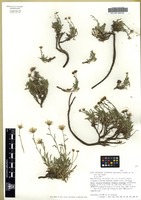
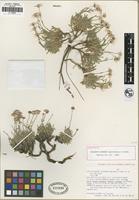
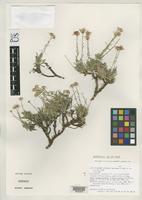
Isotype of Erigeron acomanus Spellenberg & Knight [family ASTERACEAE]
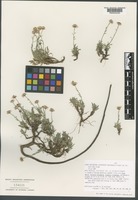
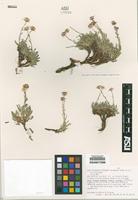
Isotype of Erigeron acomanus Spellenb. & P. J. Knight [family ASTERACEAE]
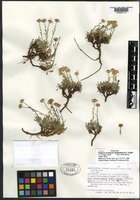
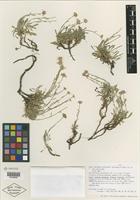
Isotype of Erigeron acomanus Spellenb. & P. Knight [family ASTERACEAE]
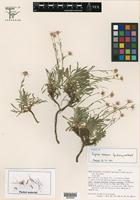
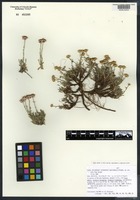
Holotype of Erigeron acomanus Spellenb. and P. Knight [family ASTERACEAE]
Isotype of Erigeron acomanus R. Spellenberg & Knight [family ASTERACEAE]
Isotype of Erigeron acomanus Spellenb. & P. J. Knight [family ASTERACEAE]
Isotype of Erigeron acomanus Spellenberg, R.W. & Knight, P. 1989 [family ASTERACEAE]
Previous
Next

Name

Identification
Isotype of Erigeron acomanus R. Spellenberg & Knight [family ASTERACEAE ] (stored under name); Verified by S. Whitcomb, 2009
Related name
  • Erigeron acomanus
Common name
  • Acoma fleabane, Flora of North America Vol. 20

Flora

Entry for Erigeron acomanus Spellenberg & P. J. Knight [family COMPOSITAE]
Herbarium
Flora of North America (FNA)
Collection
Flora of North America
Resource Type
Reference Sources
Entry From
Flora of North America, Vol 20,
Names
Erigeron acomanus Spellenberg & P. J. Knight [family COMPOSITAE], Madroño, 36: 115, figs. 2. 1989
Treatment Author(s)
Guy L. Nesom
Information
Perennials, 4.5–15 cm; taprooted, forming mats (10–70 cm diam.) connected by systems of lignescent rhizomes and caudex branches. Stems erect (grayish), sparsely strigillose (hairs whitish, stiff), eglandular. Leaves mostly basal (persistent, spreading or ascending, in rosettes at ends of caudex branches); (grayish) blades oblanceolate to narrowly obovate or spatulate, 8–23 × 2–7 mm, much reduced distally, margins entire (apices rounded to obtuse), faces moderately strigillose, eglandular. Heads 1. Involucres ca. 5 × 7–10 mm. Phyllaries in 3–4 series, lightly to moderately white-strigose, minutely glandular. Ray florets 16–30; corollas white, 4.5–9 mm, laminae not coiling or reflexing, spreading. Disc corollas 2.5–3 mm. Cypselae 1.8–2 mm, 2-nerved, faces sparsely strigoso-hirsute; pappi: outer of setae, inner of 20–25 bristles. 2n = 18.
Conservation Status
of conservation concern;
Phenology
may (spring), jun-jul (summer)
Altitude range
2000–2300 m;
Distribution
USA N.Mex.

Related Materials

  • Terms and Conditions
  • Privacy Policy
  • Cookie Policy
  • Cookie Settings
  • Accessibility
  • Help
  • Contact Us
  • Facebook
  • Twitter
ITHAKA

JSTOR is part of ITHAKA, a not-for-profit organization helping the academic community use digital technologies to preserve the scholarly record and to advance research and teaching in sustainable ways.

©2000-2026 ITHAKA. All Rights Reserved. JSTOR®, the JSTOR logo, JPASS®, Aluka®, and ITHAKA® are registered trademarks of ITHAKA.

╳