JSTOR Global Plants Home
  • Home
  • Browse
  • About
  • Access
  • Account
    • Saved Items
    • Profile
  • Log in

Global Plants

Skip to Main Content
  • JSTOR Global Plants Home
  • Global Plants

    • Browse
    • About
    • Access
    • Account
      • Saved Items
      • Profile
Log in
  • Browse
  • About
  • Access
  • Account
    • Saved Items
    • Profile
Advanced Search

Compilation
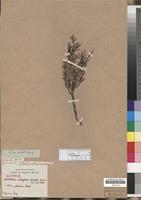
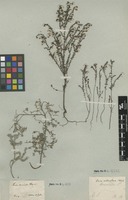
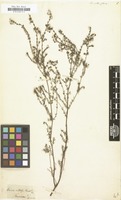
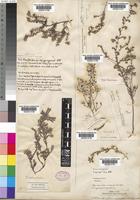
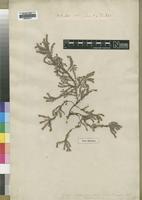
Erica velleriflora

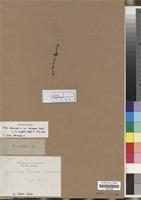
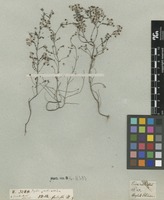
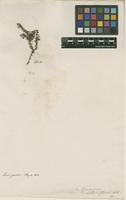
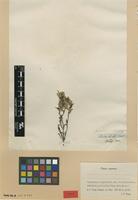
10 Images see all

Filed as Erica bruniades ? L. [family ERICACEAE]
Filed as Erica bruniades L. [family ERICACEAE]
Filed as Erica velleriflora [family ERICACEAE]
Erica bruniades L. [family ERICACEAE]
Filed as Erica bruniades L. [family ERICACEAE]
Type? of Grisebachia velleriflora Klotzsch [family ERICACEAE]
Type of Erica velleriflora Salisb. [family ERICACEAE]
Grisebachia velleriflora Klotzsch [family ERICACEAE]
Isotype of Grisebachia velleriflora Klotzsch [family ERICACEAE]
Previous
Next

Name

Identification
Erica bruniades L. [family ERICACEAE ] (stored under name); Erica velleriflora Salisb. [family ERICACEAE ]
Related name
  • Erica velleriflora
  • Erica bruniades
  • Erica bruniades ?
  • Erica capitata

Flora

Entry for ERICA bruniades Linn. [family ERICACEAE]
Herbarium
Royal Botanic Gardens, Kew (K)
Collection
Flora Capensis
Resource Type
Reference Sources
Entry From
Flora Capensis, Vol 4, page 2, (1909) Author: By H. BOLUS, F. GUTHRIE, and N. E. BROWN.
Names
ERICA bruniades Linn. [family ERICACEAE], Sp. Pl. ed. 1, 354;—Wendl. Eric. Ic. fasc. 16, 53, t. 20; Andr. Col. Heaths, t. 6; Lodd. Bot. Cab. t. 1365.
ERICA bruinades Andr. [family ERICACEAE], Heathery, t. 6.
ERICA velleriflora Salisb. [family ERICACEAE], in Trans. Linn. Soc. vi 333.
ERICA carbasina Salisb. [family ERICACEAE], in Trans. Linn. Soc. vi 333.
ERICA capitata Thunb. [family ERICACEAE], Diss. Erica, 17, not of Linn., ex Salisb. and Rach.
ERICA lasiocephala Klotzsch [family ERICACEAE], in Herb. Berol. ex Benth. in DC. Prodr. vii. 617.
ERICA eriantha Klotzsch [family ERICACEAE], in Herb. Berol. ex Benth. in DC. Prodr. vii. 617.
ERICA villosa Wendl. [family ERICACEAE], Eric. Ic. fasc. 16, 55, t. 21, ex Ind. Kew.
Information
erect or diffuse, 1–1 1/2 ft. high; branches ascending, sometimes slender, flexuous and straggling, pubescent; leaves 3-nate, erect and adpressed, or spreading, rarely squarrose, imbricate or rarely shorter than the internodes, linear, obtuse, sulcate, pilose, 1–2 1/2 lin. long; flowers 3-nate, calycine, spreading; pedicels villous, 2–4 lin. long; bracts remote, small, pilose; sepals broad-oblanceolate or obovate-oblong, acute, very densely covered with fine spreading white or pinkish hairs, the whole entirely hiding the corolla except near the apex, 1 1/4–1 1/2 lin. long, about equalling the corolla-tube; corolla urceolate, pilose, white or pale pink, 1 1/2–1 3/4 lin. long; segments recurved, 1/4– 1/3 the length of the tube; anthers exserted, almost exactly those of E. lanata, or sometimes more acuminate; stigma subsimple; ovary villous, chiefly on the summit. null
Distribution
COAST REGION frequent, ascending to 1500 ft.: Malmesbury Div., Zeyher, 1114 partly! Tulbagh Div., Zeyher, 1113! Bolus, 5109! and in Herb. Norm. 1! Worcester Div., Bolus, 5110! Cape Div., Niven, 162! 163! Burchell, 344! 8589! Bolus, 4241! 4471! Guthrie, 144! Stellenbosch Div., Burchell, 8331! Caledon Div., Zeyher, 3289! 3291! 3293a! Schlechter, 9390! Bredasdorp Div., Bolus, 8493!SOUTH AFRICA without locality, Herb. Salisbury! and cultivated specimens!
Notes
Plukenet seems to have first given this name (Almag. Bot. Mant. 69, t. 347, fig. 9, 1700), but Bentham refers the plant to E. villosa. As there may be some doubt about it, and as Plukenet was pre-Linnean, we have not cited the figure under either species. Plukenet says he named his plant after Alexander Brown, an Englishman, who first brought it from Africa. Aiton (Hort. Kew. ed. 2, ii. 365) calls it the “Brunia-like Heath.”

Related Materials

  • Terms and Conditions
  • Privacy Policy
  • Cookie Policy
  • Cookie Settings
  • Accessibility
  • Help
  • Contact Us
  • Facebook
  • Twitter
ITHAKA

JSTOR is part of ITHAKA, a not-for-profit organization helping the academic community use digital technologies to preserve the scholarly record and to advance research and teaching in sustainable ways.

©2000-2026 ITHAKA. All Rights Reserved. JSTOR®, the JSTOR logo, JPASS®, Aluka®, and ITHAKA® are registered trademarks of ITHAKA.

╳