

Compilation
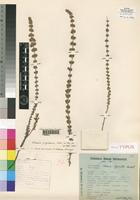
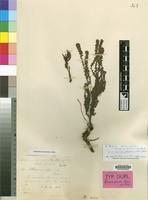
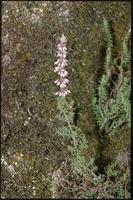
Erica tenuipilosa
3 Images see all
Name
Identification
Erica tenuipilosa (Engl. Ex Alm & T.C.E.Fr.) Cheek [family ERICACEAE ]
Related name
- Erica tenuipilosa
Flora
Entry for Erica silvatica (Engl.) Beentje [family ERICACEAE]
Herbarium
Royal Botanic Gardens, Kew (K)
Collection
Flora of Tropical East Africa
Resource Type
Reference Sources
Entry From
Flora of Tropical East Africa, page 1, (2006) Author: HENK BEENTJE
Names
Erica silvatica (Engl.) Beentje [family ERICACEAE], comb. nov. Type: Tanzania, Kilimanjaro, between Marangu & Machame, Meyer 343 (B†, holo.; UPS, iso.)
Blaeria condensata A.Rich. [family ERICACEAE], Tent. Fl. Abyss. 2: 13 (1851), non Erica condensata Benth. Type: Ethiopia, Silke Mts, Schimper II.667 (BM!, BR!, iso.)
Blaeria spicata A.Rich. [family ERICACEAE], Tent. Fl. Abyss. 2: 13 (1851), non Erica spicata Thunb.; F.T.A. 3: 484 (1877); P.O.A. C: 303 (1895); T.T.C.L.: 191 (1949); Pic.Serm. & Heiniger in Webbia 9: 36, fig. 9 (1953); Letouzey, Fl. Cam. 11: 191 (1970); Hedberg in Nordic J. Bot. 5: 463– 467 (1985). Type: Ethiopia, Mt Bachit, Schimper 749 (BM!, BR!, K!, iso.)
Blaeria silvatica Engl. [family ERICACEAE], Hochgebirgsfl. Trop. Afr.: 326 (1892); P.O.A. C: 303 (1895); T.T.C.L.: 191 (1949). Basionym of Erica silvatica
Blaeria bugonii Engl. [family ERICACEAE], Hochgebirgsfl.Trop. Afr.: 327 (1892); T.T.C.L.: 192 (1949). Type: Angola, Huila, Welwitsch 2559 (BM!, K!, iso.)
Blaeria glutinosa K. Schum. & Engl. [family ERICACEAE], in Hochgebirgsfl. Trop. Afr.: 327 (1892); P.O.A. C: 303 (1895); T.T.C.L.: 192 (1949). Type: Tanzania, Kilimanjaro, Meyer 100 & 235 (B†, syn.)
Blaeria johnstonii Engl. [family ERICACEAE], Hochgebirgsfl. Trop. Afr.: 326 (1892); P.O.A. C: 303 (1895); Alm & T.C.E.Fr. in Acta Hort. Berg. 8 (8): 251 (1924); T.T.C.L.: 190 (1949); A.V.P.: 148, 301, fig. 31– 33 (1957); U.K.W.F. ed. 2: 170, t. 65 (1994). Type: Tanzania, Kilimanjaro, Johnston 17 (BM!, K!, UPS, iso.) – note: there was no number in the protologue but there is little doubt it is this specimen
Blaeria meyeri-johannis K. Schum & Engl. [family ERICACEAE], in Hochgebirgsfl. Trop. Afr.: 326 (1892); P.O.A. C: 303 (1895); T.T.C.L.: 192 (1949). Type: Tanzania, Kilimanjaro, von Hoehnel 192 (B†, syn.) and Meyer 96, 97 & 206 (B†, syn.; fragm. of 206 at UPS)
Blaeria spicata Engl. var. mannii [family ERICACEAE], Hochgebirgsfl. Trop. Afr.: 325 (1892). Type: Cameroon, Mt Cameroon, Mann 1280 (K!, lecto., chosen by Cheek 1997)
Blaeria spicata Engl. var. patula [family ERICACEAE], Hochgebirgsfl.Trop. Afr.: 325 (1892); T.T.C.L.: 191 (1949). Type: Malawi, near Blantyre, Shiré Highlands, Last s.n. (K!, holo.)
Blaeria whyteana [family ERICACEAE], nomen nudum in Engl. P.O.A. A: 132 (1895)
Blaeria kingaensis Engl. [family ERICACEAE], in E.J. 30: 370 (1901); Alm & T.C.E.Fr. in Acta Hort. Berg. 8, 8: 247 (1924); T.T.C.L.: 191 (1949); R. Ross in Bol. Soc. Brot. ser. 2, 53: 123 (1981) & in F.Z. 7(1): 171, t. 29 (1983), non Erica kingaensis Engl. (1901). Type: Tanzania, Njombe District, Ukinga Mts, Kipengere, Goetze 957 (B†, holo.; BM!, BR!, Z, iso.), syn. nov.
Blaeria subverticillata Engl. [family ERICACEAE], in E.J. 30: 371 (1901), e descr . Type: Tanzania, Njombe District: Livingstone Mts, Masuanu [Masuamu] Mt, Goetze 826 (B†, holo.; BR!, iso.)
Blaeria breviflora Engl. [family ERICACEAE], in E.J. 43: 364 (1909); Z.A.E.: 511 (1914); Alm & T.C.E.Fr. in Acta Hort. Berg. 8 (8): 259, t. 7– 8e, t. 14i (1924); T.T.C.L.: 192 (1949); U.K.W.F. ed. 2: 170 (1994). Type: Tanzania, Lushoto District: W Usambara, Sakare– Manka, Engler 1031 (B†, syn.); Kwai, Eick 244 (B†, syn.); Lutindi, Liebusch s.n. (B†, syn.); Rwanda, Rukarara, Rugege, Mildbraed 1004, 1005 (both B†, syn.), syn. nov.
Blaeria breviflora Engl. var. ulugurensis [family ERICACEAE], in E.J. 43: 364 (1909). Type: Tanzania, Morogoro District: Uluguru, SW, upper margin of ‘ Rodungsgebietes’ at 620 m, Stuhlmann 9320 (B†, syn.); Lukwangulu, Stuhlmann 9157a (B†, syn.)
Blaeria glanduligera Engl. [family ERICACEAE], in E.J. 43: 366 (1909); T.T.C.L.: 190 (1949). Type: Tanzania, Kilimanjaro, above Johannesschlucht, Volkens 1170 (B†, holo.; BM, K!, UPS, iso.)
Blaeria keilii Engl. [family ERICACEAE], in E.J. 43: 365 (1909), e descr . Type: Burundi, Mt Luhona, Keil 269 (B†, holo.)
Blaeria kiwuensis Engl. [family ERICACEAE], in E.J. 43: 346 (1909); Z.A.E.: 511 (1914); Alm & T.C.E.Fr. “ emend.” in Acta Hort. Berg. 8, 8: 246, t. 12/a– b, t. 14/c– f (1924); T.T.C.L.: 192 (1949). Type: Rwanda/Congo-Kinshasa, SE of Karisimbi, Mildbraed 1569 (B†, holo.; BR!, iso., fragment)
Blaeria mannii (Engl.) Engl. [family ERICACEAE], in E.J. 43: 366 (1909); Z.A.E.: 511 (1914); R. Ross in F.W.T.A. ed. 2, 2: 2 (1963), non Erica mannii (Hook.f.) Beentje
Blaeria patula (Engl.) Engl. [family ERICACEAE], in E.J. 43: 364 (1909); Alm & T.C.E.Fr. in Acta Hort. Berg. 8, 8: 261 (1924); T.T.C.L.: 192 (1949), non Erica patula Klotzsch (1838) nec Erica patula Benth. (1839). Types: Malawi, near Lungwe, Stolz 52; S Nyika, Whyte s.n.; Shire Highlands, Buchanan 1478 (BM!, K, syn.); Blantyre, Last s.n.
Blaeria tenuifolia Engl. [family ERICACEAE], in E.J. 43: 365 (1909). Type: Malawi, S Malawi, Maruku Plateau, Whyte 276 (K!, holo.)
Blaeria patula Alm & T.C.E.Fr. var. aberdarica [family ERICACEAE], in Notizbl. Bot. Gart. Mus. Berlin 8: 694 (1924); T.T.C.L.: 192 (1949). Type: Kenya, Nyandarua/Aberdares, upper bamboo zone, Fries & Fries 2391 (UPS, holo.; B†, K!, iso.)
Blaeria breviflora (Alm & T.C.E.Fr.) Alm & T.C.E.Fr. var. aberdarica [family ERICACEAE], in Acta Hort. Berg. 8, 8: 260 (1924)
Blaeria granvikii Alm & T.C.E.Fr. [family ERICACEAE], in N.B.G.B. 8: 693 (1924). Type: Uganda/Kenya, Elgon, Granvik s.n. (S, holo.; UPS, iso.)
Blaeria keniensis Alm & T.C.E.Fr. [family ERICACEAE], in N.B.G.B. 8: 694 (1924). Type: Kenya, Mt Kenya, Fries & Fries 397 (UPS, holo.; K!, iso.)
Blaeria kilimandjarica Alm & T.C.E.Fr. [family ERICACEAE], in Acta Hort. Berg. 8 (8): 259 (1924); T.T.C.L.: 192 (1949), as kilimandscharica . Type: Tanzania, Kilimanjaro, Grote 3873 (B†, EA, K! mixed gathering, UPS, syn.) & 3914 (B†, EA, K!, syn.)
Blaeria patula Alm & T.C.E.Fr. var. tenuis [family ERICACEAE], in Acta Hort. Berg. 8, 8: 261 (1924). Type: Uganda, Mt Elgon, Dummer 3503 (B†, holo.; K!, UPS, iso.)
Blaeria stolzii Alm & T.C.E.Fr. [family ERICACEAE], in Acta Hort. Berg. 8, 8: 246 (1924); T.T.C.L.: 191 (1949). Type: Tanzania, Rungwe District: Kinga Mts, ‘ Mwalakola’ [I read this as Mwakalila = Mwakaleli, Rungwe], Stolz 2111 (B†, BM!, S, UPS, syn.) & 2601 (B†, BM!, K!, syn., MO, !on web), syn. nov. is a variant with dense stalked-glandular hairs intermixed on stem and leaves, the leaves also puberulous with minute simple hairs, otherwise similar in all respects.
Blaeria tenuis Alm & T.C.E.Fr. [family ERICACEAE], in Notizbl. Bot. Gart. Mus. Berlin 8: 695 (1924)
Blaeria tenuipilosa Alm & T.C.E.Fr. [family ERICACEAE], in Acta Horti Berg. 8: 246 (1924); Pic.Serm. & Heiniger in Webbia 9: 40, fig. 10 (1953). Type: Cameroon, Bamboutos Mts, Ledermann 1625 (B†, holo.; UPS, lecto., chosen by Pic.Serm. & Heiniger)
Blaeria friesii Weimarck [family ERICACEAE], in Bot. Notiser 1940: 60 (1940). Type: Zimbabwe, foothills of Inyangani Mts, Norlindh & Weimarck 5027 (BM!, BR!, K, LD, iso.)
Blaeria sphagnicola Sleumer [family ERICACEAE], in F.R. 45: 15 (1938); T.T.C.L.: 191 (1949). Type: Tanzania, Pare District: S Pare Mts, Tona Swamp near Wudee, Peter 12027 (B†, holo.; K!, iso.), syn. nov.
Blaeria sphagnicola Sleumer forma pubescens [family ERICACEAE], in F.R. 45: 16 (1938); T.T.C.L.: 191 (1949). Type: Tanzania, Pare District: S Pare Mts, Tona Swamp near Wudee, Peter 41447a (B†, holo.; K!, iso.), syn. nov.
Blaeria sphagnicola Sleumer forma pseudobreviflora [family ERICACEAE], in F.R. 45: 16 (1938); T.T.C.L.: 191 (1949). Type: Tanzania, Pare District: S Pare Mts, Tona Swamp, Peter 11992 pro parte maiore (B†, holo.; K!, iso.), syn. nov.
Blaeria guguensis Pic.Serm. & Heiniger [family ERICACEAE], in Webbia 9: 44 (1953). Type: Ethiopia, Gugu, Milchersich 77 (FT, holo.), syn. nov. ex descr.
Blaeria johnstonii (Alm & T.C.E.Fr.) Hedb. subsp. keniensis [family ERICACEAE], A.V.P.: 149, 306 (1957)
Blaeria spicata (Engl.) Wickens subsp. mannii [family ERICACEAE], in K.B. 27: 513 (1972)
Erica tenuipilosa (Alm & T.C.E.Fr.) Cheek [family ERICACEAE], in Kew Bull. 52 (3): 753 (1997), syn. nov. Type as for B. spicata
Erica tenuipilosa subsp. tenuipilosa [family ERICACEAE], syn. nov.
Erica tenuipilosa (A.Rich.) Cheek subsp. spicata [family ERICACEAE], in Kew Bull. 52 (3): 754 (1997); Hedberg & Hedberg in Fl. Eth. 4, 1: 47 (2003), syn. nov.
Information
Wiry dwarf shrub 7– 40 cm high (rarely to 1 m, and twice reported to 1.8 m, in sheltered situations at lower altitudes), much branched, erect or spreading, with short densely leafy side branches 0.5– 5 cm long and long terminal flowering shoots; stem brown to red; branchlets minutely pubescent with simple hairs, intermixed with sparse dendritic hairs 0.3– 1.2 mm long, sometimes intermixed with dense glandular hairs 0.1– 1.2 mm long which may or may not have minute side-branches near their base. Leaves in whorls of 3(– 4), rarely with spirally inserted leaves, porrect or spreading (less often, in moister situations), fleshy, narrowly elliptic or lanceolate, 0.9– 6 mm long, 0.3– 1.3 mm wide, sulcate beneath, acute, indument variable from sparse to dense, and variable from glandular hairs only to a mixed pubescence of simple and branched hairs, or ciliate with only marginal hairs or stalked glands, or glabrous with only a branched apical hair to 0.6 mm; petiole 0.1– 0.4 mm long, usually puberulous. Flowers on small side branches, forming apparent verticillasters 1– 15 cm long, also some solitary and axillary to distant leaves; pedicel 0.2– 1.7 mm long, puberulous or less often glabrous bract leaf-like, 0.6– 1.6 mm long; bracteoles reduced or missing. Sepals 4, green or reddish, ± equal, narrowly ovate or linear, 0.5– 2 mm long, 0.2– 0.5 mm wide, apex acute, gibbous, ciliate with simple and branched hairs or stalked glands. Corolla pink, less often whitish or violet, 4-merous, infundibuliform or shallowly cup-shaped, 0.8– 4.5 mm long, diameter at the mouth 0.6– 1.5 mm, the lobes 0.3– 0.7 mm long, rounded to subacute. Stamens dark purple, 4(– 5), with filaments 0.2– 3.5 mm long; anthers partly exserted, 0.2– 0.7 mm long, with basal tails 0.1– 0.5 mm long or absent. Ovary globose or slightly 4-lobed, puberulous; style red, 0.1– 5 mm long, stigma red, capitate, 0.1– 0.3 mm in diameter. Fruit globose, ± 1 mm, puberulous, first widening, then splitting the lower part of the corolla tube. Fig. 4.
Range
DISTR. U 1– 3; K 2– 5; T 2– 4, 6– 8
Altitude range
(1350– )1800– 4000(– 4500) m
Distribution
KENYA Cherangani Hills, Flat Top, Dec. 1959, Bogdan 4984!KENYA Nyandarua/Aberdare Mts, Queen’ s Falls, Dec. 1972, Kokwaro 3242!KENYA Nakuru District Mau forest, Bondui, Jan. 1946, Bally 4924!TANZANIA Kilimanjaro, Shira Cone, Sep. 1993, Grimshaw 93/605!TANZANIA Morogoro District Uluguru, Lukwangule Plateau, Mar. 1955, Semsei 1979!TANZANIA Mbeya District Maniswela Hills, Apr. 1983, Leliyo 402!UGANDA Karamoja District Sukdek, summit of Mt Moroto, Apr. 1963, J. Wilson 1335!UGANDA Mt Elgon, just W of pass into Crater, Dec. 1967, Hedberg 4535! & Kimilili trail, 3400 m, Sep. 1997, Wesche 1814!
Distribution (external)
; Guinea
Ivory Coast (Nimba Mts)
Cameroon
Equatorial Guinea (Bioko)
Sudan
Ethiopia
Rwanda
Burundi
Angola
Malawi
Zimbabwe
Notes
USES. None recorded on herbarium specimensCONSERVATION Least concern (LC) as it occurs in a common habitat range, over a wide altitude range This group was in utter confusion until Hedberg, in A.V.P. (1957), made a critical study of a large amount of material from the afro-alpine zone and showed variation (between what were six species) is continuous. He decided to use the name Blaeria johnstonii. I have followed him gratefully, and gone further in uniting the subspecies he proposed; subsp. keniensis was distinguished by having rather more spaced leaves, but Hedberg already indicated that intermediates occurred and that some specimens were only referable to subspecies by locality. Since Hedberg’ s treatment more intermediate collections have been made.I have also added to the synonymy many taxa that Hedberg did not treat, as they occur at lower altitudes; their measurements and descriptions merge gradually with the those of the upper group. Every attempt to distinguish (and write keys to) varieties has failed, though I have tried hard to distinguish groups based on such characters as the shallowly cup-shaped corolla (‘ patula’ ). Therefore I treat this as a widespread, very variable taxon.Variation can be great in the type and degree of indument: this can consist of only stalked glandular hairs (simple or with side branches near base) to a mixture of minute simple hairs and dendritic hairs; the hairs can be sparse or dense, and on the leaves they can be distributed all over or restricted to margins and apex. Sepal shape can vary from linear to narrowly triangular to slightly spatulate; and the shape of the corolla is what most ‘ species’ were based on, varying from less than 1 mm and obconic to shallowly cup-shaped at one end of the range ( patula ) to over 4 mm and distinctly tubular and infundibuliform ( johnstonii and spicata ).At lower altitudes there is a tendency to smaller flowers with concomitant smaller anthers and style, but it is all very gradual and with intermediates for all characters. In this I agree with and follow Ross in Bol. Soc. Brot. ser. 2, 53: 123– 149 (1981), who discusses the F.Z. representatives of this group. He studied what he calls Blaeria kingaensis (including subverticillata, patula, tenuifolia, stolzii and the Zimbabwean B. friesii ); and reported this is a species which encompasses great variation in indument type as well as corolla length, with ± continuous variation, and no recognizable subgroups. Ross sees the corolla as varying from 1– 3 mm, with the shortest ones bowl-shaped without a basal tubular portion. Ross states Blaeria johnstonii differs from his B. kingaensis in having leaves with a smaller maximum size that are usually incurved; also, though the marginal hairs on their leaves are always < 0.5 mm long, they normally bear side branches on their lower part (these side branches are only rarely found in the FZ area and in SW Tanzania, and then in hairs > 0.5 mm long). I have been unable to uphold this distinction.Several synonyms are slightly suspect, as the types have been destroyed . From the description in the protologue, B. subverticillata belongs here. From the description in the protologue and Engler’ s thereto I also believe B. breviflora is a synonym.The hitherto separate northern taxa, Blaeria spicata = Erica tenuipilosa, fall into line as well. The only differences with the more southern specimens are a generally slightly longer calyx and corolla, but while extreme specimens can be separated easily, there is again a whole host of intermediates. While the epithet is the oldest available within Blaeria, it has been taken up in Erica and so cannot be used.Among the oldest available names is the one used by Hedberg, Blaeria johnstonii, so the species really should be called Erica johnstonii. However, there already exists an Erica johnstoniana Britten; recommendation 23A.2 of the Code says such similarity should be avoided; hence, I have chosen to use a name from among the oldest ones available, in fact as old as Hedbergs chosen epithet. “ silvatica” is not a very appropriate name, but the alternatives were names with types destroyed or only known from fragments. Blaeria patula var. minima Brenan; type: Malawi, Nyika Plateau, Brass 17291 (K!, holo.) – looks slightly different; it has flat leaves, not succulent and recurved as usual, the flowers are solitary and axillary and spaced; the corolla is shallowly cup-shaped; stamens 5; style 0.3 mm. This would be in the ‘ patula’ series of the species but for the strange leaves.