JSTOR Global Plants Home
  • Home
  • Browse
  • About
  • Access
  • Account
    • Saved Items
    • Profile
  • Log in

Global Plants

Skip to Main Content
  • JSTOR Global Plants Home
  • Global Plants

    • Browse
    • About
    • Access
    • Account
      • Saved Items
      • Profile
Log in
  • Browse
  • About
  • Access
  • Account
    • Saved Items
    • Profile
Advanced Search

Compilation
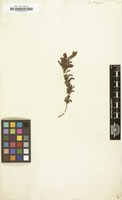
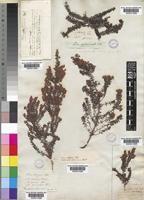
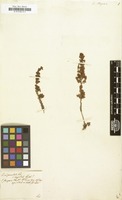
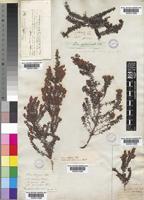
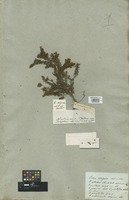
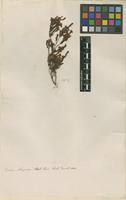
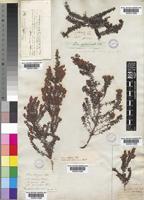
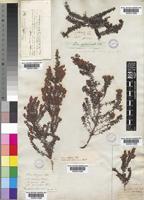
Erica strigosa

15 Images see all

Filed as Erica strigosa [family ERICACEAE]
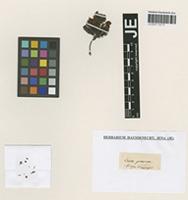
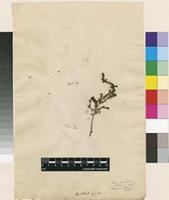
Type? of Erica praecox Lodd. [family ERICACEAE]
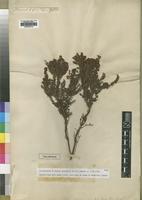
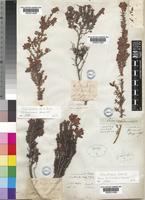
Type of Erica strigosa Sol. [family ERICACEAE]
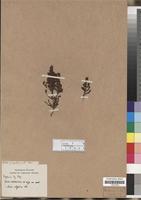
Erica strigosa Sol. [family ERICACEAE]
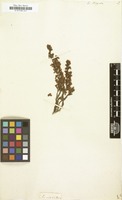
Filed as Erica strigosa [family ERICACEAE]
Erica strigosa Sol. [family ERICACEAE]
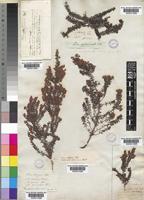
Filed as Erica strigosa Sol. [family ERICACEAE]
Lectotype of Blaeria pusilla L. [family ERICACEAE]
Erica armata Klotzsch ex Benth. [family ERICACEAE]
Filed as Erica strigosa [family ERICACEAE]
Filed as Erica strigosa Sol. [family ERICACEAE]
Erica strigosa Sol. [family ERICACEAE]
Filed as Erica strigosa Sol. [family ERICACEAE]
Erica strigosa Sol. [family ERICACEAE]
Type of Erica axillaris Salisb. [family ERICACEAE]
Previous
Next

Name

Identification
Erica strigosa Sol. [family ERICACEAE ] (stored under name);
Related name
  • Erica armata
  • Erica praecox
  • Erica lasiophylla
  • Erica unrecorded
  • Erica scabriuscula
  • Erica arborea
  • Blaeria pusilla
  • Erica glabella
  • Erica axillaris
  • Erica strigosa

Flora

Entry for ERICA strigosa Soland. [family ERICACEAE]
Herbarium
Royal Botanic Gardens, Kew (K)
Collection
Flora Capensis
Resource Type
Reference Sources
Entry From
Flora Capensis, Vol 4, page 2, (1909) Author: By H. BOLUS, F. GUTHRIE, and N. E. BROWN.
Names
ERICA strigosa Soland. [family ERICACEAE], in Ait. Hort. Kew. ed. 1, ii. 17, not of Wendl.;—Benth. in DC. Prodr. vii. 678.
ERICA arborea Thunb. [family ERICACEAE], Diss. Erica, 40, not of Linn. nor of others, fide Salisb. and Rach.
ERICA axillaris Salisb. [family ERICACEAE], in Trans. Linn. Soc. vi. 325, not of Thunb.
ERICA præcox Lodd. [family ERICACEAE], Bot. Cab. t. 1413.
ERICA pilulifera Wendl. [family ERICACEAE], Eric. Ic. fasc. 19, 107, t. 41? not of Linn.
ERICA Chamætetralix Tausch [family ERICACEAE], in Flora, 1834, 616?
ERICA lasiophylla Spreng. [family ERICACEAE], Syst. Veg. ii. 195, fide Benth.
ERICA scabriuscula Drège ex Benth. [family ERICACEAE], in DC. Prodr. vii. 678.
Information
erect, stout, 2–3 ft. high, by far the largest in this section; branches thickish, erect or divaricate, puberulous and also pilose with glandular hairs; leaves 4-nate, mostly squarrose or spreading, generally longer than the internodes, linear or linear-lanceolate, acuminate, puberulous above, velvety and paler beneath, narrowly open-backed with thick revolute margins, minutely puberulous, ciliate with setose gland-tipped hairs, 2–3 lin. long; flowers axillary and terminal, appearing subracemose on the ends of the branches, sometimes lax and interrupted, sometimes congested into a short pseudo-spike; pedicels from 1–2 lin. long; bracts remote, minute, or some occasionally wanting; sepals linear or linear-lanceolate, acuminate, foliaceous, tipped with a glandular hair, about 1 lin. long; corolla short-cyathiform or suburceolate-cyathiform, scarcely contracted or widened to the mouth, glabrous, dry, about 1 1/2 lin. long, rather less in width; segments short, erect; anthers from subincluded to subexserted, lateral, dorsifixed near the base, about 1/2 lin. long or less, aristate; pore about 1/2 the length of the cell; awns straight, 1/2 the length of the cell or less; style exserted, straight; stigma capitate; ovary turbinate, glabrous. null
Distribution
COAST REGION between 1000 and 2000 ft.: Cape Div.; Devils Peak, Burchell, 8465! Guthrie, 1167! Wolley Dod, 1740! Table Mountain, Masson! Bolus, 4752! Kässner, 162! Orange Kloof, Wolley Dod, 3416! Div.? Wilde River, Niven!SOUTH AFRICA without locality, Thunberg, Drège! Herb. Salisbury!
Notes
This species is well-marked in the section by its robust habit; and in this respect it is certainly exceptional. Bentham placed it in the § Orophanes; but by its usually axillary (as well as terminal) flowers, its spreading and open-backed leaves, it seems to us more conveniently arranged here.

Related Materials

  • Terms and Conditions
  • Privacy Policy
  • Cookie Policy
  • Cookie Settings
  • Accessibility
  • Help
  • Contact Us
  • Facebook
  • Twitter
ITHAKA

JSTOR is part of ITHAKA, a not-for-profit organization helping the academic community use digital technologies to preserve the scholarly record and to advance research and teaching in sustainable ways.

©2000-2026 ITHAKA. All Rights Reserved. JSTOR®, the JSTOR logo, JPASS®, Aluka®, and ITHAKA® are registered trademarks of ITHAKA.

╳