JSTOR Global Plants Home
  • Home
  • Browse
  • About
  • Access
  • Account
    • Saved Items
    • Profile
  • Log in

Global Plants

Skip to Main Content
  • JSTOR Global Plants Home
  • Global Plants

    • Browse
    • About
    • Access
    • Account
      • Saved Items
      • Profile
Log in
  • Browse
  • About
  • Access
  • Account
    • Saved Items
    • Profile
Advanced Search

Compilation
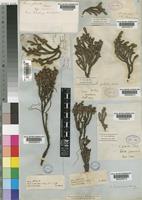
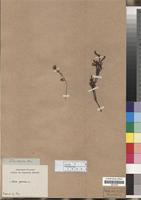
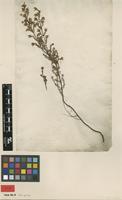
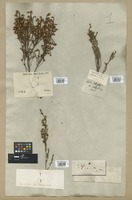
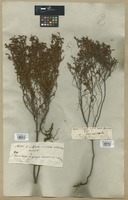
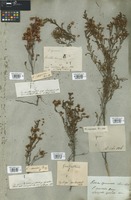
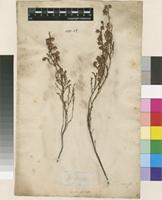
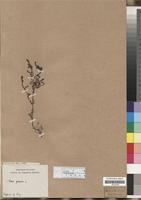
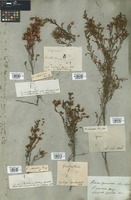
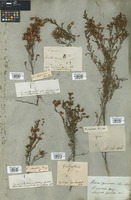
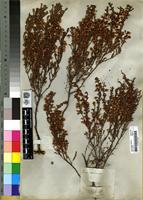
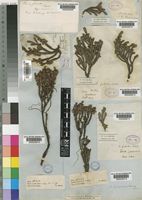
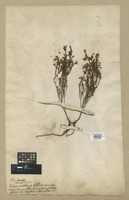
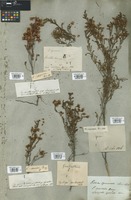
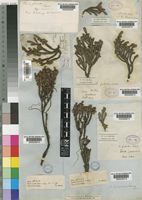
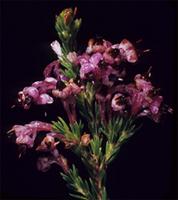
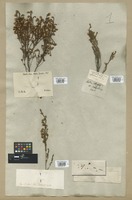
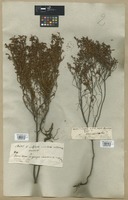
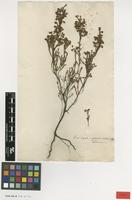
Erica spumosa

23 Images see all

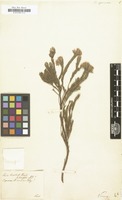
Filed as Erica spumosa [family ERICACEAE]
Filed as Erica spumosa L. [family ERICACEAE]
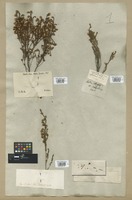
Erica lycopodiastrum Lam. [family ERICACEAE]
Filed as Erica spumosa L. [family ERICACEAE]
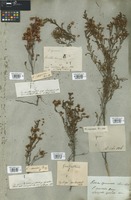
Type? of Erica scariosa P. J. Bergius [family ERICACEAE]
Filed as Erica spumosa L. [family ERICACEAE]
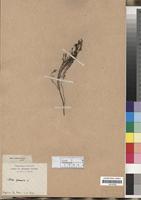
Erica lycopodiastrum Lam. [family ERICACEAE]
Filed as Erica spumosa L. [family ERICACEAE]
Lectotype of Erica spumosa L. [family ERICACEAE]
Filed as Erica spumosa L. [family ERICACEAE]
Erica lycopodiastrum Lam. [family ERICACEAE]
Erica spumosa L.
Filed as Erica spumosa L. [family ERICACEAE]
Type? of Erica scariosa P.J.Bergius [family ERICACEAE]
Previous
Next

Name

Identification
Erica spumosa L. [family ERICACEAE ]
Related name
  • Erica spumosa

Flora

Entry for ERICA sexfaria Bauer [family ERICACEAE]
Herbarium
Royal Botanic Gardens, Kew (K)
Collection
Flora Capensis
Resource Type
Reference Sources
Entry From
Flora Capensis, Vol 4, page 2, (1909) Author: By H. BOLUS, F. GUTHRIE, and N. E. BROWN.
Names
ERICA sexfaria Bauer [family ERICACEAE], Exot. Pl. t. 11;—Andr. Heathery, t. 88, and Col. Heaths, t. 131; Benth. in DC. Prodr. vii. 618.
ERICA spumosa Thunb. [family ERICACEAE], Diss. Erica, 17, not of Linn.
Information
erect, 8–15 in. high; branches ascending, flexuous, rigid, brittle, the younger pubescent, the older covered with scars of leaf-cushions, blackish; leaves spreading or suberect, sometimes densely imbricate and, owing to the shortness of the internodes, standing in six close ranks, broad linear-trigonous, thick, glabrous, 1 1/2 lin. long; heads subglobose; bracts broad-ovate; sepals obovate, keeled, 1 1/2–2 lin. long, reaching nearly or quite to the top of the corolla; corolla narrow-ovoid or suburceolate, not (or but slightly) contracted at the throat, white, 2 lin. long; segments suberect, ovate, 2/3– 7/8 of the tube in length; anthers narrow-elliptic, bifid to the middle, tapering acutely to either end, about 3/4 lin. long, decurrent-aristate; pore over 1/2 the length of the cell, nearly black; free portion of the awns very variable in length, always much shorter than the adnate portion, sometimes reduced to a mere point, and the anther then (except for the widened filament) appearing muticous. null
Distribution
COAST REGION Clanwilliam Div.; Wupperthal, Wurmb, ex Drège. Cape Div.; top of Table Mountain, Thunberg, Burchell, 537! Bowie! Drège, 7747! McGillivray, 445! Cooper, 2682! Milne, 122! Bolus, 2950! Guthrie, 1539! Schlechter, 548! Caledon Div.; Houw Hoek Mountains, 3200 ft., Bolus, 5458! Schlechter, 5459! summit of Genadendal Mountain, Galpin, 3540! Swellendam Div.; on mountains, Bowie! Riversdale Div.; Garcias Pass, 2300 ft., Galpin, 3541!SOUTH AFRICA without locality, cultivated specimens!
Notes
This species varies in the setting of the leaves, which are sometimes spreading and less closely-set, as in Bauer's fine figure of the type, sometimes densely imbricate, 3 times longer than the internodes, and more erect; the latter form gave rise to the term “sexfarious,” for while all the heaths with 3-nate leaves are strictly so, they do not equally distinctly show it. Galpin's 3540 and 3541 are in almost exact agreement with the type; while plants from the rocky, barren summit of Table Mountain have leaves commonly more erect and close-set. It also varies in the length of the free portion of the awns of the anther, as may be seen by comparing Bauer's with Andrews' figures.

Related Materials

  • Terms and Conditions
  • Privacy Policy
  • Cookie Policy
  • Cookie Settings
  • Accessibility
  • Help
  • Contact Us
  • Facebook
  • Twitter
ITHAKA

JSTOR is part of ITHAKA, a not-for-profit organization helping the academic community use digital technologies to preserve the scholarly record and to advance research and teaching in sustainable ways.

©2000-2026 ITHAKA. All Rights Reserved. JSTOR®, the JSTOR logo, JPASS®, Aluka®, and ITHAKA® are registered trademarks of ITHAKA.

╳