JSTOR Global Plants Home
  • Home
  • Browse
  • About
  • Access
  • Account
    • Saved Items
    • Profile
  • Log in

Global Plants

Skip to Main Content
  • JSTOR Global Plants Home
  • Global Plants

    • Browse
    • About
    • Access
    • Account
      • Saved Items
      • Profile
Log in
  • Browse
  • About
  • Access
  • Account
    • Saved Items
    • Profile
Advanced Search

Compilation
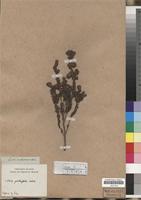
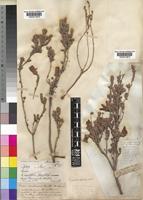
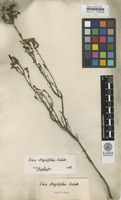
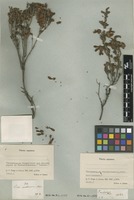
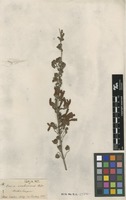
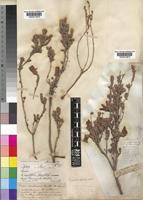
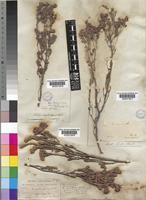
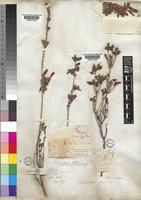
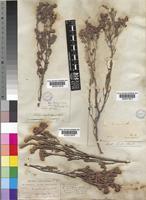
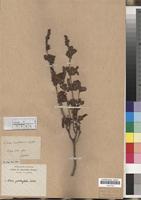
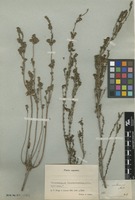
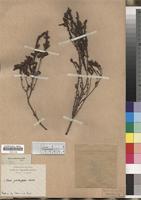
Erica pectinifolia

16 Images see all

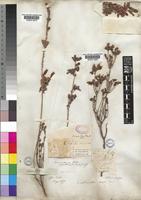
Filed as Erica pectinifolia Salisb. [family ERICACEAE]
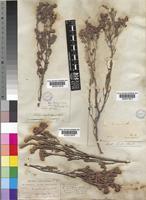
Erica pectinifolia Salisb. [family ERICACEAE]
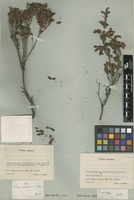
Isotype of Erica strigilifolia Salisb. [family ERICACEAE]
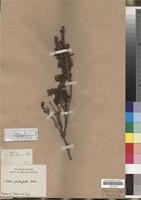
Filed as Erica pectinifolia Salisb. [family ERICACEAE]
Erica pectinifolia Salisb. [family ERICACEAE]
Filed as Erica pectinifolia Salisb. [family ERICACEAE]
Erica pectinifolia Salisb. [family ERICACEAE]
Filed as Erica pectinifolia Salisb. [family ERICACEAE]
Previous
Next

Name

Identification
Erica pectinifolia Salisb. [family ERICACEAE ] (stored under name); Verified by HBG-formal name change, 2010 Erica erubescens Andrews [family ERICACEAE ] Verified by Not on sheet,
Related name
  • Erica cerinthoides
  • Erica elongata
  • Erica unrecorded
  • Erica pectinifolia
  • Erica erubescens

Flora

Entry for ERICA pectinifolia Salisb. [family ERICACEAE]
Herbarium
Royal Botanic Gardens, Kew (K)
Collection
Flora Capensis
Resource Type
Reference Sources
Entry From
Flora Capensis, Vol 4, page 2, (1909) Author: By H. BOLUS, F. GUTHRIE, and N. E. BROWN.
Names
ERICA pectinifolia Salisb. [family ERICACEAE], in Trans. Linn. Soc. vi. 367
ERICA erubescens Andr. [family ERICACEAE], Heathery, t. 113; Benth. in DC. Prodr. vii. 637, not of Lodd.
ERICA cerinthoides Thunb. var. β [family ERICACEAE], Diss. Erica, 26, and Fl. Cap. ed. Schultes, 354.
Information
erect, 1 1/2–2 1/2 ft. high; branches slender; leaves 4-nate, erect, imbricate or sometimes shorter than the internodes, variable in size, from linear to lanceolate and ovate, acute, more or less open-backed, thick and rigid, roughly and thinly hispid, and pectinate-ciliate with long pallid cartilaginous hairs, the floral leaves wider and passing gradually into the form of the bracts, 1 1/2–3 lin. long; flowers mostly 4-nate, cernuous or spreading; pedicels 1/2 lin. long; bracts approximate, unguiculate, broad ovate or subtriangular, margins scarious, rigidly pectinate-ciliate, with a thick central nerve, about 3 lin. long; sepals like the bracts but the claw longer, and the blade somewhat smaller, about 3 1/2 lin. long; corolla tubular, slightly inflated about the middle, constricted below the short spreading limb, pubescent, the upper part with longer barbellate or shaggy hairs, white or rosy, 7–9 lin. long; anthers included, oblong, 7/8 lin. long, shortly aristate; style exserted; ovary obconical, villous with long white silky hairs. null
Distribution
COAST REGION on mountains at 400–600 ft.: Uniondale Div.; Lange Kloof Mountains, Thunberg, Bolus, 2391! Humansdorp Div.; Kromme River, Niven, 167! Kruisfontein, Galpin, 3594! Clarkson, 400 ft., Schlechter, 6006! Zitzikamma, Pappe! Uitenhage Div., near the Lead Mines, and between there and Van Stadens River, Burchell, 4511! 4580! 4621! Van Stadens Mountains, MacOwan, 1126! 2059! Bolus, 1578! Witte Klip, Bolus, 9132!
Notes
There has often been confusion of this species with the preceding. Yet according to Salisbury's own description the peculiar sepals and bracts of this species separate the two quite effectually, and we have seen no intermediate or doubtful forms. The resemblance is considerable at first sight, but is only superficial. This species, so far as we know, is much commoner and more widely distributed than the preceding.

Related Materials

  • Terms and Conditions
  • Privacy Policy
  • Cookie Policy
  • Cookie Settings
  • Accessibility
  • Help
  • Contact Us
  • Facebook
  • Twitter
ITHAKA

JSTOR is part of ITHAKA, a not-for-profit organization helping the academic community use digital technologies to preserve the scholarly record and to advance research and teaching in sustainable ways.

©2000-2026 ITHAKA. All Rights Reserved. JSTOR®, the JSTOR logo, JPASS®, Aluka®, and ITHAKA® are registered trademarks of ITHAKA.

╳