JSTOR Global Plants Home
  • Home
  • Browse
  • About
  • Access
  • Account
    • Saved Items
    • Profile
  • Log in

Global Plants

Skip to Main Content
  • JSTOR Global Plants Home
  • Global Plants

    • Browse
    • About
    • Access
    • Account
      • Saved Items
      • Profile
Log in
  • Browse
  • About
  • Access
  • Account
    • Saved Items
    • Profile
Advanced Search

Compilation
Erica myriantha

11 Images see all

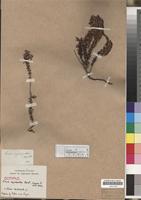
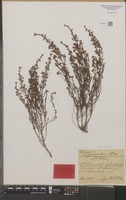
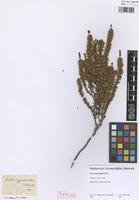
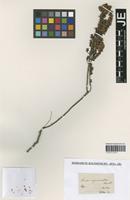
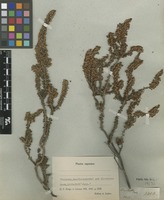
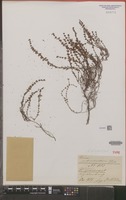
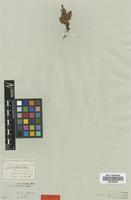
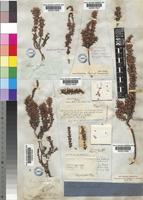
Isotype of Erica myriantha Bartl. [family ERICACEAE]
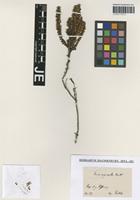
Isotype of Erica subverticillaris Diels ex Guthrie & Bolus [family ERICACEAE]
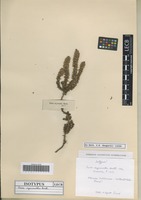
Syntype of Erica myriantha Bartl. [family ERICACEAE]
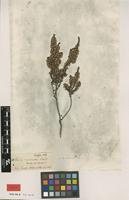
Type? of Erica myriantha Bartl. [family ERICACEAE]
Isotype of Erica subverticillaris Diels ex Guthrie & Bolus [family ERICACEAE]
Type of Erica myriantha Bartl. [family ERICACEAE]
Type? of Erica myriantha Bartl. [family ERICACEAE]
Filed as Erica imbricata L. [family ERICACEAE]
Type? of Erica myriantha Bartl. [family ERICACEAE]
Isotype of Erica myriantha Bartl. [family ERICACEAE]
Erica imbricata L. [family ERICACEAE]
Previous
Next

Name

Identification
Erica imbricata L. [family ERICACEAE ] (stored under name); Verified by Not on Sheet, Erica myriantha Bartl. [family ERICACEAE ] Verified by Not on Sheet,
Related name
  • Erica imbricata
  • Erica myriantha

Flora

Entry for ERICA imbricata Linn. [family ERICACEAE]
Herbarium
Royal Botanic Gardens, Kew (K)
Collection
Flora Capensis
Resource Type
Reference Sources
Entry From
Flora Capensis, Vol 4, page 2, (1909) Author: By H. BOLUS, F. GUTHRIE, and N. E. BROWN.
Names
ERICA imbricata Linn. [family ERICACEAE], Sp. Pl. ed. 2, 503;—Benth. in DC. Prodr. vii. 620; Andr. Heathery, t. 119, and Col. Heaths, t. 27; Wendl. Eric. Ic. fasc. 21, 135, t. 51; Lodd. Bot. Cab. t. 1243.
ERICA quinquangularis Berg. [family ERICACEAE], Descr. Pl. Cap. 117
ERICA laricifolia Lam. [family ERICACEAE], Encycl. i. 487, acc. to Ind. Kew.
ERICA flexuosa Andr. [family ERICACEAE], Heathery, t. 65, and Col. Heaths, t. 23; Lodd. l.c. t. 1495.
ERICA divaricata Wendl. [family ERICACEAE], l.c. fasc. 7, 5.
ERICA cæsia Wendl. [family ERICACEAE], l.c. fasc. 24, 179, t. 67.
ERICA pyramidalis Salisb. [family ERICACEAE], in Trans. Linn. Soc. vi. 349, 350.
ERICA squamæflora Salisb. [family ERICACEAE], in Trans. Linn. Soc. vi. 349, 350.
ERICA cæsia Salisb. [family ERICACEAE], in Trans. Linn. Soc. vi. 349, 350.
ERICA flexuosa Salisb. [family ERICACEAE], in Trans. Linn. Soc. vi. 349, 350.
ERICA stylosa Salisb. [family ERICACEAE], in Trans. Linn. Soc. vi. 349, 350.
ERICA imbricata Roxb. [family ERICACEAE], in Trans. Linn. Soc. vi. 349, 350.
ERICA bracteata Roxb. ex Salisb. [family ERICACEAE], in Trans. Linn. Soc. vi. 349, 350.
ERICA ramulosa Bartl. [family ERICACEAE], in Linnæa, vii. 632, 633.
ERICA densiflora Bartl. [family ERICACEAE], in Linnæa, vii. 632, 633.
ERICA brunneo-alba Bartl. [family ERICACEAE], in Linnæa, vii. 632, 633.
ERICA myriantha Bartl. [family ERICACEAE], in Linnæa, vii. 632, 633.
ERICA porrigens Bartl. [family ERICACEAE], in Linnæa, vii. 632, 633.
ERICA Actea Sinclair [family ERICACEAE], Hort. Eric. Wob. 1.
ERICA violacea Klotzsch ex Benth. [family ERICACEAE], in DC. Prodr. vii. 620.
ERICA leptocephala Klotzsch ex Benth. [family ERICACEAE], in DC. Prodr. vii. 620.
ERICA trifaria Klotzsch ex Benth. [family ERICACEAE], in DC. Prodr. vii. 620.
ERICA sparsa Klotzsch ex Benth. [family ERICACEAE], in DC. Prodr. vii. 620.
ERICA paleacea Klotzsch ex Benth. [family ERICACEAE], in DC. Prodr. vii. 620.
ERICA glaucifolia Klotzsch ex Benth. [family ERICACEAE], in DC. Prodr. vii. 620.
ERICA imbricata Rach var. elongata [family ERICACEAE], in Linnæa, xxvi. 771.
Information
erect, 1–3 ft. high; branches virgate or diffuse, variably pubescent, most usually with abundant flowers; leaves erect or spreading, linear, 1 1/2–2 1/2 lin. long; pedicels 1 1/2 lin. long; bracts approximate, more rarely subremote, sepal-like but smaller; sepals ovate, keel-tipped, subcartilaginous, rigid, glabrous, white, brown, or red, mostly about 1 1/4 lin. long, a little longer or shorter than the corolla; corolla cyathiform, ovoid, urceolate or globose-urceolate, white, foxy or reddish, 1–1 1/4 lin. long; anthers varying from terminal to nearly lateral, linear, oblong, lanceolate, semiovate or narrow-ovate, mostly acute or acuminate, more rarely obtuse, glabrous, smooth, light to dark-brown, mostly about 1/2 (rarely 3/4) lin. long; pore from 1/2– 2/3 the length of the cell; stigma clavate-capitellate; ovary usually glabrous, rarely puberulous. null
Distribution
COAST REGION common on plains and mountains: A—Cape Div.; Thunberg, Ecklon, 287! Caledon Div., Zeyher, 3304! 3305! Bolus, 4173! 5113! Swellendam Div., Masson, 2! Div.? Bolus, 1196! B—Stellenbosch Div.; Lowrys Pass, Schlechter, 5388! Div.? Bolus, 6740! 7471! C—Caledon Div., Schlechter, 9493! 10400! Bredasdorp Div., Schlechter, 10479! 10542! Bolus, 8445! Div.? Bolus, 6741! D—Tulbagh Div.; Witsen Berg, Burchell, 8683! Paarl Div., Bolus, 6969! Cape Div., Burchell, 24! 628! Caledon Div., Bolus, 5111! and in Herb. Norm. Austr.-Afr., 607! Zeyher, 3298! Div.? Guthrie, 2026! 3768! 4168!SOUTH AFRICA without locality; A, Herb. Linnæus! Herb. Salisbury! and cultivated specimens!
Notes
A most variable species, difficult of distinction into varieties. We have merely thrown the very large suite of specimens before us into four groups, which, in the absence of constant floral characters, may frequently be recognized by their general appearance:— A. The form represented by a named specimen in Linnæus' Herbarium; by the plates of Wendland in Eric. Ic. fasc. 7 and 24, and by specimens named E. flexuosa, E. ornata, Klotzsch ex Benth. in DC. Prodr. vii. 620, and E. densiflora, Bartl. in Linnæa, vii. 632. The inflorescence is usually copious and dense; the flowers have a foxy colour; the anthers are pale brown, and the branches are commonly flexuous. B. The form represented by the plates in Andrews' Heathery, t. 65, and Wendland, Eric. Ic. fasc. 21. Inflorescence less copious and less dense; flowers white, more rarely rosy, contrasting with dark-brown anthers. C. The form shown in Andrews' Heathery, t. 119. Flowers red or rosy; anthers dark; leaves often spreading-recurved. D. Habit more robust and more virgate than in the other forms; flowers white or rosy, more globose and less crowded; anthers usually more lateral than in the preceding forms, rarely subterminal. This form approaches E. placentæflora.

Related Materials

  • Terms and Conditions
  • Privacy Policy
  • Cookie Policy
  • Cookie Settings
  • Accessibility
  • Help
  • Contact Us
  • Facebook
  • Twitter
ITHAKA

JSTOR is part of ITHAKA, a not-for-profit organization helping the academic community use digital technologies to preserve the scholarly record and to advance research and teaching in sustainable ways.

©2000-2026 ITHAKA. All Rights Reserved. JSTOR®, the JSTOR logo, JPASS®, Aluka®, and ITHAKA® are registered trademarks of ITHAKA.

╳