JSTOR Global Plants Home
  • Home
  • Browse
  • About
  • Access
  • Account
    • Saved Items
    • Profile
  • Log in

Global Plants

Skip to Main Content
  • JSTOR Global Plants Home
  • Global Plants

    • Browse
    • About
    • Access
    • Account
      • Saved Items
      • Profile
Log in
  • Browse
  • About
  • Access
  • Account
    • Saved Items
    • Profile
Advanced Search

Compilation
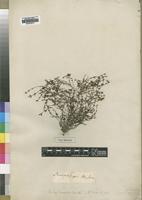
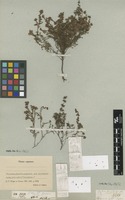
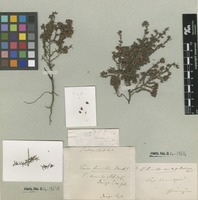
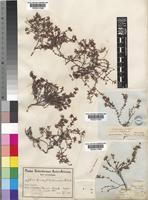
Erica humilis

5 Images see all

Type of Erica humilis Benth. [family ERICACEAE]
Filed as Erica filiformis Salisb. [family ERICACEAE]
Erica filiformis Salisb. [family ERICACEAE]
Previous
Next

Name

Identification
Erica filiformis Salisb. [family ERICACEAE ] (stored under name); Erica humilis Benth. [family ERICACEAE ]
Related name
  • Erica humilis
  • Erica filiformis

Flora

Entry for ERICA filiformis Salisb. [family ERICACEAE]
Herbarium
Royal Botanic Gardens, Kew (K)
Collection
Flora Capensis
Resource Type
Reference Sources
Entry From
Flora Capensis, Vol 4, page 2, (1909) Author: By H. BOLUS, F. GUTHRIE, and N. E. BROWN.
Names
ERICA filiformis Salisb. [family ERICACEAE], in Trans. Linn. Soc. vi. 345, not of Bartl.;—Benth. in DC. Prodr. vii. 670.
ERICA humilis Benth. [family ERICACEAE], l.c. 615, not of Neck. nor Salisb.
ERICA divergens Wendl. [family ERICACEAE], l.c. 670.
ERICA flavida Klotzsch [family ERICACEAE], l.c. 670.
ERICA connivens Klotzsch, ex Benth. [family ERICACEAE], l.c. 670.
Information
procumbent, sometimes almost prostrate, much branched, spreading 6–8 in. from the stem in every direction; branches puberulous, leafy; leaves 3-nate, erect-spreading, usually shorter than the internodes, linear-subterete, sulcate, hirsute or glabrescent, mostly with a tuft of white hairs at the apex, 1 1/2–3 lin. long; flowers terminal, 3-nate or in clusters of 3–6; pedicels slender, about 1 lin. long; bracts closely approximate, small; sepals linear-subulate or narrow-lanceolate, acute, foliaceous, hirsute, shortly gland-ciliate, about 1 lin. long; corolla suburceolate, tubular-urceolate or ovoid-urceolate, more or less contracted at the throat, usually tetragonous, viscid, glabrous, 1 1/4–1 3/4 lin. long; segments more or less spreading or suberect, semiovate, rounded, from 1/3– 1/2 the length of the tube; stamens usually 8, but often 4–7; filaments narrow, a little dilated and dark-coloured below the anther; anthers exserted or subexserted, lateral, sublateral or rarely subterminal, narrow-oblong, 1/3– 2/5 lin. long, muticous; pore about 3/4 the length of the cell; style slender, exserted; stigma small, subsimple; ovary globose, glabrous. null
Distribution
COAST REGION from 800 to 2000 ft.: Caledon Div.; Klein Houw Hoek, Zeyher, 3217! Nieuw Berg, near Palmiet River, Zeyher, 3332! hills near Grabouw, Bolus, 4177! 4178! Guthrie, 4169! Houw Hoek, Bolus, 7369! 6958! Schlechter, 9425! Var. β: Bredasdorp Div.; hills near Cape Agulhas, 250 ft., Schlechter, 10559! Var. γ: Stellenbosch Div.; Lowrys Pass, 1500 ft., Schlechter, 7247!SOUTH AFRICA without locality, Roxburgh! Herb. Salisbury! Drège!
Notes
This is a curiously variable species in respect of the number of its stamens. We have found them 4 to 8. Those specimens with 4 stamens (Bolus, 4178, and Zeyher, 3332) are so in most, if not all, the flowers. They are then technically Blæria and not Erica. Even if these stood alone it would seem a forcing of nature to separate them from E. filiformis, with which they agree in all other respects. But intermediate forms appear to indicate at once an unstable condition, which induces us to abandon (for systematic purposes in this particular case) a character based upon stability in the number of the stamens.

Related Materials

  • Terms and Conditions
  • Privacy Policy
  • Cookie Policy
  • Cookie Settings
  • Accessibility
  • Help
  • Contact Us
  • Facebook
  • Twitter
ITHAKA

JSTOR is part of ITHAKA, a not-for-profit organization helping the academic community use digital technologies to preserve the scholarly record and to advance research and teaching in sustainable ways.

©2000-2026 ITHAKA. All Rights Reserved. JSTOR®, the JSTOR logo, JPASS®, Aluka®, and ITHAKA® are registered trademarks of ITHAKA.

╳