JSTOR Global Plants Home
  • Home
  • Browse
  • About
  • Access
  • Account
    • Saved Items
    • Profile
  • Log in

Global Plants

Skip to Main Content
  • JSTOR Global Plants Home
  • Global Plants

    • Browse
    • About
    • Access
    • Account
      • Saved Items
      • Profile
Log in
  • Browse
  • About
  • Access
  • Account
    • Saved Items
    • Profile
Advanced Search

Compilation
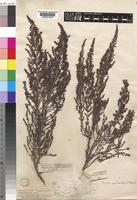
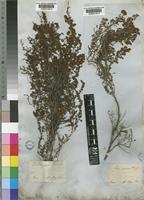
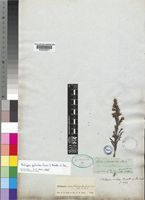
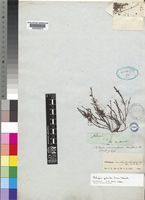
Erica galioides

5 Images see all

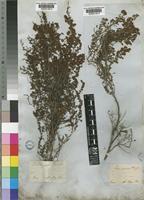
Erica galioides unrecorded [family ERICACEAE]
Erica galioides Lam. [family ERICACEAE]
Erica galioides unrecorded [family ERICACEAE]
Previous
Next

Name

Identification
Erica galioides Lam. [family ERICACEAE ] (stored under name); Salaxis unrecorded unrecorded [family ERICACEAE ] Philippia galioides (Lam.) Benth. [family ERICACEAE ] Verified by Dorr, L.J., Philippia ramosissima Benth. [family ERICACEAE ] Philippia multiglandulosa Alm & T.C.E.Fr. [family ERICACEAE ] Verified by Alm, C.G.; Fries, Th.C.E.,
Related name
  • Philippia multiglandulosa
  • Erica hispidula
  • Philippia galioides
  • Philippia ramosissima
  • Erica viscaria
  • Erica unrecorded
  • Erica galioides
  • Salaxis unrecorded
  • Philippia viscosa

Flora

Entry for ERICA leucopelta Tausch [family ERICACEAE]
Herbarium
Royal Botanic Gardens, Kew (K)
Collection
Flora Capensis
Resource Type
Reference Sources
Entry From
Flora Capensis, Vol 4, page 2, (1909) Author: By H. BOLUS, F. GUTHRIE, and N. E. BROWN.
Names
ERICA leucopelta Tausch [family ERICACEAE], in Flora, 1834, 616
ERICA barbata Hort. ex Tausch [family ERICACEAE], in Flora, 1834, 616.
ERICA unibracteata Klotzsch ex Benth. [family ERICACEAE], in DC. Prodr. vii. 692.
ERICA hispidula Benth. var. foliacea [family ERICACEAE], l.c. 691.
ERICA foliacea Klotzsch [family ERICACEAE], l.c. partly, not of Lam.
ERICA galioides Klotzsch ex Benth. [family ERICACEAE], l.c. partly, not of Lam.
Information
erect; branches and leaves pubescent, or also hispid with scanty or dense, coarse, stiff, white, sometimes gland-tipped hairs; leaves erect or spreading, oblong-lanceolate or linear, sulcate or very rarely subopen-backed, 1–2 1/2 lin. long; flowers mostly scanty, or at least not in dense masses; pedicels 1/2– 3/4 lin. long; bracts remote, mostly 3, one rather large and foliaceous, and two usually small or very minute, or perhaps sometimes wanting; sepals linear or oblong, foliaceous, pubescent, hispid-ciliate or naked, about 1/3 lin. long; corolla broad-cyathiform or hemispherical, widened to the mouth, glabrous, smooth or minutely papillose, dull yellow, 1/2– 3/4 lin. long; segments erect, broadly rounded, equalling or slightly longer than the tube; filaments capillary, shorter than the anther; anthers subexserted or subincluded, elliptical or subovate, obtuse, smooth, pale brown, 1/4– 2/5 lin. long, muticous; pore about 1/3 the length of the cell; style included or exserted; stigma cyathiform or peltate, large; ovary thinly hispidulous, glabrescent. null
Distribution
COAST REGION Stockenstrom Div.; Kat Berg, Ecklon & Zeyher! (in Herb. Berlin; the type of E. unibracteata, Kl.) Var. β: King Williamstown Div.; summit of Perie Mountain, 3000 ft., Flanagan, 2163! Buffalo River Mountains, Murray in Herb. MacOwan, 1045! Var. γ: Caledon Div.; mountains near Hemel-en-Aarde, Aug., Zeyher, 3337! Albany Div.; mountains near Grahamstown, Zeyher, 882!EASTERN REGION Var. β: Tembuland; Entwanazana, near Gat Berg, 4000 ft., Baur, 517!
Notes
The type of Tausch (a cultivated specimen in the Herb. of the Royal Univ. of Prague) and of E. unibracteata, Klotzsch, agree well. Both have distinctly three bracts, though two are usually very minute. Our other specimens chiefly differ in the indumentum of the branches, leaves and corolla. The bracts are somewhat variable in size and position, but are of one general type. The flowers much resemble those of E. mæsta (§ Chlorocodon).

Related Materials

  • Terms and Conditions
  • Privacy Policy
  • Cookie Policy
  • Cookie Settings
  • Accessibility
  • Help
  • Contact Us
  • Facebook
  • Twitter
ITHAKA

JSTOR is part of ITHAKA, a not-for-profit organization helping the academic community use digital technologies to preserve the scholarly record and to advance research and teaching in sustainable ways.

©2000-2026 ITHAKA. All Rights Reserved. JSTOR®, the JSTOR logo, JPASS®, Aluka®, and ITHAKA® are registered trademarks of ITHAKA.

╳