JSTOR Global Plants Home
  • Home
  • Browse
  • About
  • Access
  • Account
    • Saved Items
    • Profile
  • Log in

Global Plants

Skip to Main Content
  • JSTOR Global Plants Home
  • Global Plants

    • Browse
    • About
    • Access
    • Account
      • Saved Items
      • Profile
Log in
  • Browse
  • About
  • Access
  • Account
    • Saved Items
    • Profile
Advanced Search

Compilation
Erica densiflora

9 Images see all

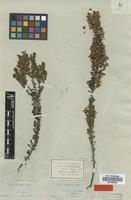
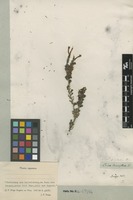
Type of Erica densiflora Bartl. [family ERICACEAE]
Filed as Erica imbricata L. [family ERICACEAE]
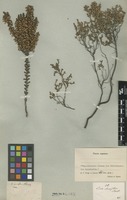
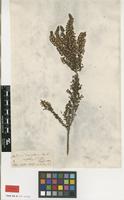
Isotype of Erica densiflora Bartl. [family ERICACEAE]
Filed as Erica accommodata Klotzsch ex Benth. [family ERICACEAE]
Filed as Erica imbricata L. [family ERICACEAE]
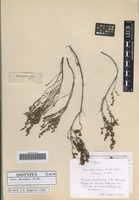
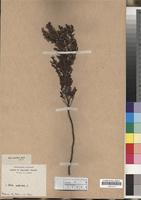
Type? of Erica densiflora Bartl. [family ERICACEAE]
Filed as Erica imbricata L. [family ERICACEAE]
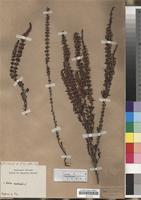
Filed as Erica discolor Andrews [family ERICACEAE]
Previous
Next

Name

Identification
Erica imbricata L. [family ERICACEAE ] (stored under name); Verified by Not on Sheet, Erica densiflora Bartl. [family ERICACEAE ] Verified by Not on Sheet,
Related name
  • Erica imbricata
  • Erica densiflora

Flora

Entry for ERICA discolor Andr. [family ERICACEAE]
Herbarium
Royal Botanic Gardens, Kew (K)
Collection
Flora Capensis
Resource Type
Reference Sources
Entry From
Flora Capensis, Vol 4, page 2, (1909) Author: By H. BOLUS, F. GUTHRIE, and N. E. BROWN.
Names
ERICA discolor Andr. [family ERICACEAE], Col. Heaths, t. 20;—Andr. Heathery, t. 160; Wendl. Eric. Ic. fasc. 5, 9; Lodd. Bot. Cab. t. 1453.
ERICA cupressiformis Salisb. [family ERICACEAE], in Trans. Linn. Soc.vi. 354.
ERICA densiflora Drège [family ERICACEAE], Zwei Pflanzengeogr. Documente, 105.
Information
erect, 2–3 ft. high; branches stout, pubescent; leaves 3-nate, suberect and imbricate, or somewhat spreading, linear or narrow-lanceolate, glabrous or the younger viscid-puberulous, often glossy, 1 1/2–3 1/2 lin. long; pedicels 1–1 1/2 lin. long; bracts approximate, like the sepals but about 2/3 their length; sepals ovate-lanceolate, acute or acuminate, keeled-tipped, scarious, coloured, glabrous, ciliolate or naked, 2–2 1/2 lin. long; corolla clavate-tubular or trumpet-shaped, glabrous, dry, red, 9–12 lin. long; limb erect or slightly spreading, red or greenish; filaments equal at the base or but slightly dilated; anthers included or just manifest, linear to oblong, more or less hollowed at the base, about 3/4 lin. long, aristate; awns reaching 2/3 the length of the cell below it, or much shorter; style usually curved at the apex; ovary glabrous. null
Distribution
COAST REGION Caledon Div.; Palmiet River, Niven, 103! Houw Hoek, Zeyher, 3159; Bolus, 5346! and in Herb. Norm. Aust.-Afr., 193! Bredasdorp Div.; near Elim, Bolus, 6761! George Div.; Outeniqualand, Niven, 197; west end of Lange Valley, Burchell, 5686; Knysna Div.; hills near Melville, Burchell, 5460! Humansdorp Div.; near Kromme River, Burchell, 4846, 4875, 4877. Port Elizabeth Div.; near Port Elizabeth, Holland! Also cultivated specimens! Var. β: Mossel Bay Div.; Attaquas Kloof, Mund & Maire!
Notes
Very near to E. unicolor; also allied to E. versicolor, from which it may be most readily distinguished by its aristate anthers not sharp pointed at the base in front, and by its filaments nearly equal at the base; its flowering season also appears to be almost constantly some months earlier.

Related Materials

  • Terms and Conditions
  • Privacy Policy
  • Cookie Policy
  • Cookie Settings
  • Accessibility
  • Help
  • Contact Us
  • Facebook
  • Twitter
ITHAKA

JSTOR is part of ITHAKA, a not-for-profit organization helping the academic community use digital technologies to preserve the scholarly record and to advance research and teaching in sustainable ways.

©2000-2026 ITHAKA. All Rights Reserved. JSTOR®, the JSTOR logo, JPASS®, Aluka®, and ITHAKA® are registered trademarks of ITHAKA.

╳