JSTOR Global Plants Home
  • Home
  • Browse
  • About
  • Access
  • Account
    • Saved Items
    • Profile
  • Log in

Global Plants

Skip to Main Content
  • JSTOR Global Plants Home
  • Global Plants

    • Browse
    • About
    • Access
    • Account
      • Saved Items
      • Profile
Log in
  • Browse
  • About
  • Access
  • Account
    • Saved Items
    • Profile
Advanced Search

Compilation
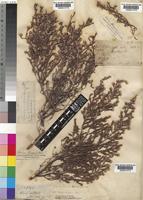
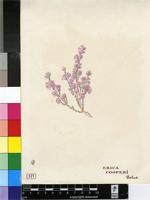
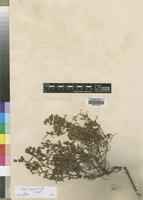
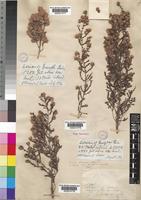
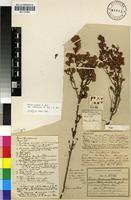
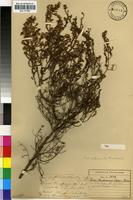
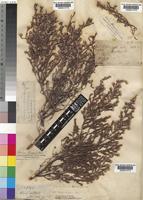
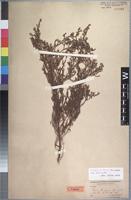
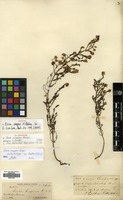
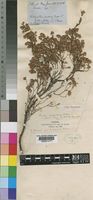
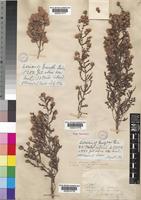
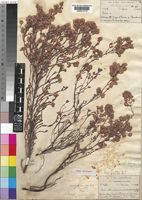
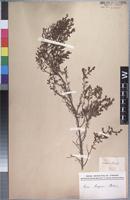
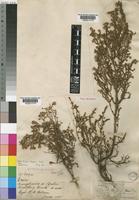
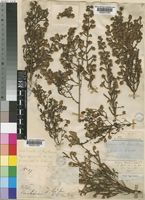
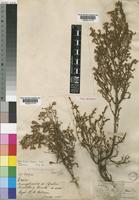
Erica cooperi

20 Images see all

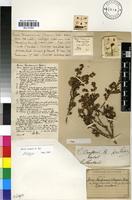
Erica cooperi Bolus [family ERICACEAE]
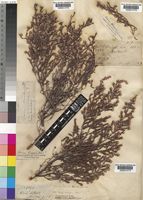
Erica cooperi Bolus
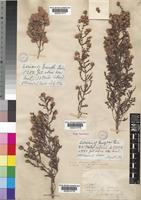
Syntype of Erica cooperi Bolus [family ERICACEAE]
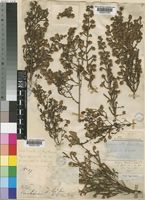
Erica cooperi Bolus [family ERICACEAE]
Holotype of Erica cooperi Bolus var. missionis Bolus [family ERICACEAE]
Lectotype of Erica cooperi Bolus [family ERICACEAE]
Erica cooperi Bolus [family ERICACEAE]
Lectotype of Erica cooperi Bolus [family ERICACEAE]
Syntype of Erica cooperi H. Bolus [family ERICACEAE]
Erica cooperi Bolus var. missionis Bolus [family ERICACEAE]
Erica cooperi Bolus [family ERICACEAE]
Erica cooperi Bolus var. missionis Bolus [family ERICACEAE]
Isolectotype of Erica cooperi Bolus [family ERICACEAE]
Type of Erica cooperi Bolus [family ERICACEAE]
Erica cooperi Bolus [family ERICACEAE]
Lectotype of Erica cooperi Bolus [family ERICACEAE]
Erica cooperi Bolus [family ERICACEAE]
Type of Erica cooperi Bolus [family ERICACEAE]
Previous
Next

Name

Identification
Erica cooperi Bolus [family ERICACEAE ]
Related name
  • Erica cooperi

Flora

Entry for ERICA Cooperi Bolus [family ERICACEAE]
Herbarium
Royal Botanic Gardens, Kew (K)
Collection
Flora Capensis
Resource Type
Reference Sources
Entry From
Flora Capensis, Vol 4, page 2, (1909) Author: By H. BOLUS, F. GUTHRIE, and N. E. BROWN.
Names
ERICA Cooperi Bolus [family ERICACEAE], in Journ. Linn. Soc. xxiv. 179
Information
stout, rigid, much branched, rough to the touch, 2–3 ft. high; branches spreading or subdivaricate, roughly hispid with spreading simple or more or less compound hairs; leaves 4-nate, mostly spreading, linear to linear-lanceolate, sulcate to open-backed, ciliate with rough simple or forked or subplumose hairs, the under surface paler or livid and subglabrous, 2–2 1/2 lin. long; flowers subcorolline or subcalycine; heads mostly 4-flowered, cernuous, semiglobose, about 4 1/2 lin. in diam.; pedicels 1 lin. long; bracts linear-lanceolate, acute, coloured, densely ciliate with long soft plumose hairs, about equal in length to the sepals; sepals like the bracts, but narrow-linear or subulate, 2 1/2–3 lin. long; corolla narrow-urceolate, puberulous, white or pale rose, 2–2 1/2 lin. long; segments spreading, short; filaments slender, 1 1/2–2 times longer than the anthers; anthers included, cuneate or cuneate-oblong, subacute, glabrous, from a little under to a little over 1/2 lin. long; cells deeply parted, crested; pore about 3/5 the length of the cell; crests varying from narrow-lanceolate, acuminate, serrulate or more usually suborbicular, incised, with one longer terminal subulate lobe, the whole 2/3– 3/4 the length of the cell; style included, short, straight; stigma capitellate, small; ovary turbinate, truncate, hirsute. null
Distribution
EASTERN REGION between 2000 and 7000 ft.: Natal; sources of the Umgeni and Umvoti Rivers, Sutherland! Mid Illovo, Wood, 1890! Noods Berg, Wood, 888! and without precise locality, Buchanan, 37! Cooper, 1101! Var. β: Tembuland; near Cala, Galpin, 2318! Griqualand East; near St. Augustine, Baur, 218! summit of Mount Currie, Tyson, 1252! between Elliot and Maclear, Bolus, 8730! Flanagan, 2872!KALAHARI REGION Orange River Colony, Cooper, 2528! 3531!
Notes
Allied to E. Baurii, but a stronger, more woody plant, with larger and differently shaped corolla. Our var. β differs chiefly in aspect, the floral characters being almost identical. The anther varies unusually, both in size and shape.

Related Materials

  • Terms and Conditions
  • Privacy Policy
  • Cookie Policy
  • Cookie Settings
  • Accessibility
  • Help
  • Contact Us
  • Facebook
  • Twitter
ITHAKA

JSTOR is part of ITHAKA, a not-for-profit organization helping the academic community use digital technologies to preserve the scholarly record and to advance research and teaching in sustainable ways.

©2000-2026 ITHAKA. All Rights Reserved. JSTOR®, the JSTOR logo, JPASS®, Aluka®, and ITHAKA® are registered trademarks of ITHAKA.

╳