JSTOR Global Plants Home
  • Home
  • Browse
  • About
  • Access
  • Account
    • Saved Items
    • Profile
  • Log in

Global Plants

Skip to Main Content
  • JSTOR Global Plants Home
  • Global Plants

    • Browse
    • About
    • Access
    • Account
      • Saved Items
      • Profile
Log in
  • Browse
  • About
  • Access
  • Account
    • Saved Items
    • Profile
Advanced Search

Compilation
Erica concava

7 Images see all

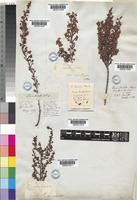
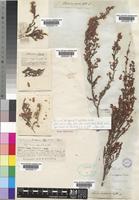
Erica bicolor Thunb. [family ERICACEAE]
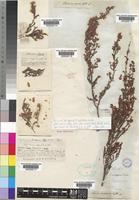
Filed as Erica cristiflora Salisb. [family ERICACEAE]
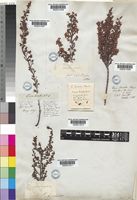
Erica cristaeflora Salisb. [family ERICACEAE]
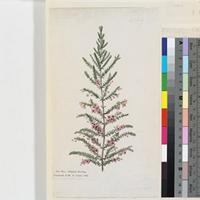
Erica concava Lodd. original illustration from Curtis's Botanical Magazine
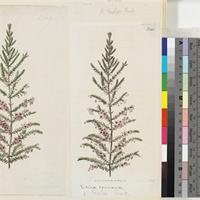
Erica concava Lodd. published illustration from Curtis's Botanical Magazine
Erica cristaeflora Salisb. [family ERICACEAE]
Erica bicolor Thunb. [family ERICACEAE]
Previous
Next

Name

Identification
Erica concava Lodd. [family ERICACEAE ]
Related name
  • Erica concava

Flora

Entry for ERICA bicolor Thunb. [family ERICACEAE]
Herbarium
Royal Botanic Gardens, Kew (K)
Collection
Flora Capensis
Resource Type
Reference Sources
Entry From
Flora Capensis, Vol 4, page 2, (1909) Author: By H. BOLUS, F. GUTHRIE, and N. E. BROWN.
Names
ERICA bicolor Thunb. [family ERICACEAE], Diss. Erica, 36;—Benth. in DC. Prodr. vii. 688; Wendl. Eric. Ic. fasc. 21, 139, t. 53.
ERICA calathiflora Salisb. [family ERICACEAE], in Trans. Linn. Soc. vi. 328.
ERICA concava Lodd. [family ERICACEAE], Bot. Cab. t. 134? and Bot. Mag. t. 2149?
ERICA canaliculata Andr. var. minor [family ERICACEAE], Heathery, t. 157, and Col. Heaths, t. 158.
Information
erect, 1–2 ft. high; branches generally virgate, the upper part laden with numerous flowers, cano-puberulous; leaves 3-nate, erect-spreading, crowded, mostly linear, sulcate, puberulous, 1–1 1/2 lin. long, more rarely broad-linear, slightly open-backed and from 1 1/2–2 1/2 lin. long; flowers 3-nate; pedicels 1–1 1/2 lin. long; bracts remote, small; sepals broad-ovate, blunt, keeled, viscid-puberulous or shortly tomentose, foliaceous, 1/2– 3/4 lin. long, reaching from 1/3– 1/2 the height of the corolla; corolla cyathiform, broad-cyathiform or subcampanulate-cyathiform, mouth a little widened or sometimes not at all so, the outline always curved, not tapering direct from the base, glabrous, dull red, 1–1 1/4 lin. long; segments erect or slightly spreading, 1/3– 2/3 the length of the tube; anthers usually subincluded and manifest, more rarely subexserted, lateral, curved-oblong, very obtuse, scaberulous, 2/5 lin. long; pore 2/5 the length of cell; awns curved, subulate, ciliolate, 1/2– 3/4 the length of the cell; style slender, well-exserted; stigma capitellate, small; ovary pubescent. null
Distribution
COAST REGION from 800 to 3000 ft.: Clanwilliam Div.; Krakadouw Pass, Leipoldt, 214 partly! Tulbagh and Ceres Div.; on the Witsen Berg, Pappe!   mountains near Tulbagh, Guthrie, 2734! Mitchells Pass, Bolus, 5298! Schlechter, 8948! 8962! Worcester Div.; Dutoits Kloof, Drège! Paarl Div.; French Hoek Mountains, Thunberg, Paarl Mountain, Drège. Stellenbosch Div.; Lowrys Pass, Bolus, 5558! Caledon Div.; Zwarte Berg, Schlechter, 5588! Knysna Div.; between Knysna and Plettenberg Bay, Cape Govt. Herb.SOUTH AFRICA without locality, Mund! and cultivated specimens!
Notes
Generally recognizable by its numerous small, well-rounded flowers, bowl-shaped to the base, and its slender long-exserted style. The shape of the corolla is somewhat variable, the limb sometimes not at all spreading, at others distinctly though shortly spreading. But we have not seen any wild specimens resembling in this respect those named E. concava, cited above, with very wide-spreading campanulate corollas and figured from garden specimens. We follow Bentham in quoting them, though we are uncertain whether this character be only an effect of cultivation or hybridization, or whether it represents a distinct species. Schlechter's 8948 looks like a species of the § Ceramia, but a careful examination shows it to belong here. This species also connects with the § Eurystoma, and does not entirely agree with this group, owing to its usually half-included stamens. Andrews' fig. l.c. t. 157, represents the plant in its wild state very well, except that we find the sepals more foliaceous, always greenish and pubescent.

Related Materials

  • Terms and Conditions
  • Privacy Policy
  • Cookie Policy
  • Cookie Settings
  • Accessibility
  • Help
  • Contact Us
  • Facebook
  • Twitter
ITHAKA

JSTOR is part of ITHAKA, a not-for-profit organization helping the academic community use digital technologies to preserve the scholarly record and to advance research and teaching in sustainable ways.

©2000-2026 ITHAKA. All Rights Reserved. JSTOR®, the JSTOR logo, JPASS®, Aluka®, and ITHAKA® are registered trademarks of ITHAKA.

╳