JSTOR Global Plants Home
  • Home
  • Browse
  • About
  • Access
  • Account
    • Saved Items
    • Profile
  • Log in

Global Plants

Skip to Main Content
  • JSTOR Global Plants Home
  • Global Plants

    • Browse
    • About
    • Access
    • Account
      • Saved Items
      • Profile
Log in
  • Browse
  • About
  • Access
  • Account
    • Saved Items
    • Profile
Advanced Search

Compilation
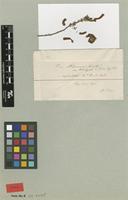
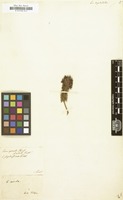
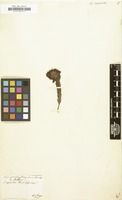
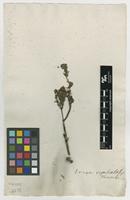
Erica cephalotes

4 Images see all

Type of Erica hesseana J.C.Wendl. ex Klotzsch [family ERICACEAE]
Filed as Erica cephalotes [family ERICACEAE]
Type of Erica cephalotes Thunb. [family ERICACEAE]
Previous
Next

Name

Identification
Erica cephalotes Thunb. [family ERICACEAE ] (stored under name); Verified by Not on sheet, Erica cephalotes Thunb. [family ERICACEAE ] Verified by Not on sheet, Erica abietina L. [family ERICACEAE ] Verified by Not on sheet,
Related name
  • Erica cephalotes
  • Erica abietina
  • Erica hesseana

Flora

Entry for ERICA sessiliflora Linn. f. [family ERICACEAE]
Herbarium
Royal Botanic Gardens, Kew (K)
Collection
Flora Capensis
Resource Type
Reference Sources
Entry From
Flora Capensis, Vol 4, page 2, (1909) Author: By H. BOLUS, F. GUTHRIE, and N. E. BROWN.
Names
ERICA sessiliflora Linn. f. [family ERICACEAE], Suppl. 222;—Benth. in DC. Prodr. vii. 625.
ERICA cephalotes Willd. ex Steud. [family ERICACEAE], Nomen. ed. 2, i. 570, not of Thunb.
ERICA spicata Thunb. [family ERICACEAE], Diss. 43, t. 4; Andr. Heathery, t. 45, and Col. Heaths, t. 61; Wendl. Eric. Ic. fasc. 2, 27; Lodd. Bot. Cab. t. 1203.
ERICA favosa Salisb. [family ERICACEAE], Prodr. 298, and in Trans. Linn. Soc. vi. 365.
Information
erect, 1–1 1/2 ft. high; branches ascending, densely leafy; leaves 6-nate or scattered, erect-spreading or incurved, imbricate, linear or subulate, acute or acuminate, often mucronate, glabrous or pubescent, ciliate or naked, 2–7 lin. long; inflorescence generally a dense congested spike, thickening and persisting long after the fall of the corolla; pedicels always very short and stout; bracts and sepals closely adpressed, usually similar in shape and texture, from rhomboid, orbicular-spathulate, or broad-obovate to unguiculate-spathulate (the lamina small, ovate, acute), oblanceolate, and narrow-oblanceolate, ciliate or naked, rarely lacerate, scarious, nerved, pale coloured or at length deep red, from 1 1/2–3 lin. long; corolla tubular trumpet-shaped, mostly narrow at the base and widening upwards, rarely more equal, glabrous, dry, green to greenish-white or yellowish-green, 8–15 (usually 10–12) lin. long; limb small, erect; anthers usually included, sometimes just visible, subcuneate-oblong, prognathous at the base, with a more or less sharp deflexed point, 2/3–1 lin. long, aristate; awns variable, usually shorter than the cell; ovary sessile, glabrous. null
Distribution
COAST REGION Paarl Div.; French Hoek, Niven, 207! Cape Div.; on mountain sides, Thunberg, Bolus, 4486! and in Herb. Norm. Aust.-Afr., 41! Stellenbosch Div.; Lowrys Pass, Mund, 8! Caledon Div.; on mountains, Burchell, 7719! 8104! Zeyher, 3176! Drège, 7707α! Bolus, 5343! Schlechter, 7583! George Div.; Keurbooms River, Burchell, 5130! Knysna Div.; various localities, Burchell, 5197! 5354! Bolus, 2386! Humansdorp Div.; near Kromme River, Drège, 7707b! and cultivated specimens! Var. β: Caledon Div.? top of hills (Houw Hoeck?), Niven, 17! Herb. Salisbury! Var. γ: Div.? Guthrie, 3795! Var. δ: Tulbagh Div.; Witsen Berg, Burchell, 8652! Roode Zand, Niven, 208! Herb. Salisbury (at Kew)!
Notes
We adopt the older name of Linnæus the younger, and have little hesitation in grouping the several forms above described. The type and var. γ almost pass into each other by gradations; var. β is more distinct, but it differs chiefly in its broader sepals. It appears to have been described by Salisbury, and figured by Andrews, from cultivated plants; it is scarcely possible in a group where the sepals vary so greatly to rely upon them for specific differences. We have dissected eight gradations of form as indicated in the text above, without finding any other uniformly correlated differences of any weight. The mere greater or less width of the corolla is of even less value.

Related Materials

  • Terms and Conditions
  • Privacy Policy
  • Cookie Policy
  • Cookie Settings
  • Accessibility
  • Help
  • Contact Us
  • Facebook
  • Twitter
ITHAKA

JSTOR is part of ITHAKA, a not-for-profit organization helping the academic community use digital technologies to preserve the scholarly record and to advance research and teaching in sustainable ways.

©2000-2026 ITHAKA. All Rights Reserved. JSTOR®, the JSTOR logo, JPASS®, Aluka®, and ITHAKA® are registered trademarks of ITHAKA.

╳