JSTOR Global Plants Home
  • Home
  • Browse
  • About
  • Access
  • Account
    • Saved Items
    • Profile
  • Log in

Global Plants

Skip to Main Content
  • JSTOR Global Plants Home
  • Global Plants

    • Browse
    • About
    • Access
    • Account
      • Saved Items
      • Profile
Log in
  • Browse
  • About
  • Access
  • Account
    • Saved Items
    • Profile
Advanced Search

Compilation
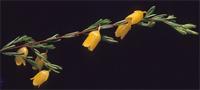
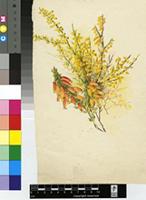
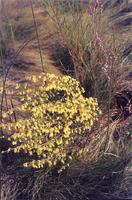
Erica campanularis

5 Images see all

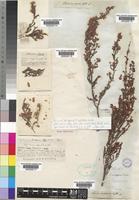
Erica campanularis Salisb.
Type of Erica cristaeflora Salisb. [family ERICACEAE]
Erica campanularis Salisb.
Previous
Next

Name

Identification
Erica campanularis Salisb. [family ERICACEAE ]
Related name
  • Erica campanularis

Flora

Entry for ERICA campanulata Andr. [family ERICACEAE]
Herbarium
Royal Botanic Gardens, Kew (K)
Collection
Flora Capensis
Resource Type
Reference Sources
Entry From
Flora Capensis, Vol 4, page 2, (1909) Author: By H. BOLUS, F. GUTHRIE, and N. E. BROWN.
Names
ERICA campanulata Andr. [family ERICACEAE], Col. Heaths, t. 9;—Andr. Heathery, t. 55; Wendl. Eric. Ic. fasc. 13, 3; Lodd. Bot. Cab. t. 184; Benth. in DC. Prodr. vii. 681.
ERICA campanularis Salisb. [family ERICACEAE], in Trans. Linn. Soc. vi. 330.
ERICA tenuifolia Hort. ex Salisb. [family ERICACEAE], l.c. 331.
ERICA flavicans Klotzsch ex Benth. [family ERICACEAE], l.c. 681.
Information
erect, slender, somewhat variable in habit and appearance, from 6 to probably 24 in. in height; branches numerous, erect or spreading, or when young and grown in damp places subsimple, virgate, and very slender with fewer and smaller flowers, glabrous, reddish; leaves commonly 3-nate, rarely 4-nate or opposite on the same plant, erect or subspreading, narrow-linear, acute, keeled, glabrous, 1 1/2–2 1/2 lin. long; flowers generally solitary, corolline; pedicels puberulous, 1–1 1/2 lin. long; bracts remote or subremote, rarely subapproximate; sepals from ovate and acute to lanceolate and long-acuminate, scarious, glabrous, margins mostly naked, rarely ciliate, coloured, 1 1/2–1 3/4 lin. long; corolla very variable in size and shape, tubular-campanulate, cyathiform, broad-cyathiform or suburceolate, bright yellow, more rarely cream-colour, 2 1/2–3 1/2 lin. long; segments erect, more rarely spreading, 1/4– 1/2 the length of the tube; filaments nearly straight, about 1/2 lin. long; anthers oblong-cuneate, obtuse, scaberulous, 1/2– 2/3 lin. long, most generally muticous (said to be “sometimes minutely toothed at base”); pore about 1/2 the length of the cell; style included, sometimes compressed; stigma capitellate, small; ovary glabrous. null
Distribution
COAST REGION Caledon Div.; mountains near Palmiet River, Ecklon & Zeyher, 95! in Herb. Berlin; Babylons Tower Mountain, 1200 ft., Templeman in Herb. Norm. Aust.-Afr., 753! Zwart Berg, near Caledon, MacOwan, Herb. Aust.-Afr., 2016! between French Hoek and Villiersdorp, Bolus, 6989! Div.? Bolus, 6872! Also cultivated specimens!
Notes
This is a very variable species, but with numerous specimens before us we are unable to define even sufficiently well-marked or stable varieties. It has been ordinarily recognized (from Andrews' figure) by its somewhat slender habit and leaves, and solitary yellow flowers. It varies gradually up to stouter forms, with 4-nate leaves and clustered (3–4-nate) flowers, and these look very different from the others, but without any differences in the structure of the flowers. Extreme forms of these are represented in Bolus, 6872.

Related Materials

  • Terms and Conditions
  • Privacy Policy
  • Cookie Policy
  • Cookie Settings
  • Accessibility
  • Help
  • Contact Us
  • Facebook
  • Twitter
ITHAKA

JSTOR is part of ITHAKA, a not-for-profit organization helping the academic community use digital technologies to preserve the scholarly record and to advance research and teaching in sustainable ways.

©2000-2026 ITHAKA. All Rights Reserved. JSTOR®, the JSTOR logo, JPASS®, Aluka®, and ITHAKA® are registered trademarks of ITHAKA.

╳