JSTOR Global Plants Home
  • Home
  • Browse
  • About
  • Access
  • Account
    • Saved Items
    • Profile
  • Log in

Global Plants

Skip to Main Content
  • JSTOR Global Plants Home
  • Global Plants

    • Browse
    • About
    • Access
    • Account
      • Saved Items
      • Profile
Log in
  • Browse
  • About
  • Access
  • Account
    • Saved Items
    • Profile
Advanced Search

Compilation
Erica calyciflora

6 Images see all

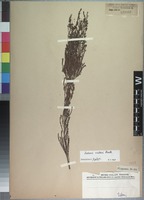
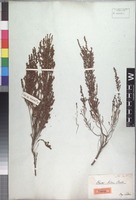
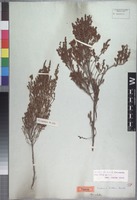
Type of Erica calyciflora Tausch [family ERICACEAE]
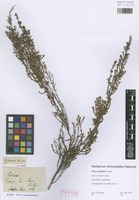
Syntype of Erica calyciflora Tausch [family ERICACEAE]
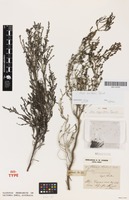
Isotype of Erica calyciflora Tausch. [family ERICACEAE]
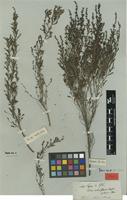
Type of Erica calyciflora Tausch [family ERICACEAE]
Previous
Next

Name

Identification
Erica calyciflora Tausch [family ERICACEAE ] (stored under name); Verified by Not on sheet, Salaxis sieberi Benth. [family ERICACEAE ] Verified by Not on sheet, Erica axillaris Thunb. [family ERICACEAE ] Verified by Not on sheet,
Related name
  • Erica calyciflora
  • Salaxis sieberi
  • Erica axillaris

Flora

Entry for SALAXIS Sieberi Benth. [family ERICACEAE]
Herbarium
Royal Botanic Gardens, Kew (K)
Collection
Flora Capensis
Resource Type
Reference Sources
Entry From
Flora Capensis, Vol 4, page 2, (1909) Author: By H. BOLUS, F. GUTHRIE, and N. E. BROWN.
Names
SALAXIS Sieberi Benth. [family ERICACEAE], in DC. Prodr. vii. 711;—Dietr. Synop. Pl. ii. 1261.
Erica calyciflora Tausch [family ERICACEAE], in Flora, xvii. ii. 617.
Information
1 ft. or more high, much branched; branchlets divergently ascending, minutely subtomentose; leaves 3-nate, erectly imbricate to adpressed and shorter than the internodes, 1–2 1/4 lin. long, linear, acute, glabrous; flowers axillary and terminal, 1–5 together, subsessile; calyx (excluding the larger lobe which is variably connate with the others or free almost to the base) 1/3– 1/2 lin. long, shorter than the corolla-tube, glabrous; lobes ovate or deltoid-ovate, acute or subobtuse or the larger one acuminate, minutely ciliate; corolla 1/2– 3/4 lin. long, campanulate or cup-shaped, with incurved lobes, glabrous; stamens 8; filaments of the long-styled form less than half as long as the 1/2 lin. long anthers, and of the short-styled form half as long as the 1/3 lin. long anthers, varying from shortly connate at their base to almost up to (but not with) the base of the anthers, becoming more or less separated in fruit; anthers oblong, usually very minutely scabrid on the apical notch, not glandular as originally described; ovary very minutely scabrid-puberulous on the ridges of the upper part, 2–3-celled; style very short or distinct and up to 1/6 lin. long, stigma funnel-shaped, with the erect sides of the cup, about 1/3 of its diam., glabrous or nearly so; fruit usually distinctly trigonous, with the 3 angles or ridges on the upper part subacute, slightly but not prominently reticulate on the lower part. null
Distribution
COAST REGION Cape Div.; Cape Flats, 0–100 ft., Bolus, 3313! Guthrie, 1379! Wynberg, 80 ft., Schlechter, 7536!SOUTH AFRICA without locality, Sieber, 176! Harvey, 155!

Related Materials

  • Terms and Conditions
  • Privacy Policy
  • Cookie Policy
  • Cookie Settings
  • Accessibility
  • Help
  • Contact Us
  • Facebook
  • Twitter
ITHAKA

JSTOR is part of ITHAKA, a not-for-profit organization helping the academic community use digital technologies to preserve the scholarly record and to advance research and teaching in sustainable ways.

©2000-2026 ITHAKA. All Rights Reserved. JSTOR®, the JSTOR logo, JPASS®, Aluka®, and ITHAKA® are registered trademarks of ITHAKA.

╳