JSTOR Global Plants Home
  • Home
  • Browse
  • About
  • Access
  • Account
    • Saved Items
    • Profile
  • Log in

Global Plants

Skip to Main Content
  • JSTOR Global Plants Home
  • Global Plants

    • Browse
    • About
    • Access
    • Account
      • Saved Items
      • Profile
Log in
  • Browse
  • About
  • Access
  • Account
    • Saved Items
    • Profile
Advanced Search

Compilation
Erianthemum lindense

8 Images see all

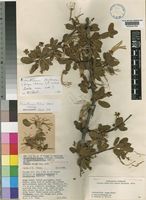
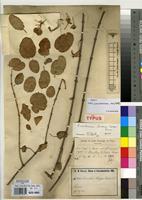
Holotype of Erianthemum milnei SBalle [family LORANTHACEAE]
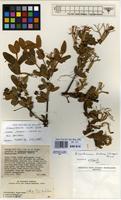
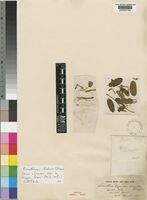
Type of Erianthemum milnei Balle [family LORANTHACEAE]
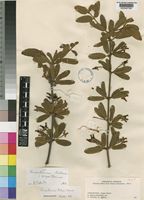
Type of Loranthus lindensis Sprague [family LORANTHACEAE]
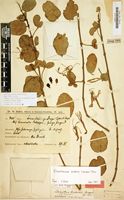
Type of Loranthus dregei var. longipes Sprague [family LORANTHACEAE]
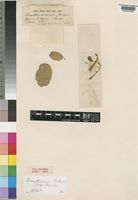
Isotype of Loranthus lindensis Sprague [family LORANTHACEAE]
Isotype of Loranthus dregei Eckl. & Zeyh. var. longipes Sprague [family LORANTHACEAE]
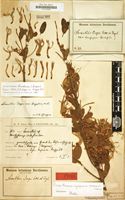
Erianthemum lindense (Sprague) Danser [family LORANTHACEAE]
Type of Loranthus lindensis Sprague [family LORANTHACEAE]
Previous
Next

Name

Identification
Loranthus lindensis Sprague [family LORANTHACEAE ] Verified by Gebauer, Erianthemum lindense (Sprague) Danser [family LORANTHACEAE ] (stored under name); Verified by Not on sheet.,
Related name
  • Loranthus lindensis
  • Erianthemum lindense
  • Erianthemum milnei
  • Loranthus dregei

Flora

Entry for ERIANTHEMUM lindense (Sprague) Danser [family LORANTHACEAE]
Herbarium
Royal Botanic Gardens, Kew (K)
Collection
Flora of Tropical East Africa
Resource Type
Reference Sources
Entry From
Flora of Tropical East Africa, page 1, (1999) Author: POLHILL & D. WIENS
Names
ERIANTHEMUM lindense (Sprague) Danser [family LORANTHACEAE], in Verh. K. Akad. Wet., sect. 2, 29(6): 54 (1933); Polh. & Wiens, Mistletoes Afr.: 243 (1998). Type: Tanzania, Lindi, Busse 3005 (B!, holo., BR!, iso., K fragment & drawing!)
Loranthus lindensis Sprague [family LORANTHACEAE], in F.T.A. 6(1): 316 (1910) & in K.B. 1911: 141 (1911); F.D.O.-A. 2: 168 (1932); T.T.C.L.: 282 (1949)
Loranthus dregei Sprague var. longipes [family LORANTHACEAE], in F.T.A. 6(1): 314 (1910) & in K.B. 1911: 140 (1911); F.D.O.-A. 2: 167 (1932); T.T.C.L.: 282 (1949). Type: Tanzania, Songea District, Kwa Kihingi, Busse 764 (B!, holo., EA!, iso., K!, fragment)
Erianthemum ngamicum [family LORANTHACEAE], [sensu Vollesen in Opera Bot. 59: 63 (1980), non (Sprague) Danser]
Information
Stems to 1 m. or so; twigs tomentose with stellate and some short dendritic somewhat fulvous hairs, glabrescent. Leaves opposite, becoming clustered at older nodes; petiole 3–5 mm. long; lamina ovate to oblong-elliptic, 1.5–7 cm. long, 0.8–5 cm. wide, mostly rounded to cordate at the base, in very young leaves sometimes cuneate, stellate-pubescent on both surfaces, variably glabrescent, with ± 4 obscure pairs of lateral nerves. Heads 1(–several) in axils or terminal from a tuft of 1–2 pairs of leaves, (2–)4-flowered; peduncle (1.5–)2–4 cm. long; bract with a small to well-developed leafy limb, (7–)10–20 mm. long, (4–)5–14 mm. wide. Receptacle 1 mm. long, long-hairy; calyx 3–4.5 mm. long, glabrous except for fringe of dendritic or mostly simple hairs around the top. Corolla 3.5–5 cm. long, pale green, the tube flushed orange to pink, densely silky villous except on the lower part of the basal swelling; basal swelling 5–6 mm. long; constriction 3–4 mm. long; funnel-shaped upper tube 5–8 mm. long. Berry deep pink, subglabrous.
Range
DISTR. T 8
Altitude range
300–1100 m.
Distribution
TANZANIA Songea District 1.5 km. E. of Songea, 15 Jan. 1956, Milne-Redhead & Taylor 8342!;TANZANIA Masasi District Masasi Hill, 8 km. NE. of Masasi, 18 Mar. 1991, Bidgood, Abdallah & Vollesen 2067!;TANZANIA Lindi District Rondo Forest Reserve, W. side, 22 Nov. 1966, Gillett 18001!
Distribution (external)
; N. Mozambique
Notes
Closely related to E. nyikense and replacing it north-eastwards. It has been confused with E. dregei ,but the combination of long peduncles, foliaceous bracts and subglabrous calyx is distinctive, apart from the clustered leaves (these may not be apparent on gatherings of young shoots only).

Related Materials

  • Terms and Conditions
  • Privacy Policy
  • Cookie Policy
  • Cookie Settings
  • Accessibility
  • Help
  • Contact Us
  • Facebook
  • Twitter
ITHAKA

JSTOR is part of ITHAKA, a not-for-profit organization helping the academic community use digital technologies to preserve the scholarly record and to advance research and teaching in sustainable ways.

©2000-2026 ITHAKA. All Rights Reserved. JSTOR®, the JSTOR logo, JPASS®, Aluka®, and ITHAKA® are registered trademarks of ITHAKA.

╳