JSTOR Global Plants Home
  • Home
  • Browse
  • About
  • Access
  • Account
    • Saved Items
    • Profile
  • Log in

Global Plants

Skip to Main Content
  • JSTOR Global Plants Home
  • Global Plants

    • Browse
    • About
    • Access
    • Account
      • Saved Items
      • Profile
Log in
  • Browse
  • About
  • Access
  • Account
    • Saved Items
    • Profile
Advanced Search

Compilation
Eragrostis moggii

9 Images see all

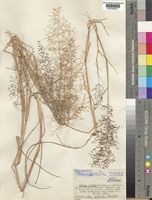
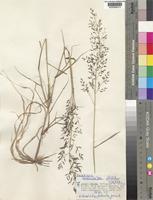
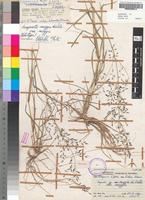
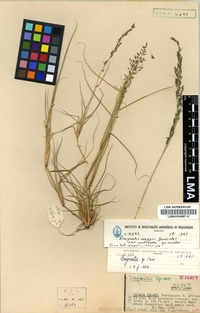
Type of Eragrostis moggii De Winter var. moggii [family POACEAE]
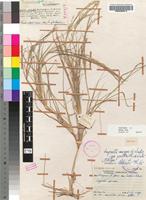
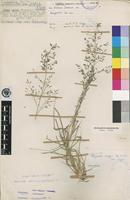
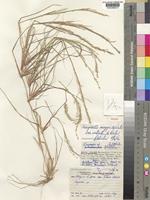
Holotype of Eragrostis moggii De Winter var. contracta De Winter [family POACEAE]
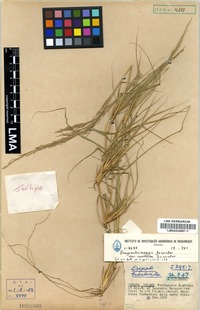
Isotype of Eragrostis moggii De winter var. contacta De winter [family POACEAE]
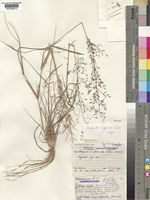
Holotype of Eragrostis moggii De Winter var. moggii [family POACEAE]
Isotype of Eragrostis moggii De Winter var. moggii [family POACEAE]
Isotype of Eragrostis moggii De Winter var. contracta De Winter [family POACEAE]
Isotype of Eragrostis moggii De winter var. contacta De winter [family POACEAE]
Previous
Next

Name

Identification
Eragrostis moggii De Winter [family POACEAE ] (stored under name); Verified by unknown, Eragrostis barrelieri Daveau [family POACEAE ] Verified by unknown,
Related name
  • Eragrostis moggii
  • Eragrostis barrelieri

Flora

Entry for Eragrostis moggii De Winter [family GRAMINEAE]
Herbarium
Royal Botanic Gardens, Kew (K)
Collection
Flora Zambesiaca
Resource Type
Reference Sources
Entry From
FZ, Vol 10, Part 2, (1999) Author: T. Cope
Names
Eragrostis moggii De Winter [family GRAMINEAE], in Bothalia 9: 137 (1966). —Gibbs Russell et al., Grasses Southern Africa [Mem. Bot. Surv. S. Africa No. 58]: 154 (1990). Type: Mozambique, Inhaca Island, 20.xii.1956, Mogg 28616 (PRE, holotype; K; SRGH).
Eragrostis moggii var. contracta De Winter [family GRAMINEAE], in Bothalia 9: 138 (1966). Type: Mozambique, Inhaca Island, Mogg 26947 (PRE, holotype; K; SRGH).
Information
Caespitose, short-lived perennial without rhizomes or stolons; culms up to 90 cm tall, erect, ascending or decumbent and rooting from the nodes, usually branched, glabrous at the nodes, eglandular or with a ring of small coalescent glandular patches below the nodes; basal leaf sheaths glabrous, chartaceous, ± compressed and keeled, gland-dotted on the nerves, persistent; ligule a line of hairs; leaf laminas 5–20 cm × 3–5 mm, linear, flat or involute, glabrous, eglandular.Panicle 11–23 cm long, narrow and contracted or open and effuse, stiffly branched, the spikelets evenly distributed on pedicels 1.5–2.5 mm long, these with a conspicuous annular gland, the primary branches not in whorls (but often paired or loosely clustered), terminating in a fertile spikelet, glabrous in the axils.Spikelets 4–7 × 1–1.5 mm, narrowly oblong, lightly laterally compressed, 4–13-flowered, the lemmas disarticulating from below upwards, the rhachilla persistent below, becoming fragile above; glumes subequal, 1.2–1.6 mm long, lightly keeled, narrowly oblong-ovate in profile, scaberulous on the keel, obtuse at the apex, the inferior reaching to just beyond the middle of the adjacent lemma, the superior to just short of the middle; lemmas 1.4–1.6 mm long, lightly keeled, ovate-elliptic in profile, membranous with prominent lateral nerves, appressed to the rhachilla, those in opposite rows ± imbricate and concealing the rhachilla, usually leaden-grey, rarely pallid, faintly scaberulous on the back, obtuse to almost truncate at the apex; palea persistent, glabrous on the flanks, the keels slender, wingless, scaberulous; anthers 3, c. 0.7 mm long.Caryopsis 0.5–0.6 mm long, broadly elliptic to almost square.
Habitat
Frequent on coastal dunes and sandy soils behind the dunes
Altitude range
0–200 m.
200
0
Distribution
Mozambique GI Inharrime, 22.vi.1960, Lemos & Balsinhas 174 (BM; COI; K; LISC; PRE; SRGH).Mozambique M between Maputo (Lourenço Marques) and Costa do Sol, 1.iv.1948, Schweickerdt 1910 (K; PRE).
Distribution (external)
South Africa (KwaZulu-Natal)
Notes
Very similar to 93. E. glandulosipedata in having a conspicuous annular ring on the pedicel, but more positively perennial and with somewhat smaller lemmas; in addition, the panicle branches are not in whorls although they are often paired or loosely clustered.Also similar to 100. E. phyllacantha, but this is pilose in the axils of the primary panicle branches.Two varieties have been recognised in Mozambique, var. moggii with loose open panicles, and var. contracta with narrow contracted panicles.Since these varieties occur in mixed populations on Inhaca Island it is doubtful if the difference between them is taxonomically significant.

Related Materials

  • Terms and Conditions
  • Privacy Policy
  • Cookie Policy
  • Cookie Settings
  • Accessibility
  • Help
  • Contact Us
  • Facebook
  • Twitter
ITHAKA

JSTOR is part of ITHAKA, a not-for-profit organization helping the academic community use digital technologies to preserve the scholarly record and to advance research and teaching in sustainable ways.

©2000-2026 ITHAKA. All Rights Reserved. JSTOR®, the JSTOR logo, JPASS®, Aluka®, and ITHAKA® are registered trademarks of ITHAKA.

╳