JSTOR Global Plants Home
  • Home
  • Browse
  • About
  • Access
  • Account
    • Saved Items
    • Profile
  • Log in

Global Plants

Skip to Main Content
  • JSTOR Global Plants Home
  • Global Plants

    • Browse
    • About
    • Access
    • Account
      • Saved Items
      • Profile
Log in
  • Browse
  • About
  • Access
  • Account
    • Saved Items
    • Profile
Advanced Search

Compilation
Eragrostis auriculata

4 Images see all

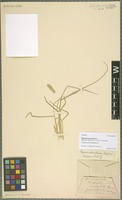
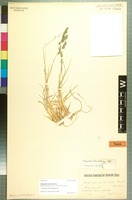
Type of Eragrostis auriculata Hack. [family POACEAE]
Syntype of Eragrostis auriculata Hack. [family POACEAE]
Type of Eragrostis auriculata Hack. [family POACEAE]
Previous
Next

Name

Identification
Eragrostis auriculata Hack. [family POACEAE ] Verified by unknown, Eragrostis echinochloidea Stapf [family POACEAE ] (stored under name); Verified by unknown,
Related name
  • Eragrostis echinochloidea
  • Eragrostis auriculata

Flora

Entry for Eragrostis echinochloidea Stapf [family GRAMINEAE]
Herbarium
Royal Botanic Gardens, Kew (K)
Collection
Flora Zambesiaca
Resource Type
Reference Sources
Entry From
FZ, Vol 10, Part 2, (1999) Author: T. Cope
Names
Eragrostis echinochloidea Stapf [family GRAMINEAE], in F.C. 7: 627 (1900). —Chippindall in Meredith, Grasses & Pastures of South Africa: 174, fig. 145 (1955). —Gibbs Russell et al., Grasses Southern Africa [Mem. Bot. Surv. S. Africa No. 58]: 150 (1990). TAB. 24, fig. 4. Type from South Africa (Free State).
Eragrostis auriculata Hack. [family GRAMINEAE], in Bull. Herb. Boissier, Sér. 2, 1: 773 (1901). Type from Namibia.
Eragrostis obtusa [family GRAMINEAE], sensu T. Durand & Schinz, Consp. Fl. Afric. 5: 886 (1895), in part, non Munro ex Ficalho & Hiern.
Information
Caespitose perennial with short oblique rhizome; culms up to 60(85) cm tall, erect or ascending, usually unbranched but sometimes branched below, glabrous at the nodes, often with an annular gland below the nodes; basal leaf sheaths glabrous or thinly pilose, chartaceous, terete, with scattered glandular pits, persistent; ligule a line of hairs; leaf laminas (2.5)5–15(20) cm × (1)2–5 mm, linear, flat or involute, glabrous or scattered-pilose (the upper surface also asperulous), with or without glandular pits in the nerves beneath.Panicle 4–19 cm long, lanceolate to narrowly ovate, the spikelets densely clustered on very short pedicels on stubby side branches, the primary branches not in whorls, terminating in a fertile spikelet, glabrous in the axils, the rhachis with an annular gland beneath each branch and the branches with crateriform glands.Spikelets 3–4 × 2.5–3 mm, ovate to oblong-ovate, strongly laterally compressed, 6–12(14)-flowered, the florets disarticulating from the apex downwards, the rhachilla fragile; glumes subequal, 1.5–2 mm long, reaching to and sometimes exceeding the apex of the adjacent lemmas, keeled, lanceolate in profile, glabrous on the flanks, gland-dotted on the nerves, acuminate at the apex; lemmas c. 2 mm long, keeled, ovate in profile, membranous with prominent lateral nerves, diverging from the rhachilla at a wide angle but those in opposite rows imbricate and concealing the rhachilla, greyish-green, sometimes tinged with purple, glabrous on the flanks, gland-dotted on the keel and lateral nerves, subacute at the apex; palea glabrous on the flanks, the keels slender, scabrid above, broadly winged in the lower half, the upper margin of the wing sometimes truncate but usually concave (the wing thus auriculate); anthers 3, c. 0.6 mm long.Caryopsis c. 1 mm long, elliptic to oblong-elliptic.
Habitat
Hot dry country in short grassland, wooded grassland and sandveld, usually on Kalahari Sand and in calcareous pans; also in disturbed ground at roadsides
Altitude range
850–1000 m.
1000
850
Distribution
Botswana SE Mahalapye, 975 m, 18.i.1956, de Beer 57 (K; SRGH).Zimbabwe W Hwange (Wankie) National Park, Main Camp, 1050 m, 21.xii.1990, Laegaard 15843 (K).Botswana SW Kgalagadi Distr., Mabuasehube Pan, 1005 m, 28.ii.1963, Leistner 3107 (K).Botswana N Ngamiland Distr., Tsao–Nokaneng road, 1000 m, 20.iii.1961, Vesey-FitzGerald 3285 (BM; K; SRGH).Caprivi Strip Linyanti area, c. 80 km from Katima on road to Linyanti, c. 915 m, 27.xii.1958, Killick & Leistner 3139 (K; SRGH).
Distribution (external)
Namibia
South Africa (Cape Province, Free State, Transvaal)
Notes
Hybrids between this species and the South African E. obtusa Munro ex Ficalho & Hiern occur in parts of southern Africa.The hybrid (E. × pseudobtusa De Winter) has a spikelet much like that of E. obtusa (blunt boat-shaped glumes, eglandular lemma nerves) but with the toothed palea wings characteristic of E. echinochloidea; in E. obtusa the palea wings are ciliolate and without a tooth.No hybrids have definitely been recorded in the Flora Zambesiaca area; one specimen often quoted (P.A. Smith 1580 from Botswana) is clearly only E. echinochloidea.

Related Materials

  • Terms and Conditions
  • Privacy Policy
  • Cookie Policy
  • Cookie Settings
  • Accessibility
  • Help
  • Contact Us
  • Facebook
  • Twitter
ITHAKA

JSTOR is part of ITHAKA, a not-for-profit organization helping the academic community use digital technologies to preserve the scholarly record and to advance research and teaching in sustainable ways.

©2000-2026 ITHAKA. All Rights Reserved. JSTOR®, the JSTOR logo, JPASS®, Aluka®, and ITHAKA® are registered trademarks of ITHAKA.

╳