JSTOR Global Plants Home
  • Home
  • Browse
  • About
  • Access
  • Account
    • Saved Items
    • Profile
  • Log in

Global Plants

Skip to Main Content
  • JSTOR Global Plants Home
  • Global Plants

    • Browse
    • About
    • Access
    • Account
      • Saved Items
      • Profile
Log in
  • Browse
  • About
  • Access
  • Account
    • Saved Items
    • Profile
Advanced Search

Compilation
Enteropogon simplex

6 Images see all

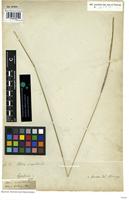
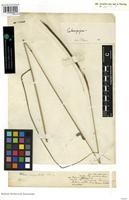
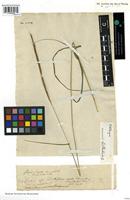
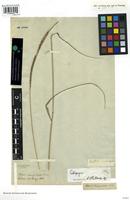
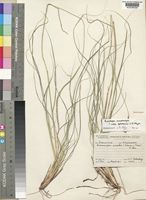
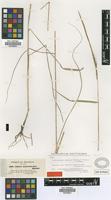
Syntype of Chloris simplex Schumach. [family POACEAE]
Holotype of Enteropogon monostachyos (Vahl) Schum. subsp. africanus Clayton, W. D. [family POACEAE]
Isotype of Chloris macrostachys Hochst. ex A.Rich. [family POACEAE]
Previous
Next

Name

Identification
Enteropogon simplex (Schum. & Thonn.) A.Chev. [family POACEAE ] (stored under name); Verified by Not on sheet, Isotype of Chloris macrostachys Hochst. ex A.Rich. [family POACEAE ] Verified by Not on sheet, Isotype of Enteropogon macrostachyus (Hochst. ex A.Rich) Munro ex Benth. [family POACEAE ] Verified by Not on sheet,
Related name
  • Enteropogon macrostachyus
  • Enteropogon simplex
  • Chloris macrostachys
  • Enteropogon monostachyos

Flora

Entry for ENTEROPOGON macrostachyus (A. Rich.) Benth. [family POACEAE]
Herbarium
Royal Botanic Gardens, Kew (K)
Collection
Flora of Tropical East Africa
Resource Type
Reference Sources
Entry From
Flora of Tropical East Africa, Part (Part 2), page 177, (1974) Author: W. D. CLAYTON, S. M. PHILLIPS AND S. A. RENVOIZE
Names
ENTEROPOGON macrostachyus (A. Rich.) Benth. [family POACEAE], in J.L.S. 19: 101 (1881); Ann. list grasses Ug.: 17 (1947); Imp. grassl. pl. Kenya: 34 (1951); F.P.S. 3: 448 (1956); Ann. list Nyasaland grasses: 38 (1958); R.K.G.: 24 (1958); I.G.U.: 28 (1960); G.T.: 40 (1965); Clayton in F.W.T.A., ed. 2, 3: 402 (1972). Type: Ethiopia, Tigre, Mai-Mezano, Schimper 1477 (K, iso.!)
Chloris simplex Schumach. [family POACEAE], Beskr. Guin. Pl.: 54 (1827), nom. superfl. Type: Ghana, Thonning (C. holo.!)
Chloris macrostachya A. Rich. [family POACEAE], Tent. Fl. Abyss. 2: 408 (1851)
Megastachya abyssinica Steud. [family POACEAE], Syn. Pl. Glum. 1: 203 (1854), in synon., based on Macrostachya abyssinica Hochst., in sched.
Enteropogon simplex (Schumach.) A. Chev. [family POACEAE], in Rev. Bot. Appliq. 14: 125 (1934)
Enteropogon monostachyos [family POACEAE], [sensu Eggeling, Ann. list grasses Ug.: 17 (1947), non (Vahl) K. Schum.]
Information
Caespitose perennial; culms up to 1 m. high. Leaf-blades narrow, linear, 10–60 cm. long, flat or involute; sheaths glabrous. Spike 8–20 cm. long. Spikelets 3-flowered; lemma of lower floret 7–10 mm. long, with an awn 10–18 mm. long.
Range
DISTR. U1–3, 4; K1, 2, 4, 6, 7; T1–8; Z tropical Africa generally
Altitude range
150–1500 m.
Distribution
KENYA Northern Frontier Province Moyale, 17 July 1952, Gillett 13600 !KENYA Machakos District 237 km. on Mombasa-Nairobi road, 15 Apr. 1960, Verdcourt & Polhill 2698 !KENYA Teita District Mazinga Hill, 1 Feb. 1953, Bally 8647 !TANZANIA Musoma District Seronera, 29 Mar. 1961, Greenway 9928! & Musoma, Emson 313 !TANZANIA Lushoto District W. foot of W. Usambara Mts., Mtarawanda, 5 July 1934, Greenway 4010 !TANZANIA Zanzibar I., Chwaka, 11 Aug. 1950, Barney 1072 !UGANDA Karamoja District Labwor, Kesm (? Kem), 6 June 1940, A. S. Thomas 3714!UGANDA Bunyoro District Lake Albert flats, May 1941, Eggeling 4370!UGANDA Toro District Lake George, Mohokya, 20 Mar. 1936, Michelmore 1388 !
Notes
E. macrostachyus is closely allied to E. monostachyos, being distinguished by a different range of variation of spikelet dimensions, and by the hairy sheath margins. These hairs are seldom prominent, and must usually be sought for with care.

Related Materials

  • Terms and Conditions
  • Privacy Policy
  • Cookie Policy
  • Cookie Settings
  • Accessibility
  • Help
  • Contact Us
  • Facebook
  • Twitter
ITHAKA

JSTOR is part of ITHAKA, a not-for-profit organization helping the academic community use digital technologies to preserve the scholarly record and to advance research and teaching in sustainable ways.

©2000-2026 ITHAKA. All Rights Reserved. JSTOR®, the JSTOR logo, JPASS®, Aluka®, and ITHAKA® are registered trademarks of ITHAKA.

╳